
Are there different size Dremel bits?
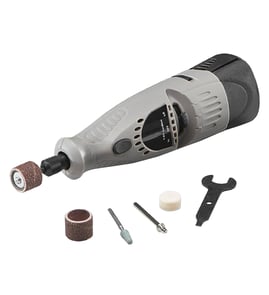
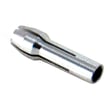
Yes. Dremel bits (accessories) come in different shank sizes, and your Dremel 275-3 rotary tool uses a collet that must match the bit’s shank diameter so the accessory clamps securely and runs true.
Common Dremel bit (shank) sizes
Most rotary-tool accessories are made with a few standard shank diameters. The most common size you will use day to day is 1/8 inch.
- 1/8 inch: most common for grinding stones, sanding drums, cutters, and many burrs
- 3/32 inch: common on smaller engraving and detail accessories
- 1/16 inch: used for very small detail work
- 1/4 inch: less common; used on some heavier-duty accessories
How to choose the right collet
Use a collet that matches the shank size exactly. A correct match prevents slipping, wobble, and accessory breakage.
- Unplug the tool before changing accessories
- Check the shank size on the accessory packaging (or measure with a ruler/calipers)
- Install the matching collet, then insert the bit fully
- Back the bit out slightly (about 1/16 inch) before tightening so it does not bottom out
- Tighten the collet nut firmly; do not overtighten
Quick fit check
| What you notice | What it usually means | What to do |
|---|---|---|
| Bit slips under load | Collet too large or not tight | Switch to correct collet size and retighten |
| Bit wobbles | Wrong collet or bent shank | Try a new bit; verify collet size |
| Bit will not insert | Collet too small | Install the next larger collet |
Why it matters
A properly sized collet keeps the bit centered. That gives you cleaner cuts, smoother sanding, less vibration, and reduces wear on the collet nut and motor bearings.
Helpful related DIY reading
If you are troubleshooting a rotary tool that will not run or seems to lose power, our electrical testing basics can help: how to use a multimeter to test electrical parts video.
Last updated: February 2026
What is the best Dremel for beginners?
For most beginners, the best Dremel is one that is easy to control, has variable speed, and includes a basic accessory kit; the Dremel 3000 is a strong starting point for general DIY use. Your Dremel model 275-3 is a rotary tool, but “best for beginners” depends more on comfort, speed control, and the projects you plan to do.
What to look for in a beginner-friendly rotary tool
- Variable speed control: helps prevent burning plastic, melting, or over-grinding
- Comfortable grip and low vibration: reduces hand fatigue and improves accuracy
- Easy accessory changes: collet and mandrel changes should be straightforward
- Starter accessories included: sanding drums, grinding stones, cutting wheels, and a few bits
- Power that matches your tasks: light-duty crafting needs less power than cutting metal
Quick comparison: beginner needs vs. common tool features
| Beginner priority | Why it matters | What to choose |
|---|---|---|
| Control | Cleaner cuts and less breakage | Variable speed, steady handling |
| Versatility | One tool for many tasks | Broad accessory compatibility |
| Comfort | Longer sessions without strain | Slim body, balanced weight |
| Learning curve | Faster success on first projects | Simple controls, clear markings |
How to choose based on your projects
- Crafts, light sanding, engraving: prioritize control and a comfortable grip
- Cutting bolts, metal shaping: prioritize higher power and durable cutting accessories
- Detail work: prioritize low-speed stability and minimal runout (wobble)
Why it matters
A beginner-friendly Dremel helps you avoid common issues like overheated materials, snapped cutoff wheels, and uneven sanding. The right speed range and handling make your first projects safer, cleaner, and more enjoyable.
For help confirming you have the correct model number before shopping accessories or replacement items, use how to find your appliance model number (and what it means for parts).
Last updated: February 2026
What is the meaning of the number 275?
For the Dremel rotary tool model 275-3, the number 275 is the model series identifier used to match the correct diagrams and replacement parts for that specific tool; it is not a performance rating or a special “code” for speed or power.
What “275” tells you for parts and repairs
When we see 275 on a Dremel rotary tool, we use it to narrow down the exact product family so you get compatible components (like a switch, cord, brushes, or housing pieces) for the right build.
Common ways the number is used:
- Identifying the correct parts breakdown for the tool
- Distinguishing similar-looking Dremel tools from other series
- Matching internal electrical parts (switch, wiring, brush holders)
- Matching mechanical parts (collet nut, spindle lock parts, housings)
- Confirming the right revision when a model has suffixes (like 275-3)
Where to find the “275” on the tool
Check these spots on your Dremel 275-3:
- The rating label or nameplate on the tool body
- The molded text on the housing (some versions)
- The original packaging or paperwork
- The model listing you used to reach the parts diagrams
Why it matters
Using the correct model identifier prevents ordering a part that “looks right” but does not fit. Rotary tools often have small design changes between series that affect brush style, switch shape, or how the housing halves align.
Quick reference
| Number you see | What it usually means | Example |
|---|---|---|
| 275 | Model series | Dremel 275 family |
| 275-3 | Specific model/version | Dremel 275-3 |
| Other numbers on label | Electrical ratings or certifications | Voltage, amps, Hz |
For help confirming you are using the exact model identifier before ordering, use how to find your appliance model number (and what it means for parts).
Last updated: February 2026