Installation guide
 Owner’s manual
 Error Codes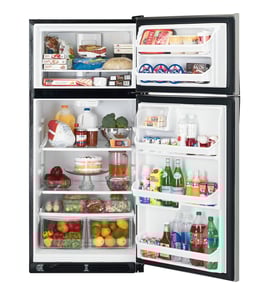



What is the upper part of a fridge called?
On the Frigidaire FFTR1821QB9B top-mount refrigerator, the upper compartment is the freezer. It is the section designed to keep foods frozen, and on some models it also supports ice production using an ice tray or an optional ice maker.
In a top-mount refrigerator like the FFTR1821QB9B, the freezer area commonly includes:
- Freezer shelf (storage and organization)
- Ice tray and/or ice bucket (depending on configuration)
- Air vents that move cold air to both compartments
- An auxiliary freezer control on some versions
- Door bins for smaller frozen items
For the labeled compartment layout and control locations, use the FFTR1821QB9B owner's manual.
| Compartment | Location (top-mount) | Main purpose | Typical temperature target |
|---|---|---|---|
| Freezer | Upper section | Long-term frozen storage | 0°F |
| Fresh food (refrigerator) | Lower section | Chilled storage | 37°F |
Knowing the correct compartment name helps when ordering parts (like a freezer door gasket), following troubleshooting steps, or adjusting temperature controls. For example, the manual notes that adjusting the refrigerator control can affect temperatures in both compartments, while an auxiliary freezer control may fine-tune freezer temperature.
- Keep air vents clear so cold air can circulate properly.
- Adjust temperatures gradually and wait about 24 hours between changes.
- Keep the freezer door sealing fully on all sides to prevent frost and warming.
- Let the refrigerator run with doors closed for at least 8 hours before loading food after setup.
Last updated: February 2026
Is top mounted refrigerator better than bottom mounted?
A top-mount refrigerator like the Frigidaire FFTR1821QB9B is better when you want strong energy efficiency, a lower purchase cost, and easy access to the freezer. A bottom-mount is better when you want the fresh-food section at eye level and easier access to everyday items.
| Feature | Top-mount (freezer on top) | Bottom-mount (freezer on bottom) |
|---|---|---|
| Fresh-food access | Lower, more bending | Higher, less bending |
| Freezer access | Easiest access | More bending or pull-out drawer |
| Energy use (typical) | Often lower | Often slightly higher |
| Cost (typical) | Often lower | Often higher |
| Storage layout | Simple shelves and bins | Often more drawers and organization |
- You use the freezer often and want it at chest or eye level
- You want a straightforward layout with fewer moving parts
- You want a refrigerator that is typically easier to keep efficient (good door-seal habits matter)
- You prefer a lighter door and simpler door swing options
- You want a classic, space-efficient footprint for smaller kitchens
For model-specific setup and door alignment basics (leveling, door seal checks, final temperature setup), follow the FFTR1821QB9B installation guide.
- You use the refrigerator section more than the freezer
- You want less bending for produce, drinks, and leftovers
- You prefer pull-out freezer baskets for organization
- You store lots of fresh items and want them at eye level
“Better” depends on how you use the appliance day to day. For example, top-mount designs often reward good installation and sealing. The installation checklist for this Frigidaire model emphasizes that doors should seal completely and the cabinet should be level and slightly tilted back, which helps doors close properly and supports steady temperatures.
Last updated: February 2026
What are the disadvantages of a top mount fridge?
Top-mount refrigerators like the Frigidaire FFTR1821QB9B are reliable and cost-effective, but the main disadvantages are less convenient fresh-food access (you bend more), fewer premium organization features, and typically fewer built-in dispenser options than higher-end layouts. See the FFTR1821QB9B owner's manual for features and adjustments specific to your unit.
- Fresh-food compartment is lower: you reach down more often for everyday items.
- Freezer is at eye level: great for frozen foods, but it pushes fresh foods lower.
- Organization can be simpler: fewer specialty drawers and flexible storage zones than many bottom-freezer models.
- Fewer built-in water/ice options: many top-mount designs do not include an external dispenser.
- More temperature swing risk if overloaded: blocking vents or overpacking can reduce airflow between compartments.
We recommend these setup and use habits for the FFTR1821QB9B:
- Level the cabinet and confirm the doors seal fully on all sides.
- Set temperatures, then wait 24 hours after changes for temperatures to stabilize.
- After first installation, run the refrigerator with doors closed for at least 8 hours before loading food.
- Keep frequently used items at mid-shelf height; use door bins for condiments and drinks.
- Adjust shelves and door racks to match how your household uses the refrigerator.
| Feature | Top-mount (like FFTR1821QB9B) | Bottom-freezer (typical) |
|---|---|---|
| Fresh-food access | Lower, more bending | Higher, easier daily access |
| Freezer access | Higher, easier to see | Lower, more bending |
| Storage features | Often simpler | Often more flexible |
| Price/complexity | Often lower/simpler | Often higher/more features |
Layout affects daily comfort and food organization. If you are frequently in the fresh-food section, a top-mount can feel less convenient; if you use the freezer heavily, the top-mount layout can be a practical advantage.
Last updated: February 2026
What is the most common problem with Frigidaire refrigerators?
The most common Frigidaire refrigerator issue we see is not cooling properly (fresh food section warm, freezer not holding temperature, or both). On the Frigidaire FFTR1821QB9B top-mount, the fastest wins are checking control settings, airflow, and frost buildup before moving to parts testing.
- Refrigerator warm, freezer cold: restricted airflow, iced evaporator area, or control setting issue
- Freezer frost buildup: door not sealing, frequent door openings, or a defrost system problem
- Runs constantly: dirty condenser area, warm room/garage conditions, or door gasket leak
- No lights or intermittent power: bulb, door switch, or outlet/circuit issue
- Ice maker not working (some models): wire arm up, water supply off, low water pressure, or freezer not cold enough
- Give it a proper cool-down: run with doors closed for at least 8 hours before judging temperatures.
- Verify controls: adjust refrigerator/freezer controls and allow 24 hours for temperature to stabilize.
- Check the install environment: avoid locations below 55°F or above 110°F; garage installs below 55°F often cause winter cooling complaints.
- Inspect door sealing: look for gaps, torn gasket, or doors not closing squarely.
- Look for heavy frost: thick frost on the freezer back panel often signals a defrost issue.
| What you notice | Most likely area | Best next step |
|---|---|---|
| Warm fridge, freezer OK | Airflow/evaporator area | Check vents, look for frost, confirm control settings |
| Heavy frost in freezer | Defrost system or door seal | Inspect gasket; if frosted over, plan defrost diagnosis |
| Light out | Bulb or switch | Replace bulb; press door switch to confirm it releases |
| Constant running | Condenser airflow or gasket leak | Clean condenser area; check gasket seal |
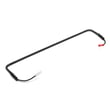
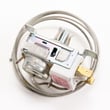
If you confirm a defrost-related frost buildup, these model-compatible parts are common fixes:
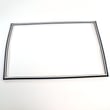
If the door is not sealing (leading to frost and long run times), match the gasket color:
- Frigidaire refrigerator door gasket (white) 242193206
- Frigidaire refrigerator door gasket (black) 242193212
A refrigerator that is even a few degrees warm forces longer run times, increases frost risk, and can push food into unsafe temperature ranges. Catching airflow, gasket, and defrost issues early prevents bigger cooling failures.
For model-specific operating guidance and control locations, use the FFTR1821QB9B owner’s manual.
Last updated: February 2026