Error Codes
What is the most common problem with a KitchenAid refrigerator?
The most common KitchenAid refrigerator problems are ice maker issues, weak or uneven cooling, water leaks, and unusual noises. On the KitchenAid KSSS42FMX02, these symptoms most often trace back to airflow (evaporator fan), temperature sensing, or the ice maker and its controls.
Most common symptoms and what usually causes them
- Ice maker not making ice or making small cubes: failed ice maker module, thermostat, or poor water supply
- Fridge warm but freezer cold: evaporator fan not moving air, iced-up evaporator, or an airflow restriction
- Water leaking inside or onto the floor: clogged/iced defrost drain, loose water line, or filter housing issues
- Buzzing, rattling, or grinding noises: fan blade hitting ice, worn fan motor, or vibration at the condenser area
- Temps swing up and down: failing sensor (thermistor) or control board problems
Parts that commonly fix these problems on model KSSS42FMX02
If your symptoms match, these are high-frequency replacement parts we see for this model:
- Refrigerator ice maker WPW10277450 for no ice or intermittent ice production
- Refrigerator temperature sensor WP2188820 for temperature fluctuations and inconsistent cycling
- Refrigerator evaporator fan blade WP2169142 when the fan is noisy, wobbling, or damaged
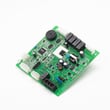
- Refrigerator electronic control board WP2259350 when multiple functions act erratically
Quick checks before replacing parts
- Set temperatures to typical targets: 37°F fresh food, 0°F freezer.
- Confirm doors seal fully and close on their own.
- Listen for the evaporator fan running when the doors are closed.
- Check for frost buildup on the freezer back wall (a defrost/airflow clue).
- For ice maker complaints, verify the shutoff arm is down and the water supply valve is fully open.
Symptom-to-part cheat sheet
| Symptom | Most likely area | Part to consider |
|---|---|---|
| No ice | Ice maker system | Refrigerator ice maker WPW10277450 |
| Warm fridge, cold freezer | Air circulation | Refrigerator evaporator fan blade WP2169142 |
| Temps fluctuate | Sensing/control | Refrigerator temperature sensor WP2188820 or refrigerator electronic control board WP2259350 |
Why it matters
Built-in side-by-side units like the KSSS42FMX02 rely on tight airflow and accurate temperature feedback. When a fan, sensor, or ice maker component starts failing, food safety, ice quality, and energy use can all suffer quickly.
Last updated: February 2026
Is side by side better than a French door?
A side-by-side is “better” than a French door when you want easier freezer access, more door-bin storage, and a narrower swing space; a French door is “better” when you want wider fresh-food shelves and more flexible refrigerator storage. For your KitchenAid KSSS42FMX02 built-in refrigerator, the best choice depends on how you use the freezer vs. fresh-food section.
Quick comparison
| Feature | Side-by-side (like KSSS42FMX02) | French door |
|---|---|---|
| Freezer access | Eye-level, no bending for most items | Lower drawer, more bending |
| Fresh-food shelf width | Narrower shelves | Wider shelves for platters/pizza boxes |
| Door storage | Typically more vertical door-bin space | Often less door-bin space |
| Organization style | Tall, narrow zones | Wide, open shelves plus drawers |
| Space in front to open | Usually less than wide French doors | Often needs more clearance |
When a side-by-side is the better fit
- You use frozen foods daily and want them at chest and eye level.
- You prefer lots of door-bin storage for condiments and beverages.
- Your kitchen aisle is tight and you want doors that don’t swing as wide.
- You like separating foods into vertical “zones” (meat, veggies, snacks).
- You want a built-in look with consistent access to both compartments.
When a French door is the better fit
- You store wide items often (party trays, sheet pans, large pizza boxes).
- You want the refrigerator section to be the main focus at eye level.
- You prefer wide shelves and larger crisper/deli drawer layouts.
- You don’t mind bending for freezer items in a bottom drawer.
Why it matters
The layout affects daily convenience and food freshness. If you open the freezer frequently, a side-by-side reduces bending and keeps frozen items easier to see. If you cook with fresh ingredients and store wide containers, a French door layout usually makes that simpler.
Tip for either style: keep water and ice performing well
Water and ice issues are common across both designs. Regular filter changes and purging air after filter replacement help prevent slow dispensing and small or hollow ice cubes. We recommend following how to replace the water filter in a KitchenAid refrigerator for best results.
Last updated: February 2026
What is the Sabbath mode on a KitchenAid refrigerator?
On a KitchenAid built-in refrigerator like model KSSS42FMX02, Sabbath mode is a special setting that keeps your temperature set points steady while turning off or limiting user-facing features such as interior lights, dispenser lights, sounds, and alarms so the refrigerator runs quietly with minimal interaction.
What changes when Sabbath mode is on
Sabbath mode is designed to reduce automatic responses to door openings and button presses. Common changes include:
- Interior lights stay off (or do not respond normally to the door switch)
- Dispenser and display lighting turns off
- Keypad or dispenser pad inputs are disabled
- Audible tones and door alarms are disabled
- Temperature settings remain at the last set points
What still works (cooling and food safety)
Even in Sabbath mode, the refrigerator still cools to the set temperatures. We recommend confirming your normal set points before enabling Sabbath mode.
| Feature | In Sabbath mode | What to expect |
|---|---|---|
| Cooling system | On | Maintains the last temperature set points |
| Interior lighting | Limited/off | Light may stay off even with the door open |
| Alarms and tones | Off | No door alarm or button beeps |
| Dispenser controls | Disabled | Water and ice dispensing may not respond |
If lights or dispenser do not work after Sabbath mode
If the refrigerator seems “stuck” with lights off or the dispenser unresponsive, Sabbath mode is the first setting to check. If the issue continues after turning Sabbath mode off, these parts are commonly involved on side-by-side designs:
- Door switch (controls interior light and some dispenser logic)
- Light switch (signals door open/close)
- Electronic control (processes switch inputs)
Related parts for KSSS42FMX02 that can affect these symptoms include the refrigerator light switch W11384469 and the refrigerator electronic control board WP2259350.
Why it matters
Sabbath mode can look like a failure (no lights, no beeps, dispenser not responding) when it is actually a normal operating mode. Checking this setting first can save time before troubleshooting door switches, controls, or wiring.
Last updated: February 2026
What's the best refrigerator side by side?
The “best” side-by-side refrigerator is the one that fits your kitchen cutout, holds temperature steadily, runs quietly, and has parts support you can maintain long-term. If you already own the KitchenAid KSSS42FMX02 built-in side-by-side, keeping it performing like a top unit usually comes down to airflow, sealing, and the cooling fans.
What to look for in the best side-by-side
- Correct fit for your space: built-in models like KSSS42FMX02 require exact cutout and ventilation clearance.
- Stable cooling: consistent fresh food temps around 37°F and freezer around 0°F.
- Strong airflow: a healthy evaporator fan and condenser fan prevent warm spots and frost issues.
- Good door sealing: tight gaskets reduce compressor run time and prevent moisture and frost.
- Serviceability: readily available parts such as controls, sensors, and ice maker components.
Quick comparison: what “best” usually means
| Priority | What you want | What to check first on KSSS42FMX02 |
|---|---|---|
| Temperature consistency | No warm zones, no freezing in fresh food | Airflow and sensor feedback (thermistor) |
| Quiet operation | Minimal fan noise, no rattles | Evaporator fan blade condition |
| Ice and water reliability | Steady ice production, good water flow | Ice maker health and filter maintenance |
| Efficiency | Reasonable run time, clean condenser area | Condenser fan operation and coil cleanliness |
Parts that commonly affect “best performance” on this model
If your KitchenAid KSSS42FMX02 is noisy, warming, or icing up, these model-matched parts are frequent fixes:
- Refrigerator evaporator fan blade WP2169142 (air circulation inside the freezer)
- Refrigerator condenser fan W10181323 (moves air across condenser coils)
- Refrigerator temperature sensor WP2188820 (helps the control board regulate temps)
- Refrigerator electronic control board WP2259350 (manages cooling and defrost functions)
- Refrigerator ice maker WPW10277450 (ice production issues)
Why it matters
Side-by-sides earn “best” status when they keep food safe and consistent without constant adjustments. On built-in units, small airflow or sealing problems can quickly show up as temperature swings, frost, or long run times.
Helpful DIY guidance
- Use our KitchenAid-specific steps in how to replace the water filter in a KitchenAid refrigerator to keep water flow and ice quality steady.
- If you suspect airflow problems, follow how to fix your evaporator cooling fan to diagnose noise, stalling, or weak circulation.
Last updated: February 2026
What causes a side-by-side refrigerator to stop cooling?
A KitchenAid side-by-side refrigerator like model KSSS42FMX02 usually stops cooling because airflow or heat removal is blocked (dirty condenser area, failed fan), the defrost system iced over the evaporator, or a control or sealed-system component failed. Start with the simplest checks before replacing parts.
Quick checks we recommend first
- Confirm the refrigerator has power and the interior lights come on.
- Make sure temperature controls were not turned warmer by accident.
- Check that food packages are not blocking air vents in either compartment.
- Listen for fans: an evaporator fan noise in the freezer and a condenser fan near the compressor.
- Look for heavy frost on the freezer back wall (often points to a defrost problem).
- Clean dust from the condenser area to restore heat transfer.
Common causes and what you typically notice
| Likely cause | What you’ll notice | What to check next |
|---|---|---|
| Condenser fan not running | Warm cabinet sides, poor cooling, compressor area hot | Inspect/replace refrigerator condenser fan W10181323 |
| Evaporator fan issue (motor or blade) | Freezer cold spots, fridge section warm, weak airflow | Inspect/replace refrigerator evaporator fan blade WP2169142 and check for ice buildup |
| Frost-clogged evaporator (defrost issue) | Freezer back wall frosted, airflow drops over days | Defrost manually, then diagnose defrost components and airflow |
| Temperature sensing/control problem | Temps swing, runs too long or not enough | Test sensor and controls such as refrigerator temperature sensor WP2188820 or refrigerator electronic control board WP2259350 |
| Sealed-system or compressor problem | Little to no cooling anywhere, unusual clicking/humming | Professional diagnosis; sealed-system repairs require specialized tools |
Why it matters
When cooling stops, food safety and compressor health are at risk. Fixing airflow problems early (fans, frost blockage, dirty condenser) often restores normal temperatures without escalating into more expensive damage.
When a part replacement makes sense
Replace a part when you have a clear symptom match:
- Fan not spinning or noisy: condenser fan kit or evaporator fan components.
- Temperature readings clearly wrong: thermistor/sensor.
- No response to settings or erratic operation: control board.
For step-by-step troubleshooting, we use guides like how to fix your evaporator cooling fan to narrow the cause before ordering parts.
Last updated: February 2026