Owner’s manual
 Error Codes



What is the lifespan of an LG inverter refrigerator?
Most LG inverter refrigerators last 10 to 15 years with normal use and basic maintenance; for the LG LRBP1031T bottom-mount refrigerator, keeping airflow clear and temperatures stable helps the inverter compressor run efficiently for the long haul. For model-specific operating guidance, use the LRBP1031T owner's manual.
- Condenser airflow and cleanliness: dust buildup makes the sealed system work harder.
- Stable power: repeated power interruptions and voltage issues stress the compressor and start components.
- Door seal habits: frequent warm-air leaks increase run time and frost.
- Temperature settings: extreme settings can increase compressor duty cycle.
- Fan performance: weak airflow can cause warm temps and longer run times.
- Vacuum dust from the lower rear area and vents every 6 to 12 months.
- Keep food from blocking interior air returns and vents.
- Confirm doors close fully; avoid overloading bins that prevent sealing.
- After a power outage, wait a few minutes before restarting if you unplugged the unit.
- If cooling is uneven, check for fan noise and airflow.
| Symptom | What it often indicates | Parts commonly involved |
|---|---|---|
| Clicking, then no start | Start device or overload opening | Start relay, overload protector |
| Warm fridge, freezer OK (or vice versa) | Airflow or defrost issue | Fan, defrost sensor, defrost heater |
| Runs constantly, temps drift | Air leak or restricted airflow | Door gasket, fan, condenser airflow |
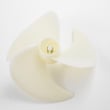
If you suspect an airflow issue, the refrigerator fan assembly 5901JQ1004A is one of the key components that moves cold air through the compartments.
A refrigerator’s sealed system and compressor are designed to run within a specific temperature and pressure range. When airflow is restricted or doors leak, the compressor runs longer, which shortens overall service life.
Last updated: February 2026
What is the most common problem with LG refrigerators?
Cooling problems are the most common issue we see with LG refrigerators, including the LG LRBP1031T. Symptoms usually show up as warm temperatures in the fresh food section or freezer, inconsistent temps, or unusual compressor and fan operation. Many “not cooling” complaints trace back to airflow, defrost, or sealed-system performance.
- Refrigerator section is warm but freezer is cold (or the reverse)
- Temperatures drift and food spoils faster
- Excess frost or ice buildup that blocks airflow
- Clicking, buzzing, or repeated start attempts from the compressor area
- Fan noise changes, or you do not hear the evaporator fan running
For the LRBP1031T, the service information points to checking the defrosting circuit, damper control, and refrigerating cycle when defrosting is poor or temperatures are off. Use the LRBP1031T owner’s manual to match your symptom to the recommended checks.
| Problem area | What it affects | Common clue |
|---|---|---|
| Airflow and fans | Moves cold air through compartments | Warm spots, weak airflow |
| Defrost system | Prevents ice from choking the evaporator | Frost buildup, poor cooling |
| Damper control | Balances cold air to the refrigerator section | Fridge warm, freezer OK |
| Sealed system (refrigerating cycle) | Produces cooling | Little or no cooling in both sections |
Only replace parts after confirming the failure with the troubleshooting steps in the manual.
- Refrigerator fan assembly 5901JQ1004A (air circulation issues)
- Refrigerator defrost sensor 4781JR2004C (defrost temperature sensing)
- Refrigerator defrost heater 5300JR1006D (melting frost on the evaporator)
Cooling issues can look “minor” at first, but poor airflow or a failing defrost system can quickly lead to heavy frost, longer run times, and food safety problems. Catching the pattern early helps you target the right repair.
Last updated: February 2026
Are LG water filters worth it?
Yes, LG water filters are worth it for most households because they reliably improve taste and odor and help protect the refrigerator’s water system from sediment buildup. For the LG LRBP1031T, the best value comes from using the correct filter type and replacing it on schedule per the LRBP1031T owner's manual.
- Your tap water has noticeable chlorine taste or odor
- You use the dispenser often and want consistent water quality
- You want to reduce sediment that can restrict flow over time
- You prefer a predictable replacement schedule (instead of “wait until it tastes bad”)
- You want to help prevent nuisance issues like slow dispensing caused by a clogged filter
The two most common complaints are cost and leaks. Leaks are usually caused by installation issues (not fully seated, damaged O-rings, cross-threading, or not flushing air out after replacement).
- Replace the filter at the interval listed in the manual
- Install it firmly and squarely; do not force it
- Flush several gallons after installing to clear carbon fines and trapped air
- If you see dripping, remove and reinstall to ensure the seal is seated
For step-by-step help, use how to replace the water filter in an LG refrigerator.
| Factor | Using an LG water filter | Not using a filter |
|---|---|---|
| Water taste/odor | Typically improved | Depends on tap water |
| Flow rate over time | More consistent when replaced on time | Can drop if debris reaches the system |
| Maintenance | Regular filter changes | More reliance on cleaning and troubleshooting |
A clogged or poorly installed filter can reduce water flow and contribute to dispenser performance problems. Replacing the filter on time and installing it correctly helps keep your LG refrigerator’s water path working smoothly.
Last updated: February 2026
How to find the correct water filter for LG refrigerator?
For an LG LRBP1031T bottom-mount refrigerator, the most reliable way to get the correct water filter is to match the filter type to your exact model number and the filter housing style shown in the LRBP1031T owner's manual. This prevents fit issues and water flow problems.
- Confirm the model number is LRBP1031T (use the rating label inside the fresh food section).
- Check whether your refrigerator actually uses an internal water filter (some configurations use an inline filter or no filter).
- Look at the current filter for any printed part number or “LT” style code.
- Compare the filter’s shape and locking method (push-in, quarter-turn, or twist-lock).
- If the old filter is missing, inspect the filter head location and note the latch/turn mechanism.
Using the model number is the fastest way to avoid ordering the wrong part. When you search parts for LRBP1031T, confirm the filter listing matches:
| What to match | What you should see | Why it matters |
|---|---|---|
| Model number | LRBP1031T | Ensures correct fit and connections |
| Filter style | Same shape and lock type | Prevents leaks and bypassing |
| Replacement interval | Typically every 6 months | Maintains taste and flow |
A “wrong filter” is one cause, but these are just as common:
- Air trapped in the line after installation
- Filter not fully seated or locked
- Low household water pressure
- A clogged filter head screen
For step-by-step filter selection and replacement tips, use how to replace the water filter in an LG refrigerator.
The correct refrigerator water filter protects the water system from sediment buildup, helps maintain water taste, and keeps dispenser flow steady. A mismatched filter can leak, restrict flow, or fail to seal.
Last updated: February 2026
Where is the drain pan on my LG refrigerator?
On the LG LRBP1031T bottom-mount refrigerator, the drain pan sits underneath the cabinet near the back, close to the compressor and condenser fan area. It collects defrost and condensation water so it can evaporate from the heat of the sealed system.
- Unplug the refrigerator to avoid electrical shock.
- Pull the unit straight out from the wall to create working space.
- Remove the lower rear access cover (if equipped) to view the compressor area.
- Look for a shallow plastic tray on the base frame under the compressor.
- Slide the pan out carefully; some models lift slightly before pulling.
A drain pan that is overflowing or smelly usually points to a drain problem, not a “bad pan.” Focus on the defrost drain path.
- Check for a clogged defrost drain (ice, food debris, sludge).
- Look for cracks or warping in the pan.
- Confirm the refrigerator is level so water flows to the drain correctly.
- Clean the pan with warm water and mild detergent; dry it fully.
- If you see water under the fridge, inspect the drain system and evaporator area.
| Symptom | Most common cause | What to do next |
|---|---|---|
| Water under fridge | Defrost drain clogged | Clear the drain and flush with warm water |
| Bad smell near bottom | Dirty drain pan | Remove and clean the pan |
| Pan keeps filling fast | Drain restriction or heavy humidity | Check drain tube and door seals |
The drain pan is part of normal defrost operation. When the drain path is restricted, water can back up, leak onto the floor, or create odors. Keeping the drain clear helps protect flooring and prevents ice buildup that can affect cooling.
For model-specific cabinet access and panel removal details, follow the LRBP1031T owner’s manual. For water-on-floor symptoms, use our how to get rid of refrigerator puddles steps.
Last updated: February 2026
How to tell if an LG compressor is bad?
On the LG LRBP1031T bottom-mount refrigerator, a bad compressor typically shows up as warm temperatures with the compressor not running normally, or repeated clicking as the start components try and fail to start the compressor. Before condemning the compressor, we check the PTC starter (start relay) and overload protector first.
- Fridge and freezer temperatures rise even though the unit has power.
- Repeated clicking from the lower rear area (start device cycling).
- Compressor is very hot to the touch and then shuts off (overload opening).
- Compressor hums briefly but does not stay running.
- Fans may run, but cooling does not improve.
LG’s service information for this model family points to the start components and electrical checks before replacing the sealed compressor.
- Check the start relay (PTC starter): Disconnect power, remove the relay from the compressor terminals, and test resistance per the service procedure in the LRBP1031T service manual.
- Check the overload protector (OLP): Remove the overload and check continuity/resistance across its terminals; an open overload can prevent the compressor from running.
- Verify supply voltage: Low voltage can cause hard-start symptoms and repeated clicking.
| What you hear/see | Most likely suspect | Example part for this model |
|---|---|---|
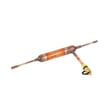
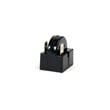
| Clicks every few minutes, compressor won’t start | Start relay (PTC) or overload | Refrigerator compressor start relay 5901JQ1004A (start device style varies by build) |
| Compressor starts then stops quickly, very hot | Overload protector or compressor | Overload protector (match by model/diagram) |
| Compressor runs but cooling is still poor | Sealed system issue, airflow, defrost | Defrost system, fans, condenser cleanliness |
We treat the compressor as failed when:
- The start relay and overload test good, correct voltage is present, and the compressor still will not start.
- Electrical checks indicate a compressor motor winding problem (shorted/open) per the service flow.
- The compressor runs but cannot pump effectively (cooling stays poor after other causes are eliminated).
Replacing a compressor is a sealed-system repair; it is more complex and costly than replacing a start relay or overload protector. Testing the start components first prevents unnecessary parts replacement and gets cooling restored faster.
Last updated: February 2026
What is the price of LG refrigerator legs?
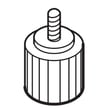
For LG model LRBP1031T, the replacement “legs” are typically sold as a leveling foot or leg assembly; the exact price depends on the specific part number and current inventory. For this model, a common match is the leg assembly 4779JQ3002A, and the current price is shown on the part listing.
Use the model number and the part ID to avoid ordering the wrong leveling foot.
- Confirm your refrigerator model is LRBP1031T in the LRBP1031T owner’s manual
- Identify whether you need a front or rear leg (some designs differ)
- Match the original part number from the old leg (if visible)
- Check for stripped threads, a cracked foot pad, or a bent stem
- Replace in pairs if the cabinet rocks or the doors do not self-close
| What you are replacing | What it does | Example part for LRBP1031T |
|---|---|---|
| Leveling leg (leveling foot) | Levels the cabinet and stabilizes the refrigerator | Leg assembly 4779JQ3002A |
A worn leveling leg can make the refrigerator sit unevenly, which leads to door alignment problems, vibration noise, and weak door sealing. Keeping the cabinet level helps the doors close consistently and supports steady cooling.
Last updated: February 2026