


What octane gas should I use in my lawn mower?
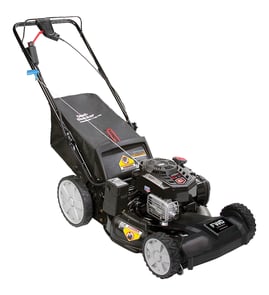
For the Craftsman lawn mower model 917373982, we recommend using regular unleaded 87 octane (E10 or less) for normal mowing. Higher octane does not add power in small mower engines; the bigger priority is fresh, clean fuel and avoiding high-ethanol blends.
What to use (and what to avoid)
- Use 87 octane regular unleaded.
- Use fuel with 10% ethanol or less (E10 max).
- Avoid E15, E20, E85; higher ethanol can cause hard starting and fuel-system issues.
- Buy fuel you will use within 30 days (or treat it with stabilizer).
- If you have access to ethanol-free gas, it stores better and is a good choice for seasonal equipment.
Quick fuel guide
| Fuel choice | OK for 917373982? | Why it matters |
|---|---|---|
| 87 octane, E10 or less | Yes | Best balance of performance and reliability |
| 89 or 91 octane | Yes (not required) | Won’t hurt, but won’t improve power |
| Ethanol-free (often 87-90) | Yes | Stores longer; helps reduce varnish and moisture issues |
| E15 or higher ethanol blends | No | Increases risk of fuel-system problems |
Tips that prevent most “won’t start” complaints
- Drain old fuel from the tank and carburetor bowl before the season.
- Replace or clean the air filter and check the spark plug condition.
- Keep the fuel cap vent clear so the tank can breathe.
- If the mower sat with fuel, expect varnish in the carburetor; a tune-up is often faster than repeated starting attempts.
- For storage, follow a winterizing routine (stabilize fuel or run the system dry).
Why it matters
Most walk-behind mower engines are designed for regular fuel; problems usually come from stale gas and ethanol-related moisture, not from octane being “too low.” Using the right fuel helps protect the carburetor, fuel lines, and starting reliability.
Related DIY help: how to keep lawn mower gas from going bad
Last updated: January 2026
Is a mower with a roller better?
A mower with a rear roller can be better if you want a striped, flatter-looking lawn and you mow often; for a Craftsman walk-behind mower like model 917373982, it is mainly a finish-quality upgrade, not a requirement for healthy grass. On bumpy or wet turf, a roller can also increase soil compaction.
When a roller mower is the better choice
- You want visible lawn stripes and a more “manicured” look
- Your yard is mostly level and you mow on a consistent schedule
- You bag or mulch regularly and keep the deck clean to maintain cut quality
- You are trying to press down minor footprints, worm casts, or light divots
When a roller mower is not the better choice
- Your soil is soft, wet, or already compacted (a roller can worsen compaction)
- Your lawn is uneven; the roller can “bridge” dips and scalp high spots
- You mow infrequently and remove a lot of grass at once (cut quality suffers)
- You have slopes; added rear weight can make handling harder
Quick comparison
| Feature | Roller mower | Standard rear wheels |
|---|---|---|
| Lawn appearance | Strong striping, flatter finish | Clean cut, less striping |
| Turf impact | Higher compaction risk | Lower compaction risk |
| Best conditions | Dry, level lawns | Mixed terrain, varied conditions |
| Handling | Heavier feel | Lighter, more maneuverable |
Why it matters
A roller changes how weight is distributed behind the deck. That can improve the “finish” of the lawn, but it can also stress grass roots if the ground is wet or the soil is already dense.
Practical tips for better results (roller or not)
- Mow when grass is dry and avoid cutting more than about 1/3 of the blade height
- Keep the blade sharp; a dull blade tears grass and browns the tips
- If your mower vibrates or cuts unevenly, inspect the blade and adapter for damage
- For striping without a roller, alternate mowing directions and overlap consistently
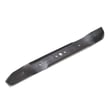
For maintenance that most directly affects cut quality on this model, start with the lawn mower blade 532406713 and keep it sharp and balanced.
Last updated: January 2026
How many years should a lawn mower last?
A gas walk-behind lawn mower like Craftsman model 917373982 typically lasts 8 to 15 years with normal homeowner use. Regular maintenance (cleaning, blade care, and drive-system upkeep) is what most often determines whether you land closer to 8 years or 15.
Typical lifespan by mower type
Most homeowners see these ranges when the mower is stored properly and serviced on schedule:
| Mower type | Typical lifespan | Notes |
|---|---|---|
| Gas walk-behind mower | 8 to 15 years | Most common homeowner mower; maintenance matters most |
| Self-propelled walk-behind mower | 8 to 12 years | Drive belt and wheel drive parts add wear points |
| Manual reel mower | 15+ years | Fewer moving parts, no engine |
What shortens (or extends) mower life
We see these factors make the biggest difference:
- Dirty deck and cooling fins: grass buildup traps moisture and heat
- Skipping oil changes: accelerates engine wear
- Dull or bent blade: strains the engine and leaves a poor cut (consider the lawn mower blade 532406713)
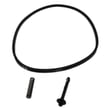
- Worn self-propel drive: slipping or no-drive often points to a worn belt (check the belt 532157769)
- Bad fuel storage habits: old gas and varnish cause hard-start and carb issues
Maintenance checklist that keeps a mower going
Use this as a simple yearly routine for a Craftsman walk-behind mower:
- Change engine oil on schedule
- Sharpen or replace the blade at least once per season
- Clean the underside of the deck after mowing (when safe and cool)
- Inspect the drive system for slipping, squealing, or uneven pull
- Winterize fuel and store the mower dry and covered
Why it matters
A mower that is maintained cuts cleaner, starts easier, and puts less load on the engine and drive system. That reduces expensive failures and helps you get the full expected lifespan out of your Craftsman 917373982.
Last updated: January 2026
What model number is the Craftsman 42 riding mower?
Craftsman 42-inch riding mowers do not have one single model number; the model number depends on the exact mower you own. The model on this page is Craftsman 917373982, which is a gas walk-behind lawn mower, not a 42-inch riding mower.
Where to find the correct model number on your 42-inch riding mower
Look for the product identification label on the mower itself. Common locations include:
- Under the seat (lift the seat and check the frame pan)
- On the rear frame plate near the hitch area
- On the left or right side of the frame, near the engine
- Near the footrest area on the frame rail
- Inside the hood area (less common)
What the model number usually looks like
Craftsman riding mower model numbers are typically numbers only and often start with 917. (sometimes shown without the dot). Write down the full number exactly as shown.
| What to record | Example format | Why it matters |
|---|---|---|
| Model number | 917.XXXXXXX or 917XXXXXXX | Matches the correct parts diagrams and parts list |
| Product number | Varies by mower | Helps confirm the exact configuration |
| Engine model/type/code | Stamped on engine shroud | Needed for engine-specific parts like carburetor or ignition |
Why it matters
A 42-inch deck size describes the cutting width, not the parts system. Two different Craftsman 42-inch riding mowers can use different blades, belts, spindles, and pulleys, so the model number is what ensures you get the right replacement parts.
If you are actually working on model 917373982
For this Craftsman walk-behind mower, common maintenance and repair items include the blade and drive components. These model-matched parts are good starting points:
- Lawn mower blade 532406713 (cut quality issues, vibration, uneven cut)
- Belt 532157769 (self-propel problems, slipping drive)
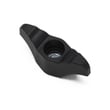
- Lawn mower blade adapter 581547901 (blade wobble, stripped adapter)
For blade-related help, we use this DIY guide: how to sharpen a lawn mower blade.
Last updated: January 2026