Where is the reset button on a Craftsman table saw?
On the Craftsman 113298844 10-inch contractor drive saw, there typically is not a separate external “reset button” on the saw body. The reset is usually part of the motor overload protector or the switch, and it’s commonly located on or near the motor housing (sometimes behind a small cap or cover).
What to check first (safe, fast steps)
- Unplug the saw before touching the motor, switch, or wiring.
- Let the motor cool 15 to 30 minutes if it tripped during a heavy cut.
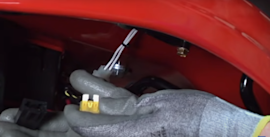
- Look on the motor end bell and around the motor housing for a small reset access (cap, plug, or button).
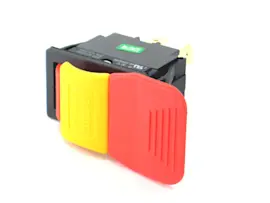
- Check the ON/OFF switch area for a built-in overload reset (some versions integrate it there).
- Reduce load before restarting: sharp blade, correct blade type, proper feed rate, and aligned fence.
Common reset locations on Craftsman table saws
Most Craftsman contractor-style table saws use one of these overload reset styles:
| Reset style | Where you’ll usually find it | What it looks like |
|---|---|---|
| Motor overload reset | On the motor housing or end cap | Small button, or access behind a cap/plug |
| Switch overload reset | On the switch box | Small button or breaker-style reset |
| No manual reset | Internal thermal protector | Motor restarts after cooling |
Why it matters
A tripped overload is a protection feature. If you keep resetting without fixing the cause, you can overheat the motor, damage the switch, or create unsafe cutting conditions. The most common causes are a dull blade, binding wood, misalignment, or a failing motor capacitor.
If it keeps tripping
- Verify the blade spins freely by hand (unplugged) and nothing rubs.
- Confirm the blade is sharp and appropriate for the material.
- Check extension cord use; long or undersized cords can cause voltage drop.
- Inspect the power cord and internal leads for damage; use a meter if needed (see how to use a multimeter to test electrical parts video).
Last updated: February 2026
What are the main parts of a saw?
For the Craftsman 113298844 10" contractor drive saw, the main parts are the blade-cutting system, the drive system, and the safety and control components that keep the cut accurate and your hands positioned safely. For a quick overview of common components, use our easy diy appliance repairs that anyone can do guide as a general DIY reference.
Main assemblies you will see on a contractor table saw
Most contractor-style table saws like the Craftsman 113298844 are built around these core assemblies:
- Table and base: tabletop work surface, extension wings, stand or cabinet
- Blade and arbor assembly: saw blade, arbor shaft, arbor bearings, arbor nut and flange
- Elevation and tilt mechanism: handwheels, trunnions, gears, tilt lock, height lock
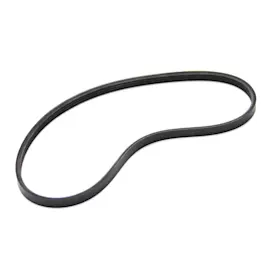
- Drive system: motor, belt (or direct drive on some designs), pulleys, belt guard
- Rip fence and miter system: rip fence, rails, miter gauge, miter slots
- Safety parts: blade guard, splitter or riving knife (design varies by age), anti-kickback pawls, throat plate
- Dust management: dust port or shroud (varies), internal deflectors
Quick “what it does” table
| Part or system | What it does | When it needs attention |
|---|---|---|
| Blade and arbor | Spins the blade true and steady | Vibration, wobble, burning cuts |
| Fence and miter gauge | Guides straight and angled cuts | Cuts drift, fence won’t lock square |
| Elevation/tilt | Sets blade height and bevel angle | Handwheel binds, bevel won’t hold |
| Motor and belt/pulleys | Provides power to the blade | Slow start, squeal, slipping under load |
Why it matters
Knowing the main parts helps you troubleshoot faster. For example, burn marks often point to fence alignment or a dull blade, while excess vibration often points to the arbor, pulleys, or belt.
Basic safety checks we recommend before inspecting parts
- Unplug the saw before any inspection or adjustment
- Remove the throat plate to check for debris around the blade and arbor
- Confirm the blade is tight and installed correctly
- Verify the fence locks parallel to the blade
- Check belt tension and pulley set screws (if belt-driven)
Last updated: February 2026
What size motor is on a 10 inch Craftsman table saw?
For the Craftsman 113298844 10-inch contractor drive saw, the motor “size” is identified on the motor nameplate (HP, amps, volts, and RPM). For many 10-inch contractor-style table saws, you’ll commonly see a belt-drive induction motor rated around 1 to 2 HP, often 120V or dual-voltage (120/240V).
What to check on your Craftsman 113298844
Use the motor’s nameplate as the deciding source; it reflects the exact motor currently installed.
- Horsepower (HP): the primary “motor size” rating
- Amps (A): current draw at the rated voltage
- Voltage (V): 120V, 240V, or dual-voltage
- RPM: motor speed (not the same as blade speed)
- Frame and shaft details: helpful when matching a replacement motor or pulley
How to find the motor rating (quick steps)
- Unplug the saw.
- Locate the motor nameplate (usually on the side of the motor housing).
- Write down HP, amps, volts, RPM, and any catalog/model number on the motor.
- If the plate is dirty, wipe it clean and take a photo for reference.
Typical motor spec ranges (for context)
These are common ranges for 10-inch contractor-drive table saws; your 113298844 may be different depending on the motor installed.
| Spec on nameplate | Common range | Why you care |
|---|---|---|
| Horsepower | 1 to 2 HP | Cutting power under load |
| Voltage | 120V or 120/240V | Outlet and wiring options |
| Amps @ 120V | Often in the low-to-mid teens | Circuit and extension cord sizing |
Why it matters
Using the exact nameplate rating helps you choose the right circuit, extension cord gauge, and replacement motor components (pulley, belt, switch) so the saw starts reliably and holds speed in thicker stock.
If you need help confirming you’re looking at the correct identification label for parts lookup, use how to find your appliance model number (and what it means for parts).
Last updated: February 2026
What length blade for Craftsman 12 bandsaw?
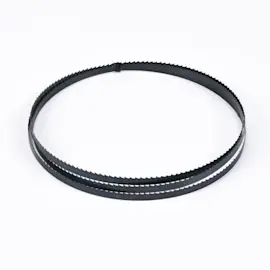
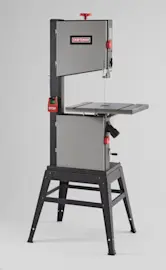
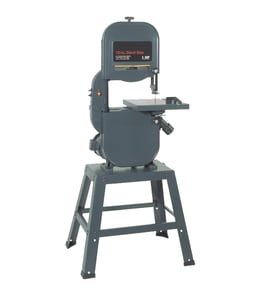
Craftsman model 113298844 is a 10-inch contractor drive saw (table saw), so it uses a 10-inch circular saw blade, not a band saw blade length. If you have a Craftsman 12-inch band saw, the blade length is set by the band saw’s exact model number and must match that machine.
Confirm which saw you have
- 113298844: 10-inch table saw; uses a 10-inch blade (diameter matters)
- 12-inch band saw: uses a loop blade (length matters)
- Check the model tag on the tool’s frame or base and match the full number
- Look inside the band saw wheel cover for a blade-length decal
- If you still have the old band saw blade, measure the full loop length
Band saw blade sizing and selection (after you confirm length)
Use the exact blade length your 12-inch band saw specifies; then choose width and TPI for the work.
| Cutting goal | Typical blade width | Typical TPI | Best use |
|---|---|---|---|
| Tight curves | 1/8 in. to 1/4 in. | 10 to 14 | Small radius, thin stock |
| General wood cutting | 1/4 in. to 3/8 in. | 4 to 6 | Most shop cuts |
| Straighter cuts in thicker stock | 3/8 in. to 1/2 in. | 3 to 4 | Better tracking, faster clearing |
Why it matters
A band saw blade that is even slightly off in length will not tension or track correctly; that causes drift, poor cut quality, and premature blade breakage.
Helpful reference
Last updated: February 2026