 Error Codes



What is the capacity of the GDT665SFN3DS?
GE dishwasher model GDT665SFN3DS is typically rated by place settings, not cubic feet. Most built-in dishwashers like this hold about 12 to 16 place settings, depending on rack layout and how you load it; use that as the practical “capacity” for this model.
What “capacity” means for a dishwasher
Dishwashers are not measured in cu. ft. the way washers are. For GDT665SFN3DS, capacity is best understood as:
- Place settings (the most common spec)
- Rack space and adjustability (upper rack height, fold-down tines)
- Tall-item clearance (how well it fits large plates, pots, and stemware)
- Soil handling (how well it cleans when fully loaded)
Quick capacity guide (typical built-in dishwasher)
| Capacity type | What you’ll see | Typical range |
|---|---|---|
| Place settings | Practical load size | 12 to 16 |
| Best for | Everyday family loads | Plates, bowls, glasses, flatware |
| Overloading risk | Cleaning and drying drop | Higher when items block spray arms |
How to maximize usable capacity on GDT665SFN3DS
- Keep the lower spray arm clear so it can spin freely; a blocked arm reduces cleaning on full loads.
- Load plates and pans so water can reach surfaces; avoid “nesting.”
- Put tall items at the sides or back so they do not interfere with the wash action.
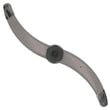
- If cleaning drops on heavy loads, inspect the dishwasher spray arm, lower WD22X33499 for cracks, warping, or clogged jets.
- If the unit struggles on full loads (poor wash pressure), check for drainage or circulation issues; a weak drain can leave dirty water behind.
Why it matters
Using place settings instead of cubic feet helps you load for better wash coverage, drying, and cycle performance. When capacity feels “smaller,” the cause is often loading technique or a spray arm or pump issue rather than the tub size.
Last updated: February 2026
Are all dishwashers 600mm wide?
No. Many full-size built-in dishwashers are about 600 mm (24 inches) wide, but not all dishwashers are; compact and slimline models are commonly about 450 mm (18 inches) wide, and portable or specialty units can vary. For your GE GDT665SFN3DS, plan around the standard 24-inch class unless your cabinet opening is different.
Common dishwasher width categories
Most dishwashers fall into a few standard width groups:
- Full-size built-in: typically about 600 mm (24 in.) wide
- Slimline built-in: typically about 450 mm (18 in.) wide
- Compact countertop/compact built-in: often 18 in. class, but depth and height vary more
- Portable dishwashers: usually 24 in. class, but the cabinet and wheel base can change overall footprint
How to confirm what fits your space
Measure the cabinet opening before you buy or replace a dishwasher.
- Measure the opening width at the front and back (cabinets can be out of square)
- Check height to the underside of the countertop (adjustable legs need clearance)
- Confirm depth to the front of adjacent cabinets (door and handle clearance)
- Verify water line, drain hose, and power routing so the unit can slide in fully
- If replacing an older unit, compare the old dishwasher’s width to the opening, not just the model label
Quick fit check (typical targets)
| Dishwasher type | Typical width | Typical cabinet opening target |
|---|---|---|
| Full-size built-in | ~24 in. (600 mm) | ~24 in. opening |
| Slimline built-in | ~18 in. (450 mm) | ~18 in. opening |
Why it matters
Dishwasher width drives whether the unit will physically install, but it also affects rack capacity, spray coverage, and how the door seals against the tub. If the opening is too tight or too wide, you can end up with installation problems, vibration, or leaks.
Related DIY help
If you are installing or re-securing a dishwasher in the opening, we recommend: how to anchor a dishwasher to the floor video.
Last updated: February 2026
What is the life expectancy of a GE dishwasher?
A GE dishwasher like model GDT665SFN3DS typically lasts 10 years with normal household use and basic maintenance (cleaning filters, using the right detergent, and fixing small leaks early).
Typical lifespan and what affects it
Most dishwashers land in the same general range, but these factors move the number up or down:
- Water quality (hard water speeds up scale buildup on the heater and in the sump)
- How often you run it (multiple loads daily shortens overall life)
- Cleaning and maintenance (filter and spray arm cleaning prevents pump strain)
- Loading habits (overloading blocks spray and increases wear)
- Small issues fixed early (minor leaks and draining problems can become major failures)
What “end of life” usually looks like
If your dishwasher is nearing the 10-year mark, these are the most common failure points we see:
- Not draining or draining slowly (often tied to the drain path or pump)
- Poor cleaning from reduced spray pressure or clogged spray arms
- Not drying well due to heating circuit problems
- Door not latching consistently
- Intermittent stopping with an error code
Quick maintenance checklist (adds years)
Use this routine to help your GDT665SFN3DS reach its full service life:
- Clean the filter area and sump regularly; remove debris and labels
- Rinse and clear spray arm holes; replace worn arms if they wobble or crack
- Run hot water at the sink before starting a cycle for better wash performance
- Use rinse aid and the correct detergent amount (too much can cause residue)
- Inspect for leaks at the door and tub seal surfaces
Common parts that impact longevity
These parts are often involved when performance drops; replacing the right one can extend the dishwasher’s usable life:
| Symptom | Common part to check | Example part for this model |
|---|---|---|
| Won’t drain | Drain pump or drain hose | Dishwasher drain pump WD19X25461 |
| Not cleaning well | Lower spray arm | Dishwasher spray arm, lower WD22X33499 |
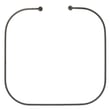
| Not drying | Heater circuit | Element heat WD05X35098 |
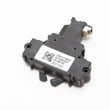
| Won’t start or stops | Door latch | GE dishwasher door latch lock WD21X10490 |
Why it matters
Knowing the typical 10-year life expectancy helps you decide whether to repair (often smart for a single failed part) or plan a replacement if multiple major components are failing.
For troubleshooting by code, use GE electronic dishwasher error codes.
Last updated: February 2026
What are the most common problems with GE dishwashers?
The most common problems we see with GE dishwashers (including model GDT665SFN3DS) are draining issues, poor cleaning, drying complaints, leaks, and “won’t start” symptoms. Many of these trace back to a clogged filter/sump area, a failing pump, a door latch problem, or a spray arm that is blocked or worn.
Most common symptoms and what usually causes them
- Dishwasher won’t drain: food debris in the sump, a kinked/blocked drain hose, or a failing drain pump
- Not cleaning well: clogged spray arm holes, low water fill, or a weak wash pump
- Not drying: heater circuit issue, venting problem, or rinse aid and loading factors
- Leaking: worn tub gasket, sump seal leak, or door vent seal leak
- Won’t start or stops mid-cycle: door not latching, control issue, or a detected fault code
Quick checks you can do first (no parts needed)
- Reset power: turn the breaker off for 1 minute, then back on.
- Check the door close: make sure the door closes firmly and the latch engages.
- Inspect spray arms: spin them by hand; clear any blocked holes.
- Confirm drain path: check for a high loop/air gap setup and look for kinks under the sink.
- Run hot water at the sink before starting a cycle to improve wash performance.
Parts that commonly fix these problems on GDT665SFN3DS
If troubleshooting points to a failed component, these model-matched parts are common solutions:
| Problem | Common part to check/replace | What it affects |
|---|---|---|
| Not draining | Dishwasher drain pump WD19X25461 | Pushes water out to the drain |
| Won’t start | GE dishwasher door latch lock WD21X10490 | Confirms door is closed so the unit can run |
| Poor cleaning | Dishwasher spray arm, lower WD22X33499 | Wash coverage on the lower rack |
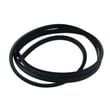
| Leaking | Dishwasher tub gasket WD08X23477 | Seals the tub to help prevent water leaks |
Error codes can speed up the diagnosis
If your GE dishwasher is showing a code or flashing pattern, match it to the symptom first, then test the related circuit or part.
Why it matters
Dishwasher problems often start small (partial clogs, weak spray, a door that does not latch perfectly) and then turn into repeat cycle failures, standing water, or leaks. Catching the root cause early helps protect the wash pump, heater, and control board from extra stress.
Last updated: February 2026





