Owner’s manual
 Error Codes
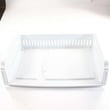




What is the problem with the bottom freezer refrigerator?
On the LG LFC24770ST bottom-mount refrigerator, most “problems” customers notice come from normal operating conditions or airflow and temperature issues, not the freezer being on the bottom. Frequent door openings, blocked air vents, a warm installation location, or a dirty condenser area can make the refrigerator or freezer run warm and work harder; the troubleshooting steps in the LFC24770ST owner's manual cover these common causes.
- Not cooling or running warm: allow up to 24 hours after installation or a move for temperatures to stabilize.
- Warm air getting in: doors opened often or left open too long raises compartment temperature.
- Air vents blocked: packages pushed against vents restrict circulation between freezer and fresh food sections.
- Condenser cover and vents clogged with dust: reduced heat release can cause longer run times.
- Ice maker performance issues: freezer temperature too warm (typical target is 0°F) or doors not closing fully.
- Confirm the controls are set to cooling (not OFF, if your version has that setting).
- Give the unit time: wait 30 minutes if it is in a defrost cycle; wait up to 24 hours after install.
- Check airflow: move food away from interior vents.
- Clean the condenser cover and vents using a vacuum attachment (do not remove the panel).
- If ice production is the complaint, verify the freezer is set cold enough and the doors seal and close completely.
| Symptom | Likely cause | Best first action |
|---|---|---|
| Refrigerator and freezer not cooling | Defrost cycle, recent install, control set incorrectly | Wait 30 minutes; allow 24 hours; verify settings |
| Sections too warm | Doors opened often, vents blocked, hot location | Reduce openings; clear vents; improve room conditions |
| Long run times | Dusty condenser cover/vents | Vacuum condenser cover and vents |
| Ice maker slow/no ice | Freezer too warm, door not fully closed | Set freezer colder; check door closure |
When airflow is restricted or warm air keeps entering, the cooling system runs longer to recover temperature. That increases energy use and can make the refrigerator seem like it is “failing” even when the sealed system is fine.
Last updated: January 2026
Why does my LG freezer keep icing up at the bottom?
Bottom ice buildup in the freezer on LG model LFC24770ST almost always happens when warm, humid air keeps getting into the freezer drawer or when meltwater from the defrost cycle cannot drain away. Start by checking drawer closure and the door gasket seal, then inspect for a blocked drain path.
- Make sure the freezer drawer closes fully every time; remove packages that stick out or hit the back wall.
- Inspect the gasket for rips, gaps, or debris; clean it with mild soap and water, then dry.
- Reduce frequent openings; the manual notes that warm air entering raises temperature and increases moisture that can freeze.
- Confirm freezer temperature is set correctly; 0°F (–18°C) is the typical target for normal operation.
- If you recently loaded a lot of unfrozen food, expect extra moisture and frost for a day or two.
A thick slab of ice on the bottom usually points to defrost water refreezing instead of draining.
- Look for ice around the rear interior panel or floor trough; that often indicates a frozen drain.
- Unplug the refrigerator before any hands-on inspection or cleaning, as outlined in the safety guidance in the LFC24770ST owner's manual.
- If you see heavy frost on the back wall plus bottom ice, the defrost system may not be clearing frost consistently.
| Symptom you notice | Common area involved | Example part for this model |
|---|---|---|
| Drawer not sealing, frost near edges | Door gasket and alignment | Refrigerator freezer door gasket ADX73350955 |
| Heavy frost buildup behind rear panel | Defrost sensing/control | Refrigerator defrost sensor assembly 6615JB2005N |
| Temps swing, frost returns quickly | Temperature sensing/airflow | Refrigerator evaporator fan motor 4681JB1027C |
Bottom-freezer icing reduces airflow, makes the freezer run longer, and can cause temperature swings that affect ice production and food quality. Fixing air leaks and drainage early prevents repeat freeze-ups and protects the evaporator area.
Last updated: January 2026
What is the most common problem with LG refrigerators?
For LG refrigerators like model LFC24770ST, the most common customer-reported issue is cooling trouble (warm fridge or freezer), which is usually tied to the sealed cooling system or airflow components. Other frequent problems are ice maker issues, water leaks, and temperature swings.
Start with the simplest checks before assuming a major failure:
- Confirm the unit has power and the doors close fully (a poor seal can cause warm temps and frost)
- Make sure vents inside the refrigerator and freezer are not blocked by food packages
- Listen for the evaporator fan; if it is not running, cooling performance drops fast
- Check for water under the unit or in the crisper area (often tied to defrost drain or water supply)
- If the ice maker is not producing, verify water supply and look for frozen fill tubes
If you want model-specific operating and troubleshooting guidance, use the LFC24770ST owner's manual.
| Symptom | What it usually points to | Parts that are often involved |
|---|---|---|
| Refrigerator warm, freezer warm | Sealed system or compressor not running correctly | Compressor, overload protector |
| Freezer cold but fridge warm | Airflow problem from freezer to fridge | Evaporator fan motor, air duct |
| Clicking, then no cooling | Compressor start device issue | Overload protector |
| No ice or small cubes | Water supply or ice maker problem | Water inlet valve, ice maker assembly |
Model LFC24770ST uses components such as the LG refrigerator evaporator fan motor 4681JB1027C and LG refrigerator water inlet valve AJU73753101 when diagnosing airflow and water supply problems.
Cooling and airflow problems can quickly lead to food spoilage and heavy frost buildup. Catching a weak fan, restricted airflow, or a water supply issue early often prevents bigger repairs later.
Last updated: January 2026
Why is my LG refrigerator leaking from the bottom?
On the LG LFC24770ST, water leaking from the bottom is usually caused by a clogged or frozen defrost drain that overflows during defrost, or a small drip in the water supply system for the ice maker. Start by identifying whether the water appears after defrost or during ice maker fills.
- Unplug the refrigerator before removing any interior panels.
- Dry the area, then watch for fresh water to pinpoint the source.
- Check the freezer floor for a thin sheet of ice (classic frozen drain sign).
- Look behind the unit for drips at the water line connection.
- Note when it leaks: after defrost cycles vs. when the ice maker runs.
Defrost meltwater should flow through the drain hole to the drain pan. When the drain is blocked, water backs up and can leak out at the bottom.
- Melt ice in the drain trough using warm water.
- Flush the drain hole until water flows freely.
- Clear debris with a pipe cleaner or flexible zip tie.
A slow drip at the rear lower area can run forward and look like a bottom leak.
- Inspect tubing for cracks, kinks, or loose fittings.
- Watch for dripping during an ice maker fill.
- If the valve body seeps, replace the LG refrigerator water inlet valve AJU73753101.
| What you notice | Most likely cause | Where to check |
|---|---|---|
| Ice on freezer floor, leak after defrost | Frozen/clogged defrost drain | Freezer drain trough and drain hole |
| Leak only during ice maker fills | Valve or water line drip | Rear lower valve and tubing |
| Water under front center | Drain pan splash/overflow | Under unit near drain pan |
Stopping the leak prevents freezer ice buildup, airflow restrictions that hurt cooling, and water damage to flooring and components near the compressor.
For safety notes and access guidance before removing covers, use the LFC24770ST manual. For prevention tips that reduce water system leaks, see how to prevent water dispenser and ice maker problems.
Last updated: January 2026