Error Codes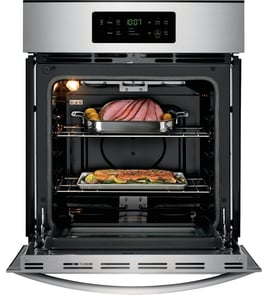


How many years should a wall oven last?
Most wall ovens, including the Ikea IBS330PVM00 electric built-in oven, typically last about 16 years with normal use and basic maintenance. Keeping the door sealing properly, preventing overheating, and fixing heating or temperature issues early helps you reach that lifespan.
- Heat stress: frequent self-clean cycles and high-heat cooking shorten component life.
- Door seal condition: heat leaks make the oven work harder and can overheat controls.
- Electrical health: loose connections at the terminal block can cause heat damage.
- Temperature accuracy: a drifting sensor can lead to overbaking and longer heat cycles.
- Ventilation: blocked airflow can overheat the control area.
- Wipe spills promptly to reduce smoke and overheating during baking.
- Avoid running self-clean back-to-back; let the oven cool fully between cycles.
- Check that the door closes evenly and does not sag.
- Replace worn bumpers or hinges so the door seals tightly.
- If temps seem off by 25 to 50 degrees, test and replace the sensor if needed.
| Category | Examples | What you usually notice |
|---|---|---|
| Wear items | Door bumpers, hinges, light bulb | Door won’t seal, door drops, light out |
| Heating system | Broil element, temperature sensor | Slow preheat, uneven browning, wrong temp |
| Safety/overheat | High-limit thermostat | Oven shuts off, won’t heat until cooled |
| Electrical/control | Terminal block, control, wire harness | Dead display, intermittent power, burning smell |
If your IBS330PVM00 is heating inconsistently or seems to run hotter or cooler than the set temperature, the wall oven temperature sensor WPW10131825 is a common part to check first.
A wall oven is designed to last well over a decade; small issues like a weak door seal or inaccurate temperature control can quietly add extra heat and runtime that shorten the life of the control and wiring.
Last updated: January 2026
What is the disadvantage of a wall oven?
A wall oven like the Ikea IBS330PVM00 is great for ergonomics and design flexibility, but the main disadvantages are higher total cost (appliance plus cabinet work and electrical), more complicated service access, and the need for a separate cooktop.
- Higher upfront cost: you are typically paying for a built-in appliance plus cabinetry modifications.
- More complex installation: wall ovens often require dedicated wiring, correct cutout sizing, and secure mounting.
- Harder to repair in place: built-in placement can make access to the control area, wiring, and blower more time-consuming.
- Separate cooktop required: if you do not already have one, you add another appliance purchase.
- Heat and ventilation planning: tight cabinetry can trap heat if clearances are not right.
Wall ovens are most frustrating when the issue is electrical or control-related, because troubleshooting can involve pulling the oven from the cabinet.
| Situation | Why it is inconvenient | What we usually check first |
|---|---|---|
| Oven temperature seems off | Calibration and diagnosis can take time | Wall oven temperature sensor WPW10131825 |
| Oven shuts down or overheats | Built-in heat buildup can trigger protection | Range high-limit thermostat WP9759243 |
| Display or controls act up | Accessing the control area may require removal | Oven control WP8303093 |
A wall oven is a long-term kitchen decision. The built-in design looks clean and can be easier on your back, but it also means installation and future repairs usually take more labor than a freestanding range.
- Confirm your cabinet cutout and electrical supply match the oven requirements.
- Plan for service access (enough slack in wiring, room to slide the unit out).
- If you bake often, consider how easy it will be to remove racks and heavy cookware at the installed height.
- Budget for professional installation if you are not experienced with 240V appliances.
Last updated: January 2026
Can a 30 inch wall oven fit in a 30 inch cabinet?
A “30-inch” wall oven like the Ikea IBS330PVM00 almost never fits a cabinet that measures exactly 30 inches wide. The oven’s required cutout is typically slightly larger than the nominal size, and you also need clearance for leveling, airflow, and the trim to sit flat.
Measure the cabinet opening (cutout), not the cabinet’s outside width. We recommend checking:
- Cutout width (inside-to-inside of the opening)
- Cutout height (top-to-bottom of the opening)
- Cutout depth (front-to-back, plus room for the power connection)
- Front frame clearance (so the oven trim does not bind)
- Electrical location (so the junction box or conduit does not interfere)
Because there’s no installation guide available for IBS330PVM00 here, use these common ranges to judge fit and plan the cabinet opening.
| What you have | What it usually means | Likely outcome |
|---|---|---|
| 30-inch cabinet outside width | Cutout is often less than 30 inches | Usually too tight |
| 30-inch cutout width (measured opening) | Still may be tight depending on trim and spec | Measure carefully |
| Cutout built to the oven’s spec | Correct clearances and support | Proper fit |
A too-tight cutout can pinch wiring, prevent the oven from sitting square, cause door alignment issues, and restrict cooling airflow. That can lead to overheating symptoms and nuisance shutoffs.
If you suspect restricted airflow or a temperature control issue, these parts are commonly involved on electric wall ovens:
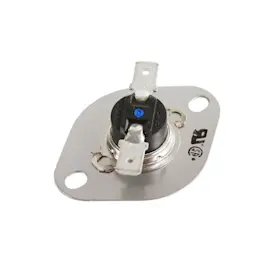
- Wall oven temperature sensor WPW10131825 (helps the control regulate oven temperature)
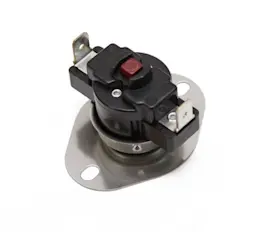
- Range high-limit thermostat WP9759243 (opens if temperatures get unsafe)
- Oven blower W10810687 (moves cooling air through the oven cabinet)
Last updated: January 2026