Owner’s manual

What is the average lifespan of an air compressor?
Most homeowner-grade air compressors like the Craftsman 919165300 typically last 5 to 10 years with normal DIY use and basic maintenance; heavier-duty shop units often run 10 to 20 years. Lifespan depends most on run time, heat, moisture control, and keeping the intake air path clean.
Typical lifespan by compressor type
| Compressor type | Typical lifespan | What usually ends life first |
|---|---|---|
| Small DIY, oil-free (common portable) | 5 to 10 years | Pump wear, overheating, leaking fittings |
| Oil-lubricated, belt-drive (shop) | 10 to 15 years | Valves, rings, motor, pressure switch |
| Rotary screw (industrial) | 15 to 20 years | Air-end wear, controls, cooling system |
What matters most for the Craftsman 919165300
Your manual describes this model as a one-cylinder, single-stage unit that requires no oil. That makes routine care simpler, but it also means airflow and cooling are critical for long life. Use the maintenance schedule and procedures in the owner's manual.
Maintenance habits that add years
- Keep the compressor in a clean, dry, well-ventilated area; allow about 12 inches of clearance for cooling.
- Inspect and replace the air filter as needed; restricted intake increases heat and wear.
- Drain tank moisture regularly to reduce internal corrosion and water in your air tools.
- Fix air leaks promptly; leaks increase run time and heat.
- Avoid long/light extension cords; use extra air hose when possible to prevent voltage drop and motor stress.
Quick “replace vs. repair” checklist
- Runs hot, cycles constantly, or won’t build pressure: often repairable (valves, check valve, leaks).
- Breaker trips or won’t start reliably: often electrical (pressure switch, motor, power supply).
- Tank won’t hold air: address immediately; tank condition is a safety-critical factor.
For step-by-step troubleshooting, use our DIY guide: air compressor won't build tank pressure. For parts lookups and model-based searching, start with the parts list for Craftsman 919165300, or search by model on Sears PartsDirect.
Why it matters
A compressor that runs longer to do the same work costs more to operate and wears out faster. Simple upkeep (air filter, moisture control, leak checks, proper power supply) is the difference between a short-lived unit and one that reaches its expected service life.
Last updated: February 2026
What is the most common cause of air compressor failure?
The most common cause of air compressor failure is poor maintenance that leads to overheating and accelerated wear. On the Craftsman 919165300, restricting ventilation openings can cause serious overheating, and failing to drain tank water can cause rust and tank damage; both shorten compressor life. See the owner's manual for the maintenance and safety steps.
Most common failure causes we see
- Restricted airflow or blocked ventilation openings (overheating)
- Water left in the tank (internal rust and thinning of the steel tank)
- Air leaks at fittings, hoses, or valves (longer run time and heat)
- Dirty or restricted air intake filter (low output, overheating)
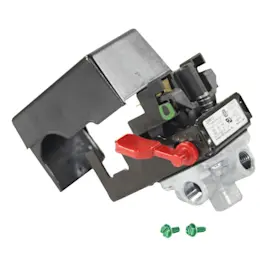
- Pressure switch or check valve problems (hard starting, overpressure, cycling issues)
- Electrical issues such as loose connections, blown fuse, or tripped breaker
Quick prevention checklist for the Craftsman 919165300
- Drain condensed water from the tank after use and before storage.
- Keep ventilation openings clear; do not operate in a confined, poorly ventilated area.
- Bleed off tank pressure and unplug before troubleshooting or service.
- Check for leaks (listen for hissing; use soapy water on fittings).
- Use the regulator correctly; set regulated pressure under flow conditions (while the tool is running).
Symptoms and the likely root cause
| What you notice | What it usually points to | What to check first |
|---|---|---|
| Safety valve pops | Pressure switch not shutting off or cut-out set too high | Turn OFF immediately; inspect pressure switch behavior |
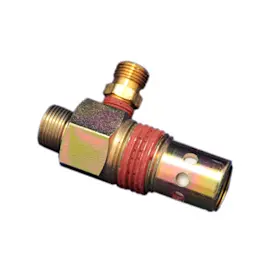
| Won't restart with pressure in tank | Check valve stuck open or restricted | Check valve and unloader function |
| Low air output | Restricted intake filter or leaks | Filter, hose, fittings |
| Knocking noise | Check valve issue or heavy use | Check valve, duty cycle |
Why it matters
Overheating and corrosion do more than reduce performance; they damage internal components and can create unsafe operating conditions. Keeping airflow clear and draining the tank are the two highest-impact habits for long-term reliability.
For step-by-step troubleshooting paths, we also use the DIY guide air compressor won't start. If you need to look up replacement parts by model number, we recommend starting with the parts list for Craftsman 919165300, or searching on Sears PartsDirect.
Last updated: February 2026
Is a 150 PSI air compressor good for car tires?
Yes. A 150 PSI air compressor is more than enough for inflating car tires because most passenger tires run far below that pressure; on your Craftsman 919165300, you set the outlet pressure with the regulator so you can inflate safely and accurately.
How to use a 150 PSI compressor for tires (safe setup)
- Set the OFF/AUTO lever to OFF before connecting the hose and tire chuck.
- Connect the air hose and a tire air chuck (or inflator kit).
- Turn the OFF/AUTO lever to AUTO and let the tank build pressure.
- Use the regulator to dial the outlet pressure to what your tire placard specifies.
- Inflate in short bursts and recheck with a tire gauge.
- When finished, set OFF/AUTO to OFF, turn the regulator down to 0, then bleed air and drain the tank.
For the exact operating steps and shutdown procedure for the 919165300, follow the owner's manual.
What “150 PSI” really means
150 PSI is typically the maximum tank pressure the compressor can store, not the pressure you should put into a tire. The regulator lets you reduce and control the outlet pressure for tire inflation.
| Spec/term | What it affects | What you do for tires |
|---|---|---|
| Max PSI (tank) | Storage capacity and tool headroom | Not a target for tires |
| Regulated PSI (outlet) | What reaches the tire chuck | Set to the tire’s required PSI |
| Airflow (CFM) | How fast it inflates | Higher CFM inflates faster |
Why it matters
Over-pressurizing is the real risk, not “too much PSI available.” Using the regulator correctly helps prevent damage and keeps inflation consistent.
When a 150 PSI compressor may feel “slow”
Even with 150 PSI available, inflation speed depends mostly on airflow and hose restrictions.
- Small-diameter hoses can slow fill time
- Leaks at fittings waste air
- A clogged intake filter can reduce output
- A weak check valve or pressure switch can cause cycling issues
If you run into performance problems, use our DIY guides like air compressor won't build tank pressure and air compressor air leaks.
You can look up diagrams and replacement items for the Craftsman 919165300, and search additional parts by model number on Sears PartsDirect.
Last updated: February 2026
Is it worth it to repair a compressor?
Yes, repairing a Craftsman air compressor model 919165300 is worth it when the problem is a common, isolated failure (like a pressure switch, check valve, or leaking fitting) and the tank is sound. If the air tank is leaking at the tank or welds, replacement is the better choice.
Quick decision checklist
- Repair when the unit runs but has air leaks, won’t build pressure, or won’t shut off at cut-out.
- Repair when the fix is a single component (pressure switch, check valve, regulator, gauge, fittings).
- Replace when there is air leakage in the tank or at tank welds.
- Replace when the compressor has repeated electrical issues or severe pump damage.
- Repair when the total parts plus labor is clearly less than a comparable replacement.
What the manual says that affects the decision
The troubleshooting guidance for this model points to repairable causes for common symptoms. For example, if the compressor won’t shut off and the contacts are welded, the fix is to replace the pressure switch; if the safety valve pops due to excessive pressure, the immediate action is to switch OFF and address the pressure switch setting or failure. See the safety and troubleshooting sections in the 919165300 owner's manual.
Cost and risk comparison (practical guide)
| Situation | Typical root cause | Usually worth repairing? |
|---|---|---|
| Won’t build tank pressure | Check valve, flapper valve, fittings, gasket leak | Yes |
| Air leaks at fittings | Loose or worn fittings/sealant | Yes |
| Safety valve pops off | Pressure switch not shutting off | Yes |
| Air leaks in tank or welds | Tank failure | No |
Why it matters
A compressor cycles automatically in ON/AUTO, and repairs can expose you to voltage, moving parts, and compressed air. We always recommend shutting the unit off, unplugging it, and bleeding tank pressure before any inspection or maintenance, as outlined in the 919165300 owner's manual.
Helpful DIY resources for common repair decisions
- Air compressor won't start
- Air compressor won't build tank pressure
- Air compressor air leaks
- How to replace an air compressor pressure switch
- How to replace an air compressor check valve
If you decide to move forward, you can look up parts by model number and symptom on the model parts list, or search by model on Sears PartsDirect.
Last updated: February 2026