Owner’s manual
 Error Codes



Where is the model number on a Kenmore side by side refrigerator?
On Kenmore side-by-side refrigerator model 10651339710, the model number is printed on the appliance identification label (the same label that lists the serial number). You will typically find this label inside the fresh food compartment on a side wall or near the ceiling.
Where to look first (fast checks)
- Open the refrigerator (fresh food) door and check the left and right interior side walls
- Look near the top front of the compartment (by the ceiling light area)
- Check around the crisper drawer frame area (label is often above or beside drawers)
- If you do not see it in the refrigerator section, check the freezer compartment side wall
- Use a flashlight; the label can be easy to miss against white liners
What the label looks like
The ID label usually includes both a model number and a serial number in the same block of text.
| Item on label | What it’s used for | Example format |
|---|---|---|
| Model number | Matching parts and diagrams | 106.5133* (series) / 10651339710 (full model) |
| Serial number | Date/production tracking for service | Letters plus numbers (varies by unit) |
Why it matters
We use the exact model number to match the correct Kenmore parts and diagrams. Even small model variations can change items like the ice maker, water inlet valve, door bins, or electronic control.
Helpful reference
For model identification and other key information for this refrigerator series, use the 10651339710 owner's manual.
Last updated: February 2026
How wide is a Kenmore side by side refrigerator?
For Kenmore side-by-side refrigerators like model 10651339710, the standard cabinet opening width is 36 inches, and the refrigerator itself is typically built to fit that space. For exact exterior width and clearance needs, use the measurements and spacing guidance in the 10651339710 owner's manual.
What the manual tells us for model 10651339710
The Use & Care Guide for Kenmore models 106.5133* specifies a normal minimum cabinet cut-out width of 36 inches (91.44 cm) for installation. It also calls for ventilation and door-swing clearance that can affect how much total space you need. See the 10651339710 owner's manual for the full installation section.
Key spacing requirements to plan for
- 36 in. minimum cabinet cut-out width (standard fit)
- 1/2 in. space on each side and at the top for ventilation
- 2 in. space behind the refrigerator
- 2 in. minimum next to a fixed wall (varies by model) for door swing
- If you want easier crisper-pan removal next to an extended wall, plan for 54 in. total opening width (36 + 18)
Quick sizing guide (what “width” can mean)
| Measurement you need | What it represents | Typical value for this model family |
|---|---|---|
| Cabinet cut-out width | Opening in your cabinetry | 36 in. |
| Refrigerator exterior width | Actual box width (varies by trim/doors) | Built to fit a 36-in. opening |
| Total space needed | Opening plus clearances | More than 36 in. depending on sides/walls |
Why it matters
Getting the width right prevents poor airflow (warm temps, higher energy use) and avoids door-swing issues that can keep bins and crisper pans from sliding out fully.
Last updated: February 2026
What temperature should a Kenmore freezer be set at?
For the Kenmore 10651339710 side-by-side refrigerator, we set the freezer to 0°F (-18°C) for everyday use; that temperature keeps food safely frozen while helping the unit run efficiently. Use the temperature adjustment steps in the 10651339710 owner's manual to match your kitchen conditions.
Recommended settings and when to change them
- Everyday home use: 0°F (-18°C)
- Short-term “extra cold” need (lots of new groceries): keep the setpoint at 0°F, but limit door openings and let the freezer recover
- Long-term storage: 0°F is still the standard; avoid going colder unless you are troubleshooting soft ice cream or frequent thawing
- If food is freezing too hard or packages frost heavily: raise the setting slightly (warmer)
- If ice cream is soft or items feel slushy: lower the setting slightly (colder)
How to confirm the freezer is actually at 0°F
Use a freezer thermometer (not the control dial) and check after the temperature stabilizes.
| What you do | What to expect |
|---|---|
| Place thermometer between frozen packages | Most accurate “real world” reading |
| Wait after an adjustment | Allow 24 hours for temperatures to fully stabilize |
| Recheck after heavy use (holidays, parties) | Temporary warming is normal |
Common reasons the freezer runs warm (and what to do)
The manual notes several causes of warm temperatures and the fixes are usually simple:
- New installation: allow 24 hours to cool completely
- Doors opened often or not sealing: minimize openings; make sure the door closes tightly
- Air vents blocked: move food away from vents so air can circulate
- Warm food added: give it several hours to return to normal
- Controls not set for conditions: adjust colder, then recheck in 24 hours
Why it matters
Keeping the freezer near 0°F helps prevent partial thawing and refreezing (ice crystals, texture loss) and supports steady airflow so the refrigerator section stays consistent too.
Last updated: February 2026
How to read Kenmore model numbers?
Kenmore model numbers tell us the appliance type and the model family so we can match the right parts and service info. For your Kenmore side-by-side refrigerator, 106.5133* is the model series shown in the 10651339710 owner's manual, and 106 is the key prefix we use to identify the model family.
Where to find the model number on a refrigerator
We use the full model number (and usually the serial number) from the ID label. Common locations include:
- Inside the fresh food compartment on a side wall
- On the ceiling of the refrigerator compartment near the light
- On the door frame (hinge side) when the door is open
- Behind the toe grille or lower kickplate area
- On the back of the cabinet (less common for daily access)
How to interpret a Kenmore model number (example: 106.5133*)
Kenmore numbers are typically split into a prefix and a base model.
| Section | Example | What it tells us | Why we use it |
|---|---|---|---|
| Prefix (first 3 digits) | 106 | Manufacturer code used by Kenmore | Helps narrow parts diagrams and service info |
| Base model digits | 5133 | Model family/series | Helps match the correct design and features |
| Suffix (often after the base) | * or extra digits | Color/revision/engineering change | Helps ensure exact fit |
Tips to make sure we match parts correctly
Small differences in the last digits can change shelves, door bins, ice maker style, or control boards.
- Write the model number exactly as shown (include dots and trailing digits)
- Capture the serial number too (it helps with production changes)
- If your label shows 106.5133*, use the full version on the tag (for example, 10651339710)
- When ordering dispenser or ice system parts, confirm the exact assembly style first
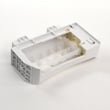
- Use model-matched parts when possible, such as the refrigerator ice maker W10873791 for this model
Why it matters
We use the model number to pull the correct Kenmore parts list, diagrams, and manual procedures. That prevents ordering a door gasket, ice maker, or electronic control that looks similar but will not mount, plug in, or operate correctly.
Last updated: February 2026
What is the cubic foot of my Kenmore refrigerator model 10651339710?
Your Kenmore side-by-side refrigerator model 10651339710 is typically in the about 22 cu. ft. class. For the exact capacity used for your specific 106.5133* series configuration, we recommend confirming it in the 10651339710 owner's manual.
How to confirm the exact capacity for your model
Capacity can vary slightly by configuration within the 106.5133* model series. The most reliable places to verify are:
- The specifications section in the 10651339710 owner's manual
- The model and serial tag inside the fresh food compartment (usually on a side wall)
- The product information section that lists features and storage details
Why the cubic feet number matters
Knowing the cubic feet helps us match the right parts and expectations for cooling performance, storage layout, and accessories (like bins and ice storage). It is also useful when comparing replacement shelves, door bins, and crisper pans.
Quick reference: what “about 22 cu. ft.” means in real use
| Capacity class | Typical fit for households | What you usually notice |
|---|---|---|
| 20 to 22 cu. ft. | 2 to 4 people | Balanced freezer and fresh food space |
| 22 to 25 cu. ft. | 3 to 5 people | More door storage and wider shelves |
Related parts that match storage and layout
If you are checking capacity because you need replacement storage components, these model-matched parts are common:
- Refrigerator door bin W11174793 for door storage replacement
- Refrigerator crisper pan W11174619 if a drawer is cracked or missing
- Door gaskets (like 2159075 beige or 2159083 black) if you are also addressing warm spots from air leaks
Last updated: February 2026
What's the average lifespan of a Kenmore refrigerator?
Most Kenmore refrigerators last 10 to 15 years. For the Kenmore 10651339710 side-by-side, lifespan depends most on basic care (airflow, clean coils, good door seals) and fixing cooling or ice maker issues early using the maintenance guidance in the 10651339710 owner's manual.
Typical lifespan ranges (what to expect)
| Refrigerator type | Typical lifespan | What usually ends life first |
|---|---|---|
| Side-by-side (like 10651339710) | 10 to 15 years | Sealed system wear, control issues, fan failures |
| Top freezer | 12 to 18 years | Thermostat/control, door seal leaks |
| French door | 9 to 14 years | Ice maker and dispenser system, electronics |
What helps a Kenmore refrigerator last longer
- Keep condenser coils clean so the compressor runs cooler and less often.
- Make sure doors close tightly; replace worn gaskets before they leak air.
- Maintain steady temperatures (avoid frequent warm-ups from propped doors).
- Keep vents inside the fresh food and freezer sections unblocked.
- Address unusual noises quickly (often an evaporator fan or ice maker issue).
Quick “is it worth repairing?” checklist
We use these rules of thumb for Kenmore side-by-side refrigerators:
- Under 8 years old: repairs are usually worth it unless it is a major sealed-system failure.
- 8 to 12 years old: worth repairing if the fix is a common part (fan motor, valve, ice maker).
- Over 12 to 15 years old: compare repair cost to replacement, especially for compressor or evaporator problems.
Why it matters
A refrigerator that is struggling to move air or seal properly runs longer, uses more electricity, and wears out key components faster. Fixing airflow and sealing problems early often adds years of reliable cooling.
Parts that commonly affect longevity on this model
- Refrigerator evaporator fan motor WP2315549 (air circulation)
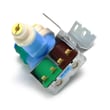
- Refrigerator water inlet valve WPW10179146 (ice maker and dispenser water supply)
- Refrigerator ice maker W10873791 (ice production and related leaks/clogs)
Last updated: February 2026
How to tell if a Kenmore refrigerator compressor is bad?
A bad compressor on Kenmore model 10651339710 usually shows up as poor or no cooling even though the refrigerator seems to be running, often with repeated clicking (start attempts) or unusual changes in normal operating sounds. Before condemning the compressor, we confirm airflow, power, and control settings using the checks in the 10651339710 owner's manual.
Quick symptoms that point toward a compressor problem
- Refrigerator and freezer are both warm, but interior lights and controls work
- You hear repeated clicking every few minutes (start device trying to start the compressor)
- The unit runs “all the time” but temperatures do not recover
- The compressor area is very hot to the touch after running attempts
- You do not hear the usual low hum, and cooling never starts
Rule out common look-alikes first (fast checks)
Many “bad compressor” calls end up being a simpler issue. Use these steps first:
- Give it time after setup: after a new installation or restart, allow 24 hours for full cooling
- Do not set colder expecting faster cooling: the coldest setting will not cool faster
- Check door sealing and loading: frequent door openings and warm room temps can make the compressor run longer
- Listen for normal sounds: whirring/pulsating, popping, and some clicking can be normal operation
- Confirm condenser airflow: clean the grille and make sure nothing blocks airflow around the cabinet
What to listen for: normal vs. concerning
| Sound/behavior | Often normal | More concerning |
|---|---|---|
| Soft hum with occasional fan noise | Yes | No hum at all with warm temps |
| Brief clicking when dispensing water or ice maker fills | Yes | Repeated clicking every few minutes with no cooling |
| Longer run times in warm rooms or heavy use | Yes | Runs constantly and never gets cold |
When a technician test is the deciding step
If the refrigerator is powered, fans are moving air, and temperatures stay warm, a technician confirms compressor health by checking:
- Start device and wiring condition
- Compressor winding continuity and insulation
- Amperage draw during start and run
- Sealed system indicators (pressures, restrictions, or leaks)
Parts that are commonly involved in “no cool” diagnosis
If testing confirms a compressor failure on this model, the compressor is the core component: refrigerator compressor WPW10466675.
Why it matters
Replacing a compressor is a major repair; ruling out airflow problems, control settings, and normal “newer efficient compressor” run behavior prevents unnecessary parts and downtime.
Last updated: February 2026
What are the most common problems with Kenmore refrigerators?
The most common problems we see on Kenmore refrigerators like model 10651339710 are cooling issues, water and ice dispenser problems, leaks, and unusual noises. These usually trace back to airflow restrictions, defrost system trouble, or a failing component such as a fan motor, water inlet valve, or control.
Common problems and what they usually mean
- Not cooling or warm temperatures: poor airflow, dirty coils, evaporator fan not running, or defrost ice buildup.
- Refrigerator won’t start: power supply issue, tripped breaker, or control problem (the manual troubleshooting section walks through quick checks).
- Ice maker not making ice: water supply issue, frozen fill tube, or a bad ice maker.
- Water dispenser slow or not dispensing: restricted filter/housing, low water pressure, or inlet valve issue.
- Water leaking inside or under the unit: clogged defrost drain, loose water line, or door not sealing.
- Clicking, buzzing, or rattling noises: fan blade hitting ice, failing fan motor, or vibration from the cabinet.
Quick checks we recommend first (fast, no parts)
- Give it time after setup: after a new installation, allow 24 hours for full cooling.
- Confirm power: verify the outlet works and the cord is plugged into a grounded 3-prong outlet (no extension cord).
- Check door sealing: look for gaps, torn gasket areas, or doors that do not close smoothly.
- Listen for fans: evaporator fan noise usually points to airflow; loud scraping can mean ice contact.
- For dispenser issues: if water has not been dispensed recently, discard the first glass; it may not be cold.
Parts that commonly fix these symptoms on 10651339710
| Symptom | Common suspect | Example part for this model |
|---|---|---|
| No ice or weak water flow | Water valve not opening fully | Refrigerator water inlet valve WPW10179146 |
| Warm fridge/freezer, noisy airflow | Evaporator fan not running | Refrigerator evaporator fan motor WP2315549 |
| Ice buildup, poor cooling | Defrost heat not melting frost | Refrigerator heater WP2323198 |
| Ice maker dead or intermittent | Ice maker module failure | Refrigerator ice maker W10873791 |
Why it matters
Most “big” refrigerator complaints (warm temps, leaks, ice maker failures) start as small airflow or water-supply problems. Catching them early helps protect food, reduces compressor run time, and prevents repeat icing or puddles.
Helpful reference
Use the troubleshooting steps and safety guidance in the 10651339710 owner's manual.
Last updated: February 2026
How to replace an ice maker in a side by side refrigerator?
To replace the ice maker in your Kenmore 10651339710 side-by-side refrigerator, we unplug the refrigerator, remove the ice bin, swap the ice maker assembly, then restore power and confirm the ice maker switch is set to On. Follow the steps in the 10651339710 owner's manual for your exact screw locations and wiring routing.
Before you start (tools and safety)
Unplugging power and controlling the water supply prevents leaks and electrical shock while you work around the freezer wall and harness.
- Unplug the refrigerator or disconnect power at the breaker
- Turn off the household water supply if you will disconnect any water line
- Use a towel to catch melting ice and drips
- Wear cut-resistant gloves (sheet metal edges inside the freezer can be sharp)
- Gather basic tools (flat-blade screwdriver, 1/4-inch nut driver, adjustable wrench)
Step-by-step: replacing the ice maker
- Remove the ice storage bin: press the release lever, tilt the bin outward, then lift it up and out.
- Access the ice maker: remove the mounting screws and gently pull the ice maker forward.
- Disconnect the wiring harness: release the locking tab and separate the connector.
- Install the new ice maker: connect the harness, position the ice maker, and reinstall mounting screws.
- Reinstall the bin: slide it back onto the door and tilt it upright until it clicks.
- Turn ice production on: set the ice maker switch to On (up) (or lower the shutoff arm, depending on your style).
Quick checks after installation
These checks confirm the ice maker can fill and cycle normally.
| What to check | What “normal” looks like | If it’s not normal |
|---|---|---|
| Ice maker On/Off switch | Switch is On (up) | Flip to On; confirm freezer door closes fully |
| Water supply | Valve is open; no drips at connections | Tighten fittings; recheck for leaks |
| Ice bin seating | Bin clicks into place | Reseat bin; make sure it’s fully latched |
| First ice | Ice begins within 24 hours | Verify freezer temp and water flow |
Why it matters
A correctly installed ice maker and properly seated ice bin prevent overfilling, no-ice complaints, and water leaks. The manual also notes the ice maker should be turned off if the water line is not connected, which helps avoid damage and nuisance cycling.
Related DIY help
- Use common refrigerator ice maker problems and solutions if the new ice maker still will not fill, harvest, or dispense.
Last updated: February 2026