Installation guide
 Owner’s manual
 Error Codes





What are the common KitchenAid problems?
Common problems on the KitchenAid KSIB900ESS2 electric slide-in range include a dead unit (no power), an induction cooktop that will not turn on, the cooktop shutting off and beeping due to moisture or objects on the touch controls, and flashing error codes (such as “Er” or “F/C” with numbers). See the KSIB900ESS2 owner’s manual for model-specific troubleshooting steps.
Most common symptoms we see (and what they usually mean)
- Nothing will operate: power cord unplugged, tripped breaker, or blown fuse.
- Cooktop will not operate: cooktop is off, control lock is on, or a cooking surface was not selected before choosing a function.
- Cooktop shuts off and beeps every 10 seconds: something is pressing on the touch panel (spills, utensils, soils).
- Flashing “Er” with numbers: a fault condition that often clears with a power reset.
- Flashing “F” or “C” with numbers: a diagnostic code tied to cooktop operation.
Quick checks before you schedule service
- Confirm power
- Verify the range is plugged into a grounded outlet.
- Reset the household circuit breaker (or replace the fuse).
- Clear the control panel
- Remove items from the cooktop touch area.
- Wipe the touch panel dry and clean.
- Reset the cooktop
- Turn power off at the breaker for about 20 seconds, then restore power.
Error code guidance (what to do first)
| What you see on the display | First action | What it often points to |
|---|---|---|
| “Er” + numbers | Power reset at breaker | Cooktop fault that may clear after reset |
| “F” or “C” + numbers | Clean touch panel, then reset | Control input or cooktop diagnostic condition |
| Beeping every 10 seconds | Remove objects, wipe panel | Pressure/soil/liquid on touch keypads |
Why it matters
Induction ranges like the KSIB900ESS2 rely heavily on touch controls and safety logic. Simple issues (a wet control panel, an unselected cooking zone, or a brief power glitch) can look like a major failure, but are often resolved with cleaning and a proper reset.
Last updated: January 2026
Are KitchenAid appliances high end?
KitchenAid is generally considered upper-mid-range to premium, and the KSIB900ESS2 electric slide-in range fits that positioning with strong cooking performance, modern styling, and feature depth without being a true luxury-tier product.
What “high end” usually means for KitchenAid
KitchenAid typically sits above entry-level brands in materials, design, and feature set, but below luxury lines that focus on pro-style customization and boutique pricing.
Common “premium” traits you will see:
- More advanced cooking features (precision modes, enhanced controls)
- Heavier-duty fit and finish than basic ranges
- Strong parts and service ecosystem
- Styling that matches higher-end kitchens
- Higher price than basic models, but not luxury pricing
Where KitchenAid fits compared to other brands
Use this as a practical way to think about brand tiers when shopping or comparing repairs.
| Tier | Typical positioning | Examples |
|---|---|---|
| Value | Basic features, lowest cost | Amana, Hotpoint |
| Mainstream | Solid everyday performance | Whirlpool, GE |
| Premium | More features and design focus | KitchenAid |
| Luxury | Pro-style, highest cost | JennAir, Wolf |
Why it matters when you are buying parts or planning a repair
Premium ranges like KitchenAid often use more specialized electronics and assemblies, so accurate model matching matters.
To keep repairs smooth:
- Match parts to the full model number KSIB900ESS2
- Use the troubleshooting section first to avoid unnecessary part swaps
- Confirm power supply and breaker status before diagnosing controls
- Keep your model and serial number handy (the manual shows where to find it)
Helpful documentation for this model
For model-specific operation, troubleshooting, and safety guidance, use the KSIB900ESS2 owner’s manual.
Last updated: January 2026
What is the life expectancy of a KitchenAid range?
A KitchenAid range typically lasts 13 to 15 years with normal home use and basic maintenance. For your KitchenAid KSIB900ESS2 electric slide-in range, keeping the oven cavity clean, protecting the cooktop surface, and fixing small issues early helps you reach that expected lifespan.
Typical lifespan and what affects it
Most modern electric ranges fall into a similar lifespan range, but real-world life depends on heat exposure, cleaning habits, and how often high-power features are used.
Common factors that shorten range life:
- Frequent high-heat cooking and long bake cycles
- Heavy use of self-clean (extra heat stress on wiring and controls)
- Spills that bake onto the oven floor or get into the door vents
- Power surges affecting the control board and display
- Using cookware that scratches or chips the cooktop surface
Maintenance that extends life
Use these habits to reduce wear on heating and electronic components:
- Wipe up spills after the range cools; avoid letting sugary spills bake on
- Use self-clean sparingly; choose shorter cycles when possible
- Keep the oven door gasket area clean so the door seals well
- Avoid slamming the oven door; it stresses hinges and glass mounts
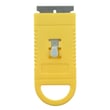
- Use the right cleaning tools for glass surfaces (a scraper made for cooktops helps)
If you need a safe tool for cooked-on residue, use a purpose-made scraper like the cooktop scraper WA906B.
Parts that commonly determine “end of life”
Many ranges are still worth repairing at 10+ years if the failure is a normal wear part.
| Symptom | Common culprit | Repair difficulty |
|---|---|---|
| Oven not heating evenly | Bake element | Moderate |
| Display or touch keys not responding | Keypad or console electronics | Moderate to advanced |
| Oven light cover cracked | Light lens | Easy |
For example, a weak or broken lower oven heater is often the bake element W10779716.
Why it matters
Knowing the typical life expectancy helps you decide when a repair is a smart investment versus when it is time to plan for replacement, especially if multiple high-cost electronic parts fail close together.
For model-specific care and operating guidance, follow the KSIB900ESS2 owner’s manual.
Last updated: January 2026
Why is my KitchenAid oven not getting power?
If your KitchenAid KSIB900ESS2 electric slide-in range looks dead (no display, no response), the most common causes are a tripped breaker, a blown household fuse, or the range being in Energy Save sleep mode with a blank display. Start with the power supply checks, then move to wiring and control issues using the KSIB900ESS2 owner’s manual.
Quick checks that solve most “no power” complaints
- Check your home electrical panel; reset the range’s double-pole breaker fully OFF, then ON.
- If your home uses fuses, replace the blown fuse with the correct type and rating.
- If the display is blank, press any keypad to wake the control; Energy Save can blank the display when idle.
- Press CANCEL UPPER to clear a flashing display after a power loss.
- Make sure the cooktop is not simply turned off; press POWER to re-enable the cooktop controls.
Step-by-step troubleshooting (in a safe order)
- Confirm power at the outlet/junction box: An electric range typically needs 240 VAC (and 120 VAC on each hot leg to neutral). If one leg is missing, the oven can appear dead or behave oddly.
- Inspect the power cord/terminal block area (power OFF at breaker): Look for loose connections or heat damage.
- Check for a control lockout or sleep mode confusion: Energy Save can make the display look “off” when the range is idle.
- Look for wiring issues: A loose harness connection at the console can stop the display and oven functions.
- Suspect an electronic control problem if correct power is present and connections are sound; control boards and keypads can fail.
What the symptoms usually mean
| Symptom | Most likely cause | Best next step |
|---|---|---|
| Completely blank display, nothing works | No incoming power or Energy Save sleep | Reset breaker; wake display; verify voltage |
| Display flashes after outage | Power loss event | Press CANCEL UPPER |
| Cooktop beeps/acts off | Control panel touched/soiled | Clean/dry panel; reset power |
Parts that may be involved (when power is confirmed)
If you confirm proper incoming voltage and solid wiring, the failure is often in the console electronics. For example, a nonresponsive touch interface can point to the keypad W11025616.
Why it matters
A range can look “dead” from a simple breaker issue or Energy Save sleep mode, but a missing power leg or overheated connection can damage wiring and controls. Verifying the power supply first prevents unnecessary parts replacement.
Last updated: January 2026