
Where to find model number on Craftsman Wet Dry Vac?
On a Craftsman wet/dry vacuum like model 113179580, the model number is printed on the product identification label, most often on the lid/top cover or on the rear of the tank near the power cord. Once you find it, match the full number exactly to get the right parts.
Where to look first (fastest checks)
- Check the top lid near the handle or latches for a sticker or metal tag.
- Look on the back of the tank/canister, especially near the cord wrap.
- Inspect the motor housing area (the part you lift off to empty the tank).
- If your vac is on a cart, check the frame or wheel base for a label.
- Wipe dust off the label; a flashlight helps make faded print readable.
What the label usually shows
Most Craftsman wet/dry vac labels include a few fields. Use the model number (not the serial number) when searching for parts.
| Label field | What it means | What to use for parts |
|---|---|---|
| Model (MOD) | The exact product identifier | Use this |
| Serial (SER) | Manufacturing identifier | Not needed |
| Electrical ratings | Volts/amps, sometimes HP | For troubleshooting only |
Tips to avoid ordering the wrong parts
- Copy the model number exactly, including any dashes or extra digits.
- If the label is damaged, take a clear photo and zoom in.
- If your vac uses common accessories, still confirm hose diameter and inlet size before buying.
Why it matters
Craftsman wet/dry vacuums can look similar across different years and sizes, but filters, hoses, casters, switches, and motor housings vary by model. Using the correct model number helps ensure the replacement part fits and seals properly.
For more help identifying the right number format, use how to find your appliance model number (and what it means for parts).
Last updated: January 2026
What are the different vacuum attachments called?
Most vacuum attachments for the Craftsman 113179580 wet/dry vacuum are named by what they do: a crevice tool for tight gaps, a dusting brush for delicate surfaces, an upholstery tool for fabric, and extension wands to reach floors, ceilings, and corners. Wet/dry vac kits may also include a squeegee-style nozzle for liquids.
Common attachment names and what they’re for
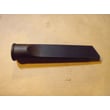
- Crevice tool: narrow nozzle for baseboards, car seats, and tight corners
- Dusting brush: soft bristles for vents, blinds, and shelves
- Upholstery tool: wide, flat head for furniture and stairs
- Extension wand (or wand set): adds reach and reduces bending
- Floor nozzle (or floor brush): general pickup on hard floors
- Wet pickup nozzle / squeegee nozzle: helps pull up liquids on smooth surfaces
Quick reference: attachment name vs. best use
| Attachment name | Best for | Typical shape |
|---|---|---|
| Crevice tool | Cracks, edges, car interiors | Long and narrow |
| Dusting brush | Delicate surfaces | Round/oval with bristles |
| Upholstery tool | Fabric, cushions | Wide and flat |
| Extension wand | Reach and control | Straight tube |
| Wet pickup nozzle | Spills on hard floors | Wide with squeegee edge |
How to choose the right attachment
- Match the tool to the surface (bristles for delicate, smooth nozzle for hard surfaces).
- Use a crevice tool first for edges and corners; finish with a floor nozzle for open areas.
- For wet pickup, use a wet pickup nozzle and empty the tank before switching back to dry debris.
- If suction seems weak, check for a clogged hose, a full tank, or a dirty filter.
Why it matters
Using the correct nozzle improves airflow at the pickup point, which increases suction where you need it and helps protect surfaces like upholstery, trim, and vents from scuffs.
For help confirming you have the correct model number before ordering accessories, use how to find your appliance model number (and what it means for parts).
Last updated: January 2026
How to fix a broken vacuum?
For a Craftsman wet/dry vacuum model 113179580, most “broken vacuum” problems come down to airflow restrictions, a missing or clogged filter, a hose/nozzle blockage, or a power issue. We recommend a quick suction and electrical check first, then cleaning and inspecting the hose, tank seal, and motor area.
Quick checks (fastest fixes first)
- Confirm the pickup mode: wet pickup typically requires the correct wet setup; dry pickup requires a dry filter installed.
- Empty the tank and remove any packed debris that can block the inlet.
- Check the hose and nozzle for a clog (coins, screws, drywall chunks, pet hair mats).
- Inspect the lid and tank seal: a loose latch or damaged gasket causes major suction loss.
- Verify the outlet has power and the cord is not cut, pinched, or overheated.
Symptom-based troubleshooting
| Symptom | Most common cause | What to do |
|---|---|---|
| Runs but no/low suction | Clog, filter issue, air leak | Clear hose/nozzle, clean or replace filter, reseat lid and seal |
| Won’t turn on | No power, bad cord/switch, motor issue | Test outlet, inspect cord, check switch function |
| Shuts off quickly | Overheat protection tripping | Clear restrictions, clean filter, let motor cool 20 to 30 minutes |
| Loud whine/rattle | Debris in impeller area | Unplug, remove hose, check inlet for debris (do not run until cleared) |
Safe DIY steps we use in the field
- Unplug the vacuum.
- Remove the hose; look through it toward a light source and clear obstructions.
- Remove and clean the filter (tap out dust outdoors; rinse only if it is a washable type and fully dry before reuse).
- Check the tank rim and lid gasket for cracks, flattening, or debris.
- If it still will not run, use a basic electrical test approach from how to tell if a fuse is blown and how to use a multimeter to test electrical parts video to confirm power through the cord and switch.
Why it matters
Wet/dry vacuums rely on an airtight path from nozzle to motor. A small air leak at the lid, a clogged filter, or a blocked hose can make a strong motor feel “broken” even when the motor is fine.
Last updated: January 2026
Is a universal motor used in a vacuum cleaner?
Yes. Most vacuum cleaners and many wet/dry vacuums use a universal (series-wound, brush-type) motor for suction because it spins very fast and produces strong airflow in a compact size. For Craftsman model 113179580, the sure way to confirm is checking the motor nameplate and brush/commutator design.
Why universal motors are common in vacuums
Universal motors match vacuum performance needs well:
- High RPM for strong airflow and suction
- Strong starting torque to spin the fan up quickly
- Compact, lightweight design for portable vacuums
- Works well with simple speed control methods
- Common service items include brushes and commutators
How to identify the motor type on Craftsman 113179580
Use these practical checks to confirm what is installed:
- Look for brush caps or brush holders (universal motors use carbon brushes)
- Check the motor label for “universal,” “series,” or brush-related service notes
- Listen for a high-pitched, high-speed sound (typical of universal motors)
- Inspect wiring and the commutator area if the motor housing is opened safely
Universal motor vs induction motor (quick comparison)
| Feature | Universal motor (common) | Induction motor (less common) |
|---|---|---|
| Typical speed | Very high | Moderate |
| Brushes | Yes | No |
| Starting torque | High | Moderate |
| Common issues | Brushes, commutator, connections | Windings, bearings, capacitor (if used) |
Why it matters for troubleshooting
Motor type points you toward the most likely failure areas. With a universal motor, we focus on brush wear, commutator condition, and electrical connections. If you need to test voltage or continuity, follow safe meter practices in how to use a multimeter to test electrical parts video.
Last updated: January 2026