Owner’s manual
 Error Codes


How do I contact Kenmore customer service?
For Kenmore gas dryer model 11070982990, contact Sears PartsDirect support for help with product questions, troubleshooting, and ordering the correct replacement parts. Have your model and serial number and proof of purchase ready. See the 11070982990 owner's manual for where to find the model and serial number plate.
Having these details ready helps quickly identify your Kenmore dryer and the correct support path.
- Model number: 11070982990
- Serial number (from the model and serial number plate)
- Date of purchase
- Proof of purchase (receipt)
- A short description of the issue (for example: will not start, no heat, unusual noise)
On this Kenmore dryer, the manual explains that the model and serial numbers are on the model and serial number plate. Use the 11070982990 owner's manual to confirm the exact location on your unit.
If the dryer is out of warranty or you are doing a repair, matching parts to the model number prevents ordering errors.
| Need | What we suggest | Example part for this model |
|---|---|---|
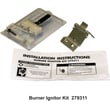
| Dryer will not heat | Check common gas-heat components | Igniter 279311 |
| Dryer overheats or shuts off | Check airflow and safety devices | Dryer thermal fuse WP3390719 |
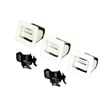
| Squealing or thumping | Inspect drum support and belt drive | Support kit WPW10314173 |
Support typically routes help by model/serial and purchase date. Having that information ready reduces delays and helps ensure you get the right service instructions or replacement parts.
Last updated: March 2026
How do I get my dryer out of lock mode?
On the Kenmore 11070982990 gas dryer, there is no electronic control lock mode to turn off; this model uses a mechanical timer and a Push to Start button. If the dryer seems “locked,” the issue is usually the door not fully closed, the timer not set to a cycle, or a safety device stopping operation.
- Close the door firmly; opening the door stops the dryer and it will not restart until the door is closed and you press Push to Start again.
- Turn the cycle selector (timer) to a drying cycle (not OFF).
- Press Push to Start (this model will not start by holding buttons).
- Unplug the dryer for 1 minute, then plug back in (resets any odd electrical state).
- If the drum light stays on or the dryer will not respond, check the door switch area for lint buildup or a loose strike.
Most customers are seeing one of these conditions:
| What you notice | Most likely cause | What to do |
|---|---|---|
| Dryer will not start, no “click” | Door not fully latched | Re-close door, then press Push to Start |
| Timer set but dryer stops when door opens | Normal operation | Close door to restart, press Push to Start |
| Dryer runs but shuts off quickly | Overheat protection tripped | Clean venting and lint screen; check thermal fuse |
If the dryer will not start even with the door closed and the timer set, common causes include a failed door switch, a blown thermal fuse, or a motor issue. For overheating-related shutdowns, the Dryer thermal fuse is a frequent suspect: dryer thermal fuse WP3390719.
A “locked” symptom is often a safety stop. Restoring airflow (lint screen and vent) prevents repeat shutdowns and helps protect components like the motor and thermostats.
For the exact start and stop steps for the 11070982990, follow the 11070982990 owner's manual.
Last updated: February 2026
How do I know if my Kenmore dryer thermal fuse is blown?
On Kenmore gas dryer model 11070982990, a blown thermal fuse commonly shows up as a dryer that will not run at all (no motor), or a dryer that runs but has heat problems after an overheating event. The sure way to know is a continuity test with the dryer unplugged.
- Dryer will not start even though the door is closed and controls are set
- Dryer stops mid-cycle and then will not restart
- Burning smell or very hot cabinet before the failure (often tied to poor airflow)
- Weak airflow at the outside vent hood
- Lint screen and venting show heavy lint buildup
- Unplug the dryer (and shut off the gas supply as a safety step).
- Access the thermal fuse (typically on the blower housing or exhaust duct area).
- Pull the wires off the fuse terminals.
- Measure continuity across the fuse with a multimeter.
- Continuity present (near 0 ohms or meter beeps): fuse is good
- No continuity (open circuit): fuse is blown and needs replacement
For model-specific access steps and safety notes, follow the 11070982990 owner's manual.
A thermal fuse usually opens because the dryer overheats from restricted airflow. The manual troubleshooting guidance points to lint screen clogs and vent or outside hood blockages as common causes.
- Clean the lint screen before every load
- Inspect and clear the exhaust vent and outside hood for lint buildup
- Make sure the vent is not crushed or kinked behind the dryer
- Confirm the dryer is in its final position with good vent routing
- Avoid long vent runs with too many elbows when possible
| What you are seeing | Commonly checked part | Example part for this model |
|---|---|---|
| Dryer will not run | Thermal fuse | Dryer thermal fuse WP3390719 |
| Poor drying, overheating symptoms | Blower wheel | Dryer blower wheel WP697772 |
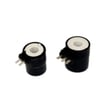
| Heat cuts in and out | Gas valve coils | Dryer valve coil kit 279834 |
The thermal fuse is a one-time safety device; replacing it without correcting venting and lint restrictions often leads to repeat failures and longer dry times.
Last updated: February 2026
How do I tell what model my Kenmore dryer is?
Your Kenmore dryer’s model number is printed on the model and serial number plate. On model 11070982990, that plate is on the dryer cabinet (commonly just inside the door opening) or on the back near the top; record the full model and serial numbers exactly as shown in the 11070982990 owner's manual.
Check these common locations on Kenmore dryers:
- Inside the door opening on the cabinet frame (open the door and look around the opening)
- On the back panel near the top edge
- Along the door opening area near the lint screen housing (varies by design)
- On a sticker or metal plate labeled “Model and Serial Number”
We recommend copying the information exactly, including all digits. You will use it to match the correct parts, diagrams, and troubleshooting steps.
| Item to record | Example format | What it’s used for |
|---|---|---|
| Model number | 11070982990 | Finding the correct Kenmore gas dryer parts list |
| Serial number | Letters and numbers | Determining production details and correct revisions |
| Purchase date (if known) | MM/DD/YYYY | Warranty and service history |
- Use the full model number, not just “Kenmore 110”
- Don’t swap the serial number for the model number; they are separate fields
- If the label is worn, take a clear photo and zoom in to confirm each digit
Kenmore model numbers identify the exact gas dryer design, which determines which components fit (for example, a dryer thermal fuse WP3390719 or an igniter 279311). Using the full model number prevents ordering the wrong part and speeds up troubleshooting.
Last updated: February 2026
Is it worth repairing an old Kenmore dryer?
Yes, a Kenmore gas dryer like model 11070982990 is usually worth repairing when the cabinet is solid, the drum turns smoothly, and the problem is limited to common wear parts (rollers, idler pulley, thermal fuse, or igniter). If repairs are frequent or major gas components are failing repeatedly, replacement makes more sense.
- Repair when the dryer heats and tumbles intermittently or makes noise, but otherwise runs normally.
- Repair when the fix is a single, common part and airflow issues are corrected.
- Replace when you have multiple failures in a short time (heat, motor, timer, and gas ignition issues together).
- Replace when the drum or cabinet is damaged or the dryer has severe corrosion.
- Replace when you cannot maintain safe, proper venting and installation.
These are typical, high-success fixes on Kenmore gas dryers and are available for model 11070982990:
| Symptom | Likely fix | Example part for this model |
|---|---|---|
| Loud thumping or squealing | Drum support or idler system | Support kit WPW10314173 or dryer idler pulley 279640 |
| Runs but no heat (or heat cuts out) | Ignition or safety circuit parts | Igniter 279311 or dryer thermal fuse WP3390719 |
| Heat starts then stops mid-cycle | Gas valve coils | Dryer valve coil kit 279834 |
- Clean the lint screen and confirm strong airflow at the outside vent hood.
- Make sure the vent is not crushed or kinked and the dryer is level.
- Confirm the door fully closes; opening the door stops the dryer and it will not restart until the door is closed and you press Start.
- Review the exhaust requirements and operating steps in the 11070982990 owner's manual.
Most “old dryer” complaints are caused by restricted venting or normal wear parts. Fixing airflow and replacing a small part often restores proper drying, reduces overheating risk, and prevents repeat failures like a blown thermal fuse.
Last updated: February 2026
What is the life expectancy of a Kenmore dryer?
A Kenmore dryer typically lasts 10 to 13 years. With consistent care (especially good airflow and regular cleaning), many Kenmore gas dryers like model 11070982990 run 15 years or longer before major repairs become more common.
- Vent restriction (crushed, kinked, or long vent runs) that makes the dryer run hotter and longer
- Lint buildup in the lint screen housing, blower area, or vent duct
- Overloading that strains the drum support rollers, belt, and idler pulley
- Heat system wear (igniter, gas valve coils, thermostats) from long dry times
- Leveling and installation issues that increase vibration and component wear
For model-specific care and operating guidance, follow the 11070982990 owner's manual.
| Task | How often | Why it matters |
|---|---|---|
| Clean lint screen | Every load | Keeps airflow strong and drying times short |
| Check vent for kinks/crushing | Monthly | Prevents overheating and shutdowns |
| Clean vent duct to outside | Every 6 to 12 months | Reduces heat stress on safety thermostats |
| Wipe drum, check for unusual noise | Monthly | Catches roller or blower issues early |
If your dryer still runs but gets noisy, takes longer to dry, or stops heating intermittently, these parts are frequent wear items on this Kenmore gas dryer:
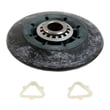
- Support kit WPW10314173 (drum support rollers and related hardware)
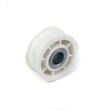
- Dryer idler pulley 279640 (keeps belt tension correct)
- Dryer thermal fuse WP3390719 (opens if the dryer overheats)
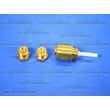
- Dryer valve coil kit 279834 and igniter 279311 (common no-heat culprits)
- Dryer blower wheel WP697772 (airflow and noise issues)
Most “short lifespan” complaints trace back to poor airflow. When venting is restricted, the dryer runs hotter and longer, which accelerates wear on the motor, heat components, and safety devices. Keeping the venting correct and the dryer level helps you get the full expected service life.
Last updated: February 2026