Installation guide
 Owner’s manual
 Error Codes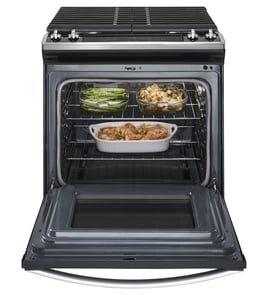
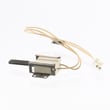


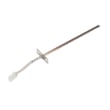

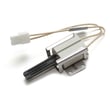
Where to find Kenmore gas range model number?
On Kenmore gas range model 7907861850A, the model and serial number are printed on the identification plate located on the right side of the oven front frame in the storage or warmer drawer compartment (sometimes described as the lower panel area). Confirm the exact spot in the owner's manual.
Where to look on the range
Check these common label locations in this order:
- Pull out the storage drawer or warmer drawer and look along the right-hand front frame
- Look at the lower front panel area near the drawer opening
- If your range has been moved or serviced before, re-check the label after fully opening the drawer
Quick steps to find it fast
- Turn the oven off and let the range cool.
- Pull the storage or warmer drawer fully open.
- Use a flashlight and look on the right side of the oven front frame.
- Write down the model number, serial number, and any lot number/letter shown.
What information to record (and why)
Having the full ID plate details helps us match the correct Kenmore parts and specifications.
| What to record | Example format | Why it matters |
|---|---|---|
| Model number | 7907861850A | Ensures parts fit your exact range |
| Serial number | Letters and numbers | Helps identify production variations |
| Lot number/letter (if shown) | Letter or code | Can narrow down version-specific parts |
Why it matters
Kenmore ranges often have multiple versions that look similar. Using the identification plate info prevents ordering the wrong igniter, sensor, or control component for your exact build.
Last updated: February 2026
How long should a Kenmore gas stove last?
A Kenmore gas range like model 7907861850A typically lasts 15 years with normal household use. Regular cleaning, proper burner flame, and prompt repair of ignition or temperature issues help you get the full service life from the oven and cooktop.
Typical lifespan and what affects it
Most ranges reach their expected life when these basics stay in good shape:
- Burner ignition system (spark ignition and oven igniter)
- Oven temperature control (sensor and control)
- Door seal and hinges (heat retention)
- Gas supply regulation (steady pressure)
- Routine cleaning (especially after spills)
Maintenance that helps your range reach 15 years
Use the care and cleaning guidance in your owner's manual. Focus on the items that most often shorten range life:
- Keep burner heads and ports clear; remove and clean after boilovers.
- Watch for slow oven ignition or no-heat symptoms; address them early.
- Avoid slamming the oven door; it can damage alignment and sealing.
- Keep the oven cavity clean so heat circulates properly.
- If you use self-clean, remove heavy soil first to reduce stress on components.
Quick symptom-to-part checklist
| Symptom | Most likely area | Example part for this model |
|---|---|---|
| Oven won’t heat or takes too long to light | Oven igniter | Tappan range oven burner igniter 316489403 |
| Oven temperature is inaccurate | Temperature sensing | Frigidaire range oven temperature sensor 316490000 |
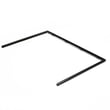
| Heat leaks, uneven baking, longer preheat | Door sealing | Range oven door seal 5304498835 |
| Cooktop clicks but won’t ignite | Spark ignition | Range spark module 5304505695 |
Why it matters
A gas range can run for many years, but small issues like a weak igniter or a leaking door seal make the appliance work harder. Fixing those problems early improves cooking performance and helps the range reach its normal lifespan.
Last updated: February 2026
How to take the top off a Kenmore gas range?
On the Kenmore 7907861850A gas range, the cooktop is not removable, so you should not try to “take the top off.” For access, we typically remove surface parts (grates, burner caps, and burner heads) and, when needed, remove the oven bottom panel instead; see the installation guide.
What you can remove safely for cleaning and access
- Remove the cooking grates.
- Lift off the burner caps.
- Remove the burner heads (on many models they lift off once the cap is removed).
- Clean and dry the parts completely before reinstalling.
- If you need deeper access for an oven flame check, remove the oven bottom panel (not the cooktop).
Oven bottom removal (common service access)
The installation instructions for this style of range describe removing the oven bottom to observe the bake burner flame.
- Turn all controls to OFF and let the oven cool.
- Remove the oven racks.
- Remove the hold-down screws at the rear of the oven bottom.
- Lift up at the rear, disengage the front edge, and pull the panel out.
| Task | What to remove | What to avoid |
|---|---|---|
| Clean top burners | Grates, caps, burner heads | Removing the cooktop |
| Check bake burner flame | Oven bottom panel, burner baffle | Operating with panels removed longer than needed |
Why it matters
Trying to remove a non-removable cooktop can bend panels, damage burner components, or create a gas leak risk. Using the correct access points (surface parts and the oven bottom) keeps the range safe and serviceable.
When a “top removal” question is really a repair symptom
If the goal is to fix ignition or heating problems, these parts are commonly involved:
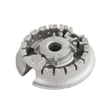
- Range surface burner head 316212400 (clogged ports can cause weak or uneven flames)
- Tappan range oven burner igniter 316489403 (bake ignition issues)
- Range spark module 5304505695 (clicking or no spark on surface burners)
Last updated: February 2026
What are the parts of a gas stove?
A gas stove (gas range) like the Kenmore 7907861850A is made up of surface cooking parts (burners, caps, grates, valves, igniters, knobs) plus the oven system (burner, igniter, temperature sensing and controls), and safety and convenience parts such as the door latch, light, and pressure regulator. See the owner's manual for the feature list and component locations.
Main parts you will see on the cooktop
These parts create and control the top-burner flame.
- Burner grates: support cookware over the flame
- Surface burner heads and caps: shape the flame and help it ignite consistently
- Electrodes (spark igniters): create the spark at the burner
- Burner valves and knobs: turn gas on/off and adjust flame height
- Manifold: distributes gas to each surface burner valve
Common cooktop parts for this model
| What it does | Example part on this model | When it’s usually needed |
|---|---|---|
| Creates spark to light burners | Range spark module 5304505695 | Clicking but weak or no spark at multiple burners |
| Provides burner flame pattern | Range surface burner head 316212400 | Uneven flame, clogged ports, damaged head |
| Supplies gas to all top burners | Range surface burner manifold assembly (varies by section) | Multiple burners have low/no gas flow |
Main parts inside the oven
These parts control baking and broiling performance.
- Oven burner: produces heat for baking
- Oven burner igniter: glows to ignite gas; oven flame typically appears after a short delay
- Oven temperature sensor: helps the control maintain set temperature
- Electronic oven control: sets bake/broil and manages timing
- Oven racks and interior panels: support food and protect components
Why it matters
Knowing the major parts helps you troubleshoot faster. For example, if the oven takes too long to light or won’t heat, the igniter and sensor are common checks; if a surface burner won’t light, correct burner cap and head placement is critical.
Quick tips for correct burner assembly and ignition
Use these checks before replacing parts:
- Match the burner cap to the correct burner head location
- Make sure each burner head has a cap installed for proper ignition and flame size
- Confirm the electrode sits correctly in the burner head slot
- If a burner is slow to light after installation, purge air by leaving the knob on LITE briefly
- After lighting, turn the knob out of LITE and adjust flame as needed
Last updated: February 2026