Installation guide
 Owner’s manual
 Error Codes






What is KitchenAid Sabbath Mode?
KitchenAid Sabbath Mode on the KitchenAid KERK807PSS00 electric freestanding range keeps the oven operating in a bake setting until you turn it off (or for a timed period). While it’s active, tones are silenced and the display does not show temperature changes or normal messages.
What changes when Sabbath Mode is on
Sabbath Mode limits normal feedback and immediate responses from the oven control.
- Only the number pads and START function for operation
- No tones sound
- The display does not show messages or temperature changes
- Heat source icons stay lit on the display
- Opening or closing the door does not turn the oven light on or off
- Heating elements do not switch on or off immediately when the door is opened or closed
How it works on KERK807PSS00
This model supports both untimed and timed Sabbath Mode.
| Feature | Untimed Sabbath Mode | Timed Sabbath Mode |
|---|---|---|
| How long it runs | Until you turn it off | Up to 9 hours 59 minutes |
| What you set first | BAKE temperature | BAKE temperature plus COOK DURATION |
| What happens at the end | You press OFF to exit | Oven turns off at stop time; control stays Sabbath-compliant until OFF |
For the exact button sequence to enable, activate, and deactivate Sabbath Mode on your control panel, follow the steps in the KERK807PSS00 owner's manual.
Why it matters
Sabbath Mode is designed for observance by preventing beeps, message prompts, and immediate light or element responses, while still allowing controlled baking.
Last updated: January 2026
What is an F2 code on a KitchenAid oven?
On the KitchenAid KERK807PSS00 electric range, an F2 error code means the oven sensed an over-temperature condition (the oven temperature is too high). The most common causes are a failed oven temperature sensor, a control/relay problem that keeps an element heating, or a wiring issue.
What to check first (safe, quick steps)
- Cancel the cycle and let the oven cool completely.
- Reset power: turn the range breaker off for 1 minute, then back on.
- If the code returns during preheat, suspect the oven sensor or control.
- If the oven keeps heating when it should be off, suspect a stuck relay on the electronic control.
- If you smell burning insulation or see arcing, shut off power at the breaker.
Likely causes and the parts involved
| Likely cause | What you may notice | Common fix |
|---|---|---|
| Oven temperature sensor out of range | Temps swing, overbakes, F2 during preheat | Test sensor resistance; replace sensor if out of spec |
| Stuck bake/broil relay on control | Oven heats when set to Off | Replace electronic control |
| Wiring/connector issue | Intermittent F2, heat-related failures | Inspect harness, repair damaged wiring |
For this model, the sensor is commonly serviced as the wall oven temperature sensor WPW10131825. Use the wiring diagram and diagnostic guidance in the KERK807PSS00 owner’s manual to locate the sensor circuit and confirm the correct test procedure.
How we recommend testing the oven sensor
- Disconnect power at the breaker.
- Access the sensor connector (usually inside the oven cavity or from the rear, depending on design).
- Measure resistance with a multimeter; compare to the spec in the manual.
- If resistance is out of range or changes erratically when the harness is moved, replace the sensor or repair the wiring.
A helpful skill-builder for this job is how to use a multimeter to test electrical parts video.
Why it matters
An F2 over-temperature condition can lead to poor baking results and can overheat internal wiring and components. Addressing it quickly helps protect the electronic control, elements, and harness connections.
Last updated: January 2026
What is the life expectancy of a KitchenAid oven?
A KitchenAid oven typically lasts 10 to 15 years with normal household use and basic maintenance. For the KitchenAid KERK807PSS00 electric freestanding range, long life depends most on keeping the oven cavity clean, avoiding overheating events, and addressing heating or temperature issues early using the KERK807PSS00 owner's manual.
Typical life expectancy (what to expect)
Most electric ranges and ovens fall into a predictable lifespan range when they are installed correctly and used normally.
- Typical range: 10 to 15 years
- Common “long life” range with good care: 15 to 20 years
- Most frequent early failures: heating components, sensors, electronic control issues, door latch/lock problems
| Component area | What usually wears first | What you may notice |
|---|---|---|
| Oven heating | Bake/broil elements | Slow preheat, uneven baking, no heat |
| Temperature control | Oven sensor | Oven too hot/cold, temperature swings |
| Safety/overheat | High-limit thermostat | Oven shuts off, won’t heat after overheating |
| User interface | Electronic control | Error codes, dead display, random beeping |
What matters most for KERK807PSS00 longevity
The warranty language in the documentation highlights that proper operation and maintenance are expected, and it also shows which areas are designed for longer-term durability (for example, certain elements and the porcelain oven cavity/inner door have extended limited coverage). Use the KERK807PSS00 owner's manual for the exact care and operating practices recommended for this model.
- Keep spills from baking onto the bottom; heavy carbon buildup can trap heat and stress parts
- Avoid repeated self-clean cycles back-to-back; high heat is hard on wiring and controls
- Confirm the range is level; uneven racks and door alignment can affect cooking results
- Use cookware that matches the surface element size to reduce overheating and cycling
- Fix temperature accuracy problems early (they often start small and get worse)
Parts that commonly affect “how long it lasts”
If the oven starts heating inconsistently, repairing the specific failed part often restores normal performance and extends the appliance’s useful life.
- Wall oven temperature sensor WPW10131825 (helps regulate oven temperature)
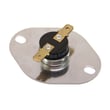
- Oven high-limit thermostat WP9759242 (protects against overheating)
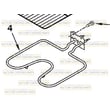
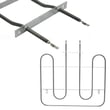
- Bake element 4451175 (primary heat source for baking)
Why it matters
A range that is still structurally sound can often be kept reliable for years by replacing a single failed part (like an oven sensor or bake element). Catching symptoms early helps prevent secondary damage to wiring, controls, and insulation.
Last updated: January 2026