Installation guide
 Owner’s manual
 Error Codes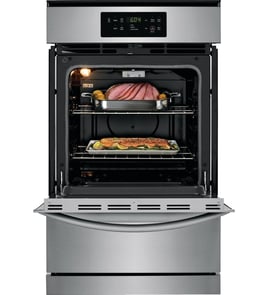


Are all 30 wall ovens the same size?
No. “30-inch” wall ovens are not all the same size. For Kenmore gas wall oven model 79030552803, the cabinet cutout and required clearances are what matter for fit; different brands and even different cavity styles can change the opening height, depth, and mounting needs. Use the 79030552803 installation guide dimensions before you buy or replace an oven.
What “30-inch” usually means (and what it does not)
“30-inch” typically describes the nominal width class, not a guaranteed cabinet opening size.
- The cutout width can vary by manufacturer and design
- The cutout height can vary a lot between single, double, and “1 1/2 cavity” designs
- The overall depth and door swing clearance can differ even when the face width is similar
- Trim pieces can hide small gaps, but they do not fix a wrong cutout
Model 79030552803 fit details to check
From the installation instructions for this Kenmore gas wall oven, we focus on these fit-critical items:
- Cabinet cutout dimensions (width, height, depth)
- Required clearance for door opening (the guide calls out at least 19-3/8 inches)
- Venting placement guidance (for example, vent location relative to the floor)
- Whether your installation is standard or an alternate construction scenario
Common opening scenarios (why “same size” is tricky)
| Scenario | What changes most | What to verify first |
|---|---|---|
| Replacing a similar 30-inch single wall oven | Minor trim and depth differences | Cutout width and depth, door clearance |
| Replacing a different cavity style (example: “1 1/2 cavity”) | Height and mounting approach | Cutout height range, height adjuster needs |
| Installing into an older cabinet opening | Opening may be oversized or undersized | Whether filler strips or runners are needed |
Why it matters
A wall oven that is “30-inch” on the outside can still fail to install safely if the cabinet opening is off. Correct cutout sizing helps prevent mounting problems, door interference, and venting or clearance issues.
Quick install-planning checklist
- Measure the cabinet opening in three places (top, middle, bottom)
- Confirm you have the required door swing clearance
- Compare your measurements to the 79030552803 installation guide
- Plan for proper electrical grounding and gas hookup location
- If your opening is too wide, plan for approved filler strips as described in the guide
Last updated: January 2026
Does anyone make a 30 gas wall oven?
Yes. 30-inch gas wall ovens are made by multiple brands, and your Kenmore gas wall oven model 79030552803 is itself a 30-inch class built-in gas wall oven. The key is matching the cabinet cutout size, gas type (natural vs LP), and electrical grounding requirements before you buy or install.
What to match before choosing a 30-inch gas wall oven
Use these checks to avoid fit and hookup problems:
- Cabinet cutout dimensions: verify width, height, and depth of the opening.
- Support capacity: the cabinet base should support 150 lb (typical requirement for this style of oven).
- Gas type: confirm natural gas vs LP; conversion steps are model-specific.
- Electrical: a properly grounded 3-prong receptacle is required; do not remove the grounding prong.
- Mounting: if the opening is too wide for mounting screws, plywood filler strips are commonly used.
For the exact cutout and hookup requirements for this model, follow the 79030552803 installation guide.
Quick comparison: what “30-inch gas wall oven” usually means
| Item to compare | What to look for | Why it matters |
|---|---|---|
| Width class | 30-inch class | Helps narrow options, but cutout still varies |
| Cutout height range | Varies by model | Determines whether it fits your existing opening |
| Gas type | Natural or LP (convertible on some models) | Wrong setup causes ignition and flame issues |
| Power/grounding | Grounded outlet required | Reduces shock risk and supports safe operation |
Why it matters
A “30-inch” label alone does not guarantee a drop-in fit. Cabinet cutout size, proper grounding, and correct gas pressure setup determine whether the oven installs safely and heats correctly.
Last updated: January 2026
What is the average lifespan of 79030552803?
A Kenmore gas wall oven like model 79030552803 typically lasts 15 years with normal household use and basic maintenance (keeping vents clear, avoiding heavy self-clean use, and fixing ignition issues quickly). Use the owner's manual for care and operating practices that help it reach full life.
What affects lifespan most
- Heat stress from frequent high-temp baking or broiling
- Self-clean cycles (high heat can shorten life of electronics, door latches, and wiring)
- Ignition health (slow ignition can overheat components)
- Ventilation and installation (proper grounding and safe clearances matter)
- Moisture and spills that reach the control area or wiring
Typical lifespan by major system
| System | Typical service life | Common symptoms when aging |
|---|---|---|
| Ignition (hot-surface igniter) | 3 to 7 years | Slow preheat, no bake, gas smell before ignition |
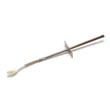
| Temperature sensing | 8 to 12 years | Overbakes, underbakes, temp swings |
| Electronic control | 10 to 15 years | Dead display, erratic operation, won’t start |
| Door hardware and lighting | 5 to 15 years | Door not closing well, light out, lens damage |
Maintenance that extends life
- Keep the oven cavity and burner area free of heavy grease buildup.
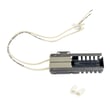
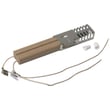
- If bake or broil is slow to light, address it early; the frigidaire range oven burner igniter 5303935066 is a common wear item on gas ovens.
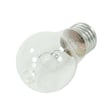
- Replace failed lighting parts promptly to avoid heat damage; use the correct 40-watt bulb such as appliance light bulb, 40-watt 316538904 if your unit uses that style.
- Verify the oven is installed and grounded correctly; follow the installation guide requirements.
- Disconnect power before servicing and label wires during any control work (good practice for safe, correct reassembly).
Why it matters
Knowing the expected 15-year lifespan helps you decide whether to repair (often best for ignition, sensor, or light issues) or plan a replacement when major control or gas-valve problems appear.
Last updated: March 2026