 Installation guide
 Owner’s manual
 Error Codes




What's the most common problem with a Bosch dishwasher?
The most common “problem” we see with Bosch dishwashers like model SHE43P02UC is a no-start or won’t-run complaint caused by basics: the door not fully latched, a cycle not properly started or reset, delay start enabled, or the water supply turned off. These are the first items Bosch lists to check in the SHE43P02UC owner’s manual.
Start with these quick checks before replacing any parts:
- Confirm the door closes firmly and latches; a partially latched door can prevent starting.
- Make sure the dishwasher is actually turned on and a cycle is selected before closing the door.
- Cancel or reset the current cycle if a previous cycle did not complete.
- Check whether Delay start is enabled.
- Verify the home power supply (breaker/fuse) is on.
- Confirm the water supply valve to the dishwasher is turned on.
If the basics are correct and the dishwasher still will not run, these are common repair directions for this Bosch platform:
| Symptom | Likely area | Example part on this model |
|---|---|---|
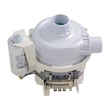
| Won’t drain, water left in tub | Drain system restriction or failed pump | Drain pump 00642239 |
| Poor cleaning, weak spray | Circulation system issue or clogging | Sump filter 00441905 |
| Leaks at the bottom of the door | Door sealing surface or seal issue | Door seal 00432490 |
Most “Bosch dishwasher problems” are setup or condition issues (latch, reset, delay start, water supply). Checking those first prevents unnecessary parts replacement and gets the dishwasher running faster.
If your unit is showing a code or beeping pattern, use Bosch dishwasher error codes to match the symptom to the right troubleshooting path.
Last updated: January 2026
What does speed 60 mean on a Bosch dishwasher?
On a Bosch dishwasher, “Speed 60” is a faster wash program designed to finish a load in about 60 minutes by using hotter water and more active washing than longer, energy-saving cycles. For your Bosch SHE43P02UC, the exact temperature and time can vary with soil level and incoming water temperature.
- Typical total run time is about 1 hour (it can vary by conditions).
- It generally uses hotter water than normal/eco cycles to clean faster.
- It is best for light to moderate soil and same-day dishes.
- It is not the best choice for baked-on or heavy soil loads.
- Results depend on your home’s hot water supply; Bosch cycle times are based on 120°F incoming water.
Bosch uses a “Smart Control” (EcoSense) that can adjust cycle time and water use based on soil load and incoming water temperature. That means Speed 60 may not behave exactly the same from one load to the next.
| What changes | What you may notice | What to do |
|---|---|---|
| Incoming water temp | Longer time or weaker cleaning if water is cool | Run hot water at the sink until hot before starting |
| Soil level | More time or more aggressive washing | Scrape heavy soil; avoid overloading |
| Sanitization conditions | “Sanitized” light may come on if requirements are met | Use the cycle/options recommended in the SHE43P02UC owner’s manual |
Choosing Speed 60 can save time, but it trades some efficiency and heavy-soil performance for speed. If dishes are coming out cloudy or still dirty, switching to a longer cycle or improving loading and water temperature usually fixes it.
For cycle names, indicators, and options specific to your control panel, follow the cycle chart in the SHE43P02UC owner’s manual.
Last updated: January 2026
Can I still use my appliance with an E22 error?
Yes, but we recommend stopping use of your Bosch SHE43P02UC dishwasher until you clear the cause of the E22 error. E22 commonly points to restricted water flow through the filter area, which can lead to poor cleaning and can keep the dishwasher from draining correctly.
- Turn the dishwasher off; then shut off power at the breaker before reaching into the sump area.
- Remove and clean the filter(s) and any debris in the sump area.
- Check the drain path for kinks or clogs, including the air gap (if installed) and the sink/disposer connection.
- Make sure the dishwasher is level and not over-sudsing (use only dishwasher detergent).
- Run a short cycle after cleaning to confirm the error clears.
If cleaning the filter area does not help, the issue is often in the drain system or circulation system.
| Symptom you notice | Most likely area | Example part for this model |
|---|---|---|
| Standing water in bottom | Drain system restriction or weak pump | Drain pump 00642239 |
| Slow drain or intermittent drain | Drain hose kink, clog, or routing issue | Dishwasher drain hose 00668108 |
| Poor wash pressure plus error returns | Circulation/recirculation issue | Dishwasher recirculation pump assembly 00442548 |
An E22 condition usually means water is not moving through the filtration and drain system the way it should. Continuing to run cycles can leave dirty water in the tub, reduce cleaning performance, and increase the chance of leaks if water backs up.
For the exact filter removal steps, cleaning routine, and any Self Help troubleshooting for your Bosch SHE43P02UC, follow the instructions in the SHE43P02UC owner’s manual. For shutoff procedures and safety basics (power and water), use the SHE43P02UC installation guide.
Last updated: January 2026





