Owner’s manual



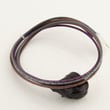

Can range hoods be repaired?
Yes. Kenmore range hood and downdraft systems like model 23359966400 are designed to be repaired; most problems come from a dirty filter, a wiring issue, or a worn moving part (motor, slide, or linkage) that can be cleaned, tested, or replaced using the owner's manual.
What you can repair (most common fixes)
- Poor airflow or smoke not clearing: clean the vent path and replace a clogged filter
- Unit will not turn on: check power, outlet, cord, and internal wiring connections
- Vent rises but blower is weak or noisy: inspect for dust buildup and worn motor components
- Vent will not raise or lower smoothly: inspect slides/rails and linkage for binding
- Intermittent operation: look for loose connections in the harness and switch area
Parts that commonly solve repair issues
If troubleshooting points to a failed component, these model-matched parts are typical repair solutions:
| Symptom | Likely area | Example model-matched part |
|---|---|---|
| No power or trips breaker | Wiring/grounding | Ground wire S99271218 |
| Vent binds or sticks | Slide/rail hardware | Range hood slide rail S97015973 |
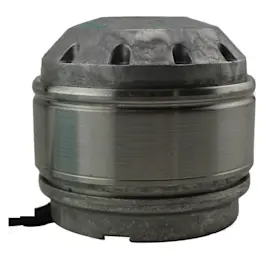
| Vent does not lift or struggles | Drive/motor | Gear motor S97017014 |
| Grease buildup, reduced airflow | Filtration | Range hood filter S97015841 |
Safe troubleshooting steps we recommend
- Disconnect power before cleaning or accessing internal components.
- Clean filters and grease-laden surfaces frequently; restricted airflow can mimic a “bad motor.”
- Confirm the vent is moving freely; binding slides can overload the drive.
- Inspect wiring for damage or loose connectors; repair damaged wires correctly.
- Check ductwork for restrictions; crushed ducting and loose joints reduce performance.
Why it matters
A repair is usually faster and less expensive than replacement, and it restores proper ventilation. Keeping filters clean and the vent mechanism moving freely also reduces strain on the motor and helps prevent noisy operation.
Last updated: February 2026
Do you need make up air for a 400 cfm range hood?
Yes. For a 400 CFM range hood, makeup air is commonly required once the hood is rated over 400 CFM, and it is still a smart design choice at 400 CFM in tighter homes. For your Kenmore Elite 23359966400 downdraft blower setup, confirm the exact blower rating and installation requirements in the owner's manual.
What “makeup air” means (and why it matters)
Makeup air is controlled outdoor air brought back into the home to replace air your range hood exhausts. Without it, you can get negative pressure that reduces venting performance and can backdraft other combustion appliances.
Why it matters: a downdraft blower moves a lot of air; if the house cannot “replace” that air, smoke and odors can linger and the blower can sound louder while moving less air.
Code and real-world guidance
Many building codes use 400 CFM as the threshold where a makeup air system is required when the hood is greater than 400 CFM. Even if your hood is exactly 400 CFM, makeup air is often recommended when the home is well-sealed.
You’re more likely to need makeup air if you have:
- A tight, newer home (spray foam, sealed attic, new windows)
- A gas cooktop or other combustion appliances nearby
- A fireplace that is sensitive to drafts
- Long duct runs or restrictive ducting (elbows, transitions)
- A downdraft system used on higher speeds frequently
Quick checks we use before recommending a solution
- Verify the hood’s actual rated airflow (CFM) at the installed duct configuration
- Confirm the blower is ducted outdoors (required for ducted fans)
- Compare your duct design to typical best practice (keep equivalent duct length reasonable)
- Watch for symptoms: doors “pulling shut,” whistling at windows, weak capture of smoke
Common options (at a glance)
| Option | What it does | Typical use case |
|---|---|---|
| Passive inlet | Lets air in when the house depressurizes | Mild negative pressure, older homes |
| Motorized makeup air damper | Opens when the hood runs | Code-driven installs, tighter homes |
| Interlocked system | Ties damper to hood operation | Higher airflow systems, inspections |
Installation notes for this model
Your 23359966400 downdraft blower system must be vented outdoors and uses metal ductwork for fire safety. We also plan wiring and grounding carefully for safe operation; details and clearances are in the owner's manual.
Last updated: February 2026
Does higher CFM mean quieter?
No. Higher CFM (airflow) usually means the blower is moving more air and can be louder, especially at higher speeds. For your Kenmore Elite 23359966400 downdraft blower, “quieter” depends more on the fan speed you run, duct design, and vibration control than on CFM alone; use the owner's manual to match operation and setup to your kitchen.
What to compare besides CFM
When you’re shopping or troubleshooting noise, focus on these factors:
- Sone rating (lower sones = quieter at a given speed)
- Fan speed setting (low/medium is typically much quieter than high)
- Ductwork layout (shorter runs and fewer elbows reduce turbulence noise)
- Vibration and mounting (loose fasteners or misalignment can amplify sound)
- Filter and vent cleanliness (grease buildup can change airflow and add noise)
Why ducting matters (a lot)
This model performs best with ducting that stays within a typical “equivalent length” limit and uses smooth, metal ductwork. Long duct runs, tight elbows, and restrictive transitions force the blower to work harder, which increases air noise.
Quick ducting checklist
- Vent ducted systems to the outdoors
- Use metal ductwork
- Keep the duct path as short and straight as possible
- Minimize elbows and transitions
- Seal joints to prevent leaks and rattles
Practical guidance for quieter everyday use
The manual describes turning the downdraft on before cooking and letting it run a few minutes after; that approach often lets you use a lower speed most of the time.
| Cooking situation | Typical best approach | Noise impact |
|---|---|---|
| Light simmering | Low speed | Lowest |
| Pan frying | Medium speed | Moderate |
| Heavy smoke or high heat | High speed (as needed) | Highest |
Why it matters
CFM is about capture and removal of smoke, steam, and odors. Noise is about how efficiently the system moves that air through the vent, duct, and cabinet without turbulence or vibration. Balancing both gives better ventilation without the “jet engine” effect.
Last updated: February 2026
What are the parts of a range hood called?
On the Kenmore Elite 23359966400 downdraft blower (range hood ventilation system), the main parts are the vent housing and blower, grease filters, controls, wiring, and the lift/slide hardware that raises and lowers the downdraft intake. For the exact part names used for your model, use the exploded views in the owner's manual.
Common range hood part names (and what they do)
Most range hoods and downdraft vents use these component names:
- Canopy or vent housing: the main body that captures smoke and grease
- Blower motor and fan wheel: moves air through the ductwork
- Grease filter(s): traps grease before it reaches the blower and ducts
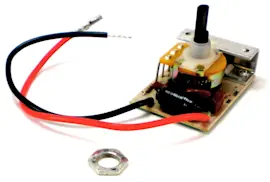
- Control panel or switch assembly: turns the unit on and sets speed
- Duct collar, transitions, clamps: connects the hood to ductwork
- Wiring harness and ground wire: powers the unit and provides electrical grounding
Model-specific examples for Kenmore Elite 23359966400
These are examples of part names you will see for this model’s downdraft system:
| Part name (as listed) | What it’s for | Example part on this model |
|---|---|---|
| Range hood filter | Captures grease and helps protect the blower | Range hood filter S97015841 |
| Gear motor | Raises/lowers the downdraft vent mechanism | Gear motor S97017014 |
| Range hood thermostat | Helps protect the unit if temperatures rise | Range hood thermostat S99030323 |
| Ground wire | Provides a safe path to ground | Ground wire S99271218 |
Why the names matter when ordering parts
Using the correct part name (and the model number 23359966400) helps match the right component to the right location in the downdraft assembly. This is especially important for lift hardware (slides, rails, crank arm) and electrical parts (harness, thermostat).
Quick tips to identify the part you need
- Match the location in the diagram to the part list in the manual
- Look for the exact part ID when ordering (for example, S97015841)
- For airflow issues, check the filters and duct connections first
- For lift issues, focus on the gear motor, crank arm, slides, and rails
- For power issues, inspect the outlet, cord, harness, and ground wire
Last updated: February 2026