Owner’s manual
 Error Codes


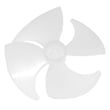
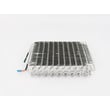
What's the average lifespan of a Kenmore refrigerator?
Most Kenmore refrigerators average 10 to 15 years of service life; a well-maintained Kenmore 1064650045714 side-by-side refrigerator often reaches the upper end of that range when airflow, door sealing, and cooling-system cleanliness are kept in good shape (see the 1064650045714 owner's manual).
Typical lifespan and what to expect
In normal household use, here is what we see most often:
- 10 to 15 years: typical lifespan for most Kenmore refrigerators
- 15+ years: common when condenser coils are kept clean and door gaskets seal tightly
- Under 10 years: more likely when the unit runs hot (dirty coils), has frequent door openings, or has unresolved ice and water issues
| Age of refrigerator | What’s common | What we recommend |
|---|---|---|
| 0 to 5 years | Minor adjustments, filters, occasional ice maker issues | Keep temps steady; replace filters on schedule |
| 6 to 10 years | Fan motors, inlet valves, icemaker wear | Address small cooling or water problems early |
| 11 to 15 years | Seals, defrost components, airflow problems | Inspect gaskets; clean coils; watch for frost buildup |
| 16+ years | Higher chance of major sealed-system repairs | Compare repair cost vs. replacement |
Maintenance that extends life (high impact)
These steps reduce compressor run time and prevent common failures:
- Clean condenser coils and ensure good airflow around the cabinet
- Keep freezer and fresh food sections at consistent settings (avoid frequent extreme changes)
- Check door closing and alignment; fix gaps that cause warm air leaks
- Keep the ice maker and dispenser area clear of clumps and jams
- If water dispensing slows, troubleshoot the supply and filtration before parts overheat or strain
Why it matters
A refrigerator’s lifespan is mostly about run time and heat. When coils are dirty or a door gasket leaks, the compressor and fans run longer, which accelerates wear and shortens overall life.
Last updated: February 2026
Where is the model number on a Kenmore side by side refrigerator?
On Kenmore side-by-side refrigerator model 1064650045714, the model number is printed on the appliance identification label (the same label typically lists the serial number). We use that label to match the correct parts, diagrams, and service information for your exact refrigerator.
Most common places to check
Look for a paper or foil label in one of these spots:
- Inside the fresh food compartment on a side wall (often near the top)
- On the ceiling of the fresh food compartment near the light
- On the inside edge of the refrigerator door (hinge side)
- Behind the base grille at the bottom front (you may need to remove the grille)
- On the back exterior panel near the power cord
For model-specific label locations and access steps, use the 1064650045714 owner's manual.
How to read the label (model vs. serial)
The label usually shows both numbers. Use this quick guide:
| What you see on the label | What it’s used for | Example format |
|---|---|---|
| Model number | Identifies the exact design and parts list | 1064650045714 |
| Serial number | Identifies your specific unit and production run | Letters and numbers |
Why it matters
Kenmore model numbers can look similar across different refrigerator families. Using the exact model number (and often the serial number) prevents ordering the wrong items like an ice maker, water inlet valve, or door gasket.
Quick tips before you write it down
- Take a clear photo of the label so you do not mix up digits.
- Copy the model number exactly as printed (no spaces).
- If the label is hard to read, gently wipe it with a damp cloth and dry it.
Last updated: February 2026
How wide is a Kenmore side-by-side refrigerator?
Most Kenmore side-by-side refrigerators, including model 1064650045714, are designed to fit a standard 36-inch-wide cabinet opening; the manual for this series lists a minimum cabinet cut-out width of 36 in (91.44 cm). For the exact overall width of your unit (case and doors), confirm in the 1064650045714 owner's manual.
What “36 inches wide” means for fit
A 36-inch cut-out is the opening your kitchen cabinetry provides. The refrigerator itself can be close to that width, but you also need clearance for airflow and door swing.
- Plan on 36 in minimum cabinet opening
- Leave 1/2 in clearance on each side and at the top for ventilation
- Leave 2 in clearance behind the refrigerator
- If installed next to a fixed wall, allow about 2 in on the wall side so doors can swing open
Quick sizing checklist (before you buy or move it)
Use this list to avoid common “it won’t fit” problems:
- Measure the cabinet opening width in 3 places (top, middle, bottom)
- Measure doorway and hallway widths for delivery path
- Confirm depth needs (counter-depth vs standard-depth)
- Account for handles and door swing clearance
- Verify you can pull out crisper drawers without hitting a wall
Typical widths you will see (side-by-side refrigerators)
These are common real-world ranges; your exact dimension can vary by door style and handle.
| Refrigerator type | Typical overall width | Typical cabinet cut-out |
|---|---|---|
| Standard side-by-side | 35 1/2 in to 36 in | 36 in |
| Counter-depth side-by-side | 35 1/2 in to 36 in | 36 in |
Why it matters
A refrigerator that is even 1/4 inch too wide can bind against cabinets, restrict ventilation (hurting cooling performance), or prevent doors from opening fully. Planning around the 36-inch cut-out plus clearances helps your Kenmore refrigerator cool correctly and fit comfortably.
Last updated: February 2026
How many cubic feet is the Kenmore refrigerator model 1064650045714?
The Kenmore side-by-side refrigerator model 1064650045714 has a total capacity of 21.9 cubic feet. For the most accurate breakdown of refrigerator vs. freezer space and feature details, use the 1064650045714 owner's manual.
Capacity details (what “21.9 cu. ft.” means)
Capacity is the combined interior storage volume of both compartments. It helps you compare models and plan food storage.
- Total capacity: 21.9 cu. ft.
- Includes fresh food + freezer space
- Usable space can feel smaller if shelves, bins, or the ice maker take up room
- Door bins and adjustable shelves affect how the space is organized
Quick reference table
| Spec | What to expect for this model | Why it matters |
|---|---|---|
| Total capacity | 21.9 cu. ft. | Overall storage size comparison |
| Style | Side-by-side | Narrower compartments, tall storage |
| Installation cutout width (typical) | 36 in. cabinet opening | Fit through space and door swing planning |
Why it matters
Knowing the cubic feet helps us match replacement parts and accessories to the correct platform, and it also helps you decide if storage bins, shelves, or an ice system fit your day-to-day needs.
Related tips for this Kenmore 106 platform
If you are troubleshooting cooling or ice production (which can affect usable space due to frost or ice buildup), we recommend checking the troubleshooting section in the 1064650045714 owner's manual and using the Kenmore 106 model refrigerator error codes guide when your display shows a code.
Last updated: February 2026
Can I run my Kenmore refrigerator without a water filter?
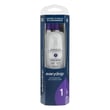
Yes. On Kenmore model 1064650045714, you can operate the refrigerator with the water filter removed; this is commonly done for troubleshooting low water flow (especially with reverse osmosis) or while waiting for a replacement. Water and ice will be unfiltered, and you may need to flush the system afterward per the 1064650045714 owner's manual.
When running without a filter makes sense
- You use a reverse osmosis (RO) system and water flow is weak; the manual notes the refrigerator filter can further reduce pressure when used with RO.
- You are diagnosing slow dispensing or small ice cubes.
- You are temporarily waiting for a new filter.
What to expect (and what to do next)
- Taste and odor: Water and ice quality can drop because filtration is bypassed.
- Flow and ice production: Flow may improve if a restricted filter was the cause.
- Dripping after changes: Air in the line can cause dripping; flush the water system after reconnecting water or replacing the filter.
- Maintenance: Replace the filter at least every 6 months (or sooner if flow drops noticeably).
Quick comparison
| Setup | Water quality | Water flow | Best use case |
|---|---|---|---|
| Filter installed | Filtered | Normal to reduced | Everyday use |
| Filter removed | Unfiltered | Often higher | Short-term troubleshooting or RO pressure issues |
Steps we recommend
- Remove the filter from the base grille filter compartment (see 1064650045714 owner's manual).
- Dispense water and check for improved flow.
- If you reinstall a filter, flush the water system by dispensing about 3 gallons (12 L) total using 5 seconds on, 5 seconds off cycles.
- If flow is still poor, inspect the household supply and consider testing the refrigerator water inlet valve WPW10179146.
Why it matters
Running without a filter can quickly separate a water supply or valve issue from a restricted filter issue, which saves time and helps prevent repeat ice maker and dispenser problems.
Last updated: February 2026
Why is my Kenmore side by side refrigerator leaking water?
Water leaks on Kenmore side-by-side refrigerator model 1064650045714 usually come from a clogged defrost drain, a loose water supply connection, or normal dripping at the dispenser when the glass is pulled away too soon. We recommend checking the leak location first, then addressing the most likely cause.
Quick checks based on where you see water
- Under the freezer or fresh food compartment (inside the cabinet): defrost drain likely iced over or clogged.
- Front of the unit near the dispenser: a few drops after dispensing can be normal; technique and air in lines matter.
- Behind the refrigerator: water line connections may be loose or not fully seated.
- Under the unit (floor puddle): drain overflow, tubing leak, or a slow valve seep.
Fixes you can try first
- Confirm the source: Dry everything, then watch for the first place water reappears.
- Dispenser drip: Hold the glass under the dispenser 2 to 3 seconds after releasing the lever; flush water if a filter was recently changed (air in lines can cause dripping).
- Check rear connections: Verify the household water line and refrigerator connection are firmly tightened.
- Clear the defrost drain: Remove food/ice buildup around the drain opening; melt ice with warm water (do not use sharp tools).
- Inspect tubing for kinks or cracks: Pay attention to the door hinge area and any exposed lines.
Parts that commonly relate to leaks on this model
If you confirm the leak is tied to the water supply system, these model-matched parts are common suspects:
| Leak symptom | Most likely area | Model-matched part to consider |
|---|---|---|
| Water pooling, slow seep, or no/weak fill | Back of unit, valve area | Refrigerator water inlet valve WPW10179146 |
| Drips or leaks tied to dispenser line routing | Door hinge area or cabinet routing | Refrigerator water tube W10823511 |
Why it matters
Even a small leak can lead to ice buildup, poor cooling airflow, and floor damage. Fixing the source early also helps prevent ice maker and water dispenser problems.
Helpful reference
For model-specific troubleshooting steps for ice and water symptoms (including dispenser dripping and rear-connection leaks), use the 1064650045714 owner's manual.
Last updated: February 2026
What are the most common problems with Kenmore refrigerators?
The most common problems we see on Kenmore refrigerators like model 1064650045714 are cooling issues, water leaks, ice maker and dispenser troubles, and unusual noises. These typically trace back to airflow restrictions (dirty coils or a failed fan), defrost system problems, or water supply components; the 1064650045714 owner's manual troubleshooting section is a great starting point.
Common problems and what usually causes them
- Not cooling or weak cooling: dirty condenser coils, blocked vents, failed evaporator fan motor, or defrost ice buildup
- Freezer cold but refrigerator warm: airflow problem (often evaporator fan or damper/air channels)
- Water leaking or puddles: clogged defrost drain, loose water line connections, or a seeping inlet valve
- Ice maker not making ice: water supply issue, inlet valve problem, or ice maker assembly failure
- Noisy operation: fan blade hitting ice, worn fan motor, or vibration from the cabinet/lines
Quick checks we recommend first (before replacing parts)
- Confirm power and outlet: the manual notes to plug into a grounded 3-prong outlet and avoid extension cords.
- Give a new install time: allow 24 hours for full cooling after installation.
- Check airflow: make sure vents are not blocked by food packages.
- Clean condenser coils: heavy dust makes the compressor run longer and cooling weaker.
- Look for frost buildup: heavy frost on the freezer back wall points to a defrost problem.
Parts that commonly solve these symptoms (for model 1064650045714)
| Symptom | Common suspect | Example model-matched part |
|---|---|---|
| Warm temps, poor airflow | Evaporator fan not moving air | Refrigerator evaporator fan motor WP2315549 |
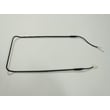
| Frost buildup, warming | Defrost heater not heating | Refrigerator heater WP2323198 |
| No ice, no water fill | Water valve not opening | Refrigerator water inlet valve WPW10179146 |
| Ice maker dead or inconsistent | Ice maker module failure | Refrigerator ice maker assembly WPW10300022 |
Why it matters
Cooling, ice, and leak complaints usually share the same root causes: airflow and water control. Fixing a dirty coil, a failing evaporator fan, or a weak inlet valve early helps protect food temperatures and reduces strain on the compressor.
Related DIY help
For dispenser and ice-related repairs, we recommend how to disassemble a Kenmore refrigerator dispenser. For model-family diagnostics, Kenmore 106 model refrigerator error codes can help you narrow down control and sensor issues.
Last updated: February 2026