Owner’s manual
 Error Codes


What is the disadvantage of a side-by-side fridge?
A common disadvantage of a side-by-side refrigerator like the GE GSHS6HGDBCSS is reduced usable width in each compartment; wide platters, pizza boxes, and large produce trays can be harder to fit and organize compared with many French door designs.
Common drawbacks you may notice
- Narrower shelves in both the fresh food and freezer sections can limit wide items.
- More bending and scanning: fresh foods are spread top-to-bottom, so items can get “lost” at eye level.
- Freezer storage can feel tighter for bulky bags because the compartment is narrower.
- Door storage can take up interior space when bins are heavily loaded.
- More door openings: you may open the refrigerator side more often to access frequently used items.
Quick comparison: side-by-side vs French door
| Feature | Side-by-side (like GSHS6HGDBCSS) | French door (typical) |
|---|---|---|
| Shelf width | Narrower | Wider |
| Freezer access | Eye-level, vertical | Pull-out drawer |
| Best for | Frozen-food access, tight kitchens | Wide items, fresh-food visibility |
Tips to reduce the downsides
We recommend using the layout features described in the GSHS6HGDBCSS owner’s manual to make the most of the vertical space.
- Keep everyday items at eye level; move rarely used items to upper shelves.
- Use clear bins to group snacks, deli items, and condiments.
- Store wide items (party platters, sheet pans) on the refrigerator side only when shelves are adjusted.
- Avoid blocking air vents so temperatures stay even.
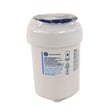
- If water flow or ice production drops, replacing the filter on schedule helps; use the compatible GE refrigerator water filter MWFP.
Why it matters
Side-by-side refrigerators can be a great fit for narrow kitchens and quick freezer access, but the narrower compartments can affect how you shop, store leftovers, and organize fresh foods day to day.
Last updated: January 2026
What is the most common problem with GE refrigerators ice maker?
A very common reason a GE refrigerator ice maker stops making ice is restricted water flow, most often from a clogged water filter. On GE model GSHS6HGDBCSS, the owner’s manual notes to replace the filter if dispenser or icemaker flow decreases; many “no ice” complaints start there.
Quick checks we recommend first
- Confirm the icemaker power switch is set to ON.
- Allow 12 to 24 hours for a newly installed or recently restarted refrigerator to begin making ice.
- Make sure the freezer is cold enough; the icemaker typically starts filling once it reaches about 15°F.
- Replace the water filter if water flow is slow or the filter is older than about 6 months.
- Throw away the first few batches after restoring water flow to clear the line.
Parts that commonly fix “no ice” on this model
If basic checks point to a water supply issue, these are the most common parts involved:
- GE refrigerator water filter MWFP
- Refrigerator water valve WR57X33326
- GE refrigerator ice maker kit WR30X10093
What to look for (symptom-to-cause guide)
| Symptom | Most likely cause | What to do next |
|---|---|---|
| No ice and water dispenser is also weak | Clogged filter or low supply pressure | Replace filter; verify shutoff valve fully open |
| No ice but dispenser water is normal | Icemaker not turned on, or icemaker issue | Check switch; inspect icemaker and fill area |
| Hollow/small cubes | Restricted water flow | Replace filter; check inlet valve |
| Ice production is slow | Freezer too warm or frequent door openings | Verify temps; reduce door openings |
Why it matters
The ice maker depends on steady water flow and a cold freezer. A partially clogged filter can reduce flow enough that the mold does not fill correctly, leading to no ice, small cubes, or slow production.
For model-specific operating details (icemaker switch location, expected production, and filter replacement steps), use the GSHS6HGDBCSS owner’s manual.
Last updated: January 2026
How do I find the model number on my GSHS6HGDBCSS?
For your GE GSHS6HGDBCSS side-by-side refrigerator, the model number and serial number are printed on a label inside the fresh food (refrigerator) compartment; it’s located at the top right side. Write both numbers down before ordering parts or scheduling service.
Where to look (exact location)
Check these spots in order:
- Open the refrigerator (fresh food) door
- Look along the top interior area
- Focus on the right-hand side wall/ceiling area
- Find the rating label with Model # and Serial #
- Record both numbers exactly as shown (letters and numbers)
What the label looks like
Most GE side-by-side rating labels include:
- Model # (example: GSHS6HGDBCSS)
- Serial #
- Electrical information (voltage/amps)
- Certification and manufacturing details
| Item on label | What it’s used for | Why you need it |
|---|---|---|
| Model number | Identifies the exact refrigerator design | Ensures diagrams and parts match your unit |
| Serial number | Identifies production run and date code | Helps confirm correct revisions and compatibility |
Why it matters
GE often uses multiple versions of similar-looking refrigerators; the model and serial numbers make sure you get the correct replacement parts (like a water filter, ice maker kit, or temperature sensor) and the right troubleshooting steps.
Helpful tip before ordering parts
- Take a clear photo of the label
- Use the full model number (including any suffix letters)
- Match parts by model first, then confirm by part number
For more details on identification labels and model-specific information, use the owner's manual.
Last updated: March 2026