




How to find model number on Craftsman chainsaw?
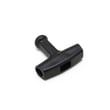
Every Craftsman chainsaw leaves the factory with a model/serial label; on the Craftsman model 358350962, you will typically find it on the engine housing (starter side), near the rear handle, or on the underside of the saw body. Use that exact model number to match the correct parts list.
Where to look on the saw
Check these common label locations (wipe off oil and sawdust first):
- On the side of the engine casing near the recoil starter cover
- Near the rear handle or trigger area
- On the bottom of the chassis, close to the bar mount studs
- Near the fuel tank area (often on the plastic housing)
- Occasionally under the top cover (air filter cover area)
What the label usually shows
Most chainsaw ID labels include both a model number and a serial number.
| Label item | What it’s used for | Example format |
|---|---|---|
| Model number | Choosing the correct illustrated parts list | 358350962 |
| Serial number | Identifying production run details for service | Letters and numbers |
| Engine info | Fuel mix and basic specs (varies) | CC / RPM (varies) |
Tips if the label is hard to read
- Clean the area with a dry rag first; avoid soaking the label.
- Use a flashlight at an angle to make faint printing easier to see.
- Take a close-up photo and zoom in.
- If the sticker is missing, check for a stamped number on the crankcase or a tag near the handle (varies by build).
Why it matters
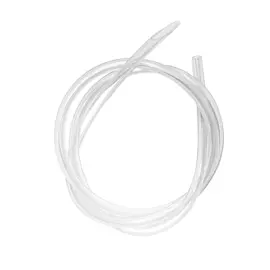
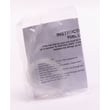
Using the exact model number prevents ordering the wrong bar, chain, or fuel system parts. For example, once you confirm your model, you can match wear items like the chain 91PX052G or a fuel line component such as the fuel pick link 530069216 to the correct diagrams.
Last updated: February 2026
Why does my Craftsman chainsaw stall when I give it gas?
When your Craftsman gas chainsaw model 358350962 stalls as you squeeze the throttle, it is usually running lean from restricted fuel flow or a carburetor that is not metering fuel correctly. Start by addressing old fuel, the fuel pickup/filter in the tank, and basic air and spark checks.
Quick checks that fix most “stalls on throttle” problems
- Drain old fuel and refill with fresh, properly mixed 2-cycle fuel.
- Inspect the in-tank fuel pickup and line for cracking, softness, or blockage; replace if suspect.
- Check the air filter; a heavily dirty filter can cause poor acceleration.
- Confirm the chain is not over-tightened and the bar is lubricated; excessive load can bog the engine.
- Verify the spark plug condition and gap; replace if fouled.
A common fuel-delivery culprit on this model is the in-tank pickup/filter assembly. If fuel flow is inconsistent, replace the fuel pick link 530069216.
What to do next (in a practical order)
- Fuel first: If fuel is older than about 30 days (or smells sour/varnished), replace it.
- Fuel pickup/line: Pull the pickup from the tank with a hook and check for clogging or a split line.
- Air and exhaust: Clean the air filter; check the muffler spark arrestor screen (if equipped) for carbon buildup.
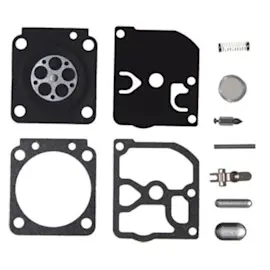
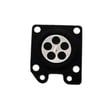
- Carburetor metering: If it idles but dies on throttle after the steps above, the carburetor diaphragm can be stiff or damaged; consider replacing the diaphragm 503896701.
Symptom-to-cause guide
| What you notice | Most likely cause | What we recommend |
|---|---|---|
| Idles OK, dies when you hit the trigger | Restricted fuel pickup/filter, stale fuel | Replace fuel, inspect/replace pickup and line |
| Needs choke to keep running | Lean condition (fuel restriction or carb issue) | Check pickup/line, then carb diaphragm |
| Bogging only when cutting | Chain too dull/tight, bar oiling issue | Sharpen chain, set tension, confirm oiling |
| Random stall after a bump | Loose ignition/flywheel issue | Inspect flywheel key and fasteners |
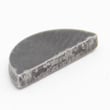
If the saw took a hard stop (pinched bar, sudden kickback, or impact) and then started stalling, inspect the flywheel key 530015126 because a partially sheared key can affect timing.
Why it matters
Running lean (not enough fuel) makes a chainsaw stall on acceleration and can also overheat the engine. Fixing fuel delivery and carb metering restores smooth throttle response and helps protect the piston and cylinder.
Last updated: February 2026
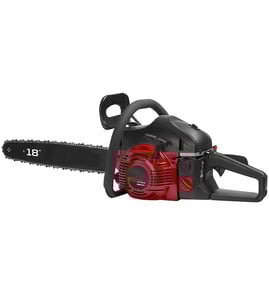
What is the Craftsman 358350962 42 cc 2-cycle gas 18 chainsaw?
The Craftsman 358350962 is a gas-powered, 2-cycle chainsaw in the 42 cc class, built for typical homeowner cutting tasks like limbing and bucking firewood. This model uses common wear items such as a guide bar and chain, which you can match by part ID when replacing.
What this chainsaw is designed to do
We see this type of Craftsman saw used most often for light to medium-duty cutting where portability matters.
- Limbing and trimming downed branches
- Cutting firewood to length
- Storm cleanup and general yard work
- Occasional felling of small trees (with proper technique and safety gear)
Key components you replace most often
For the Craftsman 358350962, the most common maintenance replacements are the cutting components and fuel system items.
- Chain 91PX052G (cutting chain)
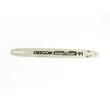
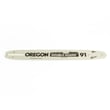
- 14 guid bar 140SDEA041 (14-inch guide bar option)
- 16 guid bar 160SDEA041 (16-inch guide bar option)
- Fuel pick link 530069216 (fuel line/pickup style part used in the fuel system)
Quick compatibility check (bar and chain)
Use the part IDs below to ensure you are ordering the correct cutting setup for your saw.
| Item | Part name | Part ID |
|---|---|---|
| Chain | Chain | 91PX052G |
| Guide bar (14-inch) | 14 Guid Bar | 140SDEA041 |
| Guide bar (16-inch) | 16 Guid Bar | 160SDEA041 |
Why it matters
Matching the correct bar and chain (and keeping the fuel system in good shape) directly affects cutting speed, safety, and how hard the engine has to work. A mismatched or worn chain can make the saw feel weak even when the engine is running normally.
Last updated: February 2026
Do you use 40 1 or 50 1 gas in a chainsaw?
For the Craftsman gas chainsaw model 358350962, use the gas-to-2-cycle oil ratio specified on the fuel cap, in the operator labeling, or in your printed manual. Many 2-cycle chainsaws run either 40:1 or 50:1, and using the correct ratio prevents plug fouling, poor performance, and engine damage.
40:1 vs 50:1: what the numbers mean
Both ratios are common on 2-stroke chainsaws; the right one is the one your engine was designed for.
- 40:1 means more oil in the mix (richer oil blend)
- 50:1 means less oil in the mix (leaner oil blend)
- Use fresh gasoline and 2-cycle engine oil labeled for air-cooled 2-stroke engines
- Mix fuel in an approved container; do not mix in the chainsaw tank
Mixing chart (quick reference)
| Gasoline amount | Oil for 50:1 | Oil for 40:1 |
|---|---|---|
| 1 gallon | 2.6 fl oz | 3.2 fl oz |
| 2 gallons | 5.1 fl oz | 6.4 fl oz |
| 5 gallons | 12.8 fl oz | 16.0 fl oz |
How to confirm the correct ratio on your saw
Check these spots on model 358350962 before you mix a new batch:
- Fuel cap markings (often lists 40:1 or 50:1)
- Decals near the fuel tank or starter housing
- The original operator manual that came with the saw
- Any emissions or engine label on the crankcase
Why it matters
Too little oil can overheat and score the piston and cylinder; too much oil can foul the spark plug and clog the muffler spark arrestor. The correct mix ratio keeps lubrication and combustion balanced.
If the saw runs poorly after fresh fuel
Fuel delivery problems are common on older 2-cycle saws. If it bogs, surges, or won’t stay running, inspect the fuel line and pickup first; a cracked or restricted line can mimic a bad carburetor.
- Replace a brittle or leaking fuel line with fuel pick link 530069216
- Check for stale fuel and clean the tank
- Verify the chain is sharp and properly tensioned to avoid excess load
Last updated: February 2026