Error Codes



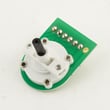
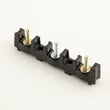
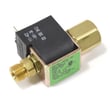
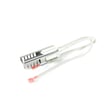
How to clean a Thermador igniter?
On a Thermador PRG366EH01 gas range, we clean the igniter area by removing debris and grease so the spark can jump cleanly to the burner and ground. The goal is a clean metal-to-metal path at the burner head and a dry, unobstructed igniter tip.
- Turn all burner knobs to OFF and let everything cool completely.
- Shut off the gas supply if you will lift the cooktop or remove burner parts.
- Unplug the range (or switch off the breaker) to prevent accidental ignition.
- Never scrape the igniter with a knife or use steel wool on the ceramic.
- Keep water and cleaner out of the igniter base and wiring.
- Remove grates and lift off burner caps/heads (as your model allows).
- Wipe loose crumbs and grease from the burner base with a dry paper towel.
- Use a soft toothbrush or nylon brush to clean around the igniter tip and the burner ports.
- If needed, use a cotton swab lightly dampened with rubbing alcohol to remove oily residue; then dry.
- Make sure the burner head sits flat and centered when reinstalled (this is critical for grounding).
- Let everything air-dry fully before restoring power and gas.
- Soaking burner parts while the igniter is still mounted nearby
- Spraying cleaner directly at the igniter or letting liquid pool under the burner
- Enlarging burner ports with a drill bit or hard metal pick
- Reassembling while damp (often causes clicking and delayed ignition)
| Symptom | Most likely cause | What to do next |
|---|---|---|
| Rapid clicking but no flame | Wet/dirty burner head or poor ground | Dry fully; reseat burner head and cap |
| Clicks, then lights late with a “whoosh” | Clogged burner ports | Brush ports; ensure cap is aligned |
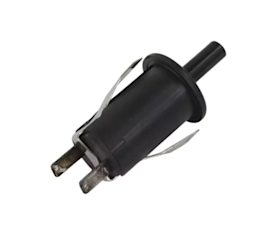
| No clicking at all | Ignition circuit issue | Check power; consider replacing Thermador ignition 00619017 |
| One burner weak spark only | Worn igniter/electrode | Consider replacing Thermador igniter 00492431 |
A clean, properly seated burner head gives the igniter a strong ground path, which produces a brighter spark and faster lighting. It also reduces nuisance clicking and helps prevent delayed ignition.
Last updated: February 2026
What is the life expectancy of a Thermador oven?
A Thermador oven typically lasts 15 years. With normal home use and basic care, many Thermador ovens and ranges (including model PRG366EH01) run 12 to 20 years before major components like ignition, controls, or sensors commonly need replacement.
A Thermador oven’s lifespan is mostly driven by heat stress, cleaning habits, and how quickly worn parts are replaced.
- Heavy high-heat roasting and frequent long bakes increase wear on igniters and sensors
- Frequent self-clean cycles accelerate wear on wiring, door seals, and electronic controls
- Spills and grease buildup can cause burner ignition problems and knob or valve sticking
- Power surges can damage the control board and display components
- Replacing failing parts early prevents secondary damage (for example, weak ignition causing delayed lighting)
| Appliance type | Typical life expectancy | Notes |
|---|---|---|
| Standard gas oven/range | 13 to 15 years | Most common household baseline |
| Premium gas oven/range (Thermador class) | 15 years | Built with higher-end components |
| Well-maintained premium unit | 18 to 20 years | Best-case with timely repairs |
If your PRG366EH01 is otherwise in good shape, replacing one of these parts often restores reliable operation.
- Oven ignition parts (delayed ignition, no heat): Thermador igniter 00492431
- Burner spark/ignition issues (clicking, weak spark): Thermador ignition 00619017
- Temperature regulation problems (overheats, underheats): Thermador sensor 00627375
- Control failures (dead display, erratic operation): Thermador control unit 00619016
- Heat loss, longer preheat, uneven baking: Thermador door seal 00498114
Knowing the expected lifespan helps you decide whether a repair is worth it. If your Thermador oven is under about 15 years old and the cabinet, door, and burners are in good condition, replacing a key component is usually the fastest path back to dependable baking and broiling.
Last updated: February 2026
Why does my Thermador oven smell like gas?
A gas smell from your Thermador PRG366EH01 range usually means unburned gas is escaping because a burner or oven ignition is not lighting cleanly, or a gas valve is not sealing fully. Treat any persistent gas odor as urgent and stop using the range until you identify the source.
- Turn all burner knobs to OFF.
- Open windows and ventilate the kitchen.
- Do not light matches, use lighters, or create sparks.
- If the odor is strong or continues with all knobs off, shut off the gas supply valve to the range.
- Do not operate the oven or broiler again until the smell is resolved.
Most gas odors come from ignition or gas-flow parts that are dirty, misaligned, or failing:
- Weak or failed igniter: the oven gas opens but ignition is delayed, so you smell gas before it lights.
- Dirty burner ports or spillovers: gas flow is uneven and ignition is slow.
- Sticking or leaking valve: gas can seep even when it should be closed.
- Control issue: the control may energize ignition or gas flow at the wrong time.
- Confirm all knobs fully return to OFF; a slightly open knob can release gas.
- Watch the oven start: if you smell gas for more than a few seconds before ignition, suspect the igniter.
- Check for recent boil-overs; residue can delay ignition.
- If the smell happens only when the oven is on (not the cooktop), focus on the bake ignition system.
These model-matched parts are often involved when ignition is delayed or gas flow does not shut off correctly:
| Symptom you notice | Part to consider | What it affects |
|---|---|---|
| Oven takes long to light, then whoosh | Thermador igniter 00492431 | Lights the oven burner so gas does not build up |
| Gas odor even with proper lighting behavior | Thermador valve 00423093 | Helps control and shut off gas flow |
| Intermittent ignition behavior | Thermador ignition 00619017 | Supports spark/ignition function (model-dependent) |
| Odd timing or inconsistent operation | Thermador control unit 00619016 | Coordinates oven functions and signals |
Unburned gas can accumulate and ignite suddenly, causing a flare-up. Fixing delayed ignition and any valve sealing issues protects your home and helps your Thermador range heat more consistently.
Last updated: February 2026