

What is the life expectancy of a Kenmore washing machine?
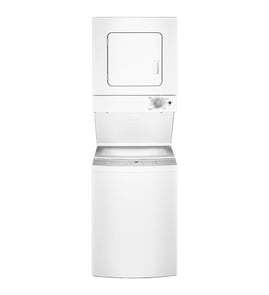
A Kenmore washing machine typically lasts 10 to 15 years. For a Kenmore thin-twin washer/dryer like model 11026182029A, lifespan depends most on load size, how often it runs, and whether wear parts (like the drive coupling and drain pump) are replaced when symptoms start.
Typical lifespan ranges (what we see most often)
- 10 to 15 years: common for many Kenmore top-load style washers with normal use
- 8 to 12 years: common when the washer runs daily, is frequently overloaded, or has repeated out-of-balance loads
- 15+ years: achievable with light-to-moderate use and timely maintenance (hoses, pump, drive parts)
What shortens washer life fastest
- Overloading the basket (especially heavy items like towels and jeans)
- Running with chronic out-of-balance shaking
- Letting small leaks continue (they can damage bearings, motor, and wiring)
- Ignoring early drive symptoms (burning smell, slipping, weak agitation)
- Poor draining (standing water strains the pump and can lead to odors)
Parts that commonly affect longevity on 11026182029A
Replacing wear parts early often prevents bigger failures.
| Symptom | Common wear area | Example part on this model |
|---|---|---|
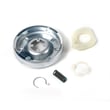
| Won’t spin or agitates poorly | Drive connection | Coupling 285753A |
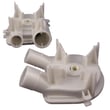
| Won’t drain or drains slowly | Drain system | Washer drain pump WP3363394 |
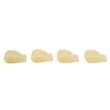
| Agitator “clicks” or won’t move clothes well | Agitator dogs | Agitator dog 80040 |
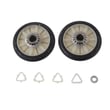
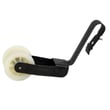
| Loud squeal or thump during dryer operation | Dryer belt tensioning | Dryer idler pulley WP691366 |
Why it matters
A washer that is still filling, agitating, spinning, and draining correctly can often be kept running for years by addressing small issues early. On a stacked laundry center, staying ahead of vibration and drainage problems also helps protect the dryer section and shared cabinet.
Last updated: February 2026
How can I tell how old my Kenmore washer is?
To tell how old your Kenmore 11026182029A thin-twin washer/dryer is, we use the serial number from the model tag and decode the manufacturing date. The exact date code format depends on which manufacturer built the unit, but the serial always contains the key.
Where to find the serial number on a stacked laundry center
Check these common locations on Kenmore thin-twin laundry centers:
- Inside the washer lid area (around the rim under the lid)
- On the washer cabinet front or side panel
- On the back panel of the unit
- Inside the dryer door opening (on the door frame)
- Behind the lower access panel (if your unit has one)
How to decode the date once you have the serial
Kenmore-branded laundry products were built by different manufacturers over the years, so the serial number pattern varies. Here is the process we use:
- Write down the full model number (11026182029A) and the full serial number
- Identify the manufacturer from the serial format (often Whirlpool-built for many 110-prefix models)
- Decode the year and week or the year and month from the serial characters
- Confirm the result by checking whether the decoded date matches the appliance’s design era and features
Quick decoding guide (what you are looking for)
| What the serial code gives you | What it tells you | What to do with it |
|---|---|---|
| Year + week number | Build week in a specific year | Convert week to an approximate month |
| Year + month | Build month in a specific year | You get a direct month/year |
| Plant code + date code | Factory plus build date | Use the date code portion only |
Why it matters
Knowing the build date helps us match the right replacement parts and avoid ordering look-alike parts that changed mid-production (common with items like a motor coupling, drain pump, or timer).
Parts that are often age-related on this model
If you are troubleshooting an older unit, these are common wear items we see replaced on Kenmore 11026182029A:
- Coupling 285753A (washer won’t agitate or spin)
- Washer drain pump WP3363394 (won’t drain, leaks, or loud pumping)
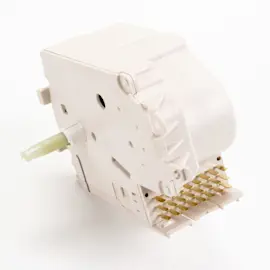
- Washer timer WP3952379 (cycle stalls or won’t advance)
Last updated: February 2026
How to read Kenmore model numbers?
Kenmore model numbers are read left to right: the first 3 digits identify the manufacturer source, and the remaining digits identify the product series and specific design variation. For your Kenmore thin-twin washer/dryer model 11026182029A, matching the full model number is the key to getting the correct parts.
Where to find the model number on a laundry center
On stacked laundry centers like Kenmore 11026182029A, the model/serial tag is typically in one of these places:
- Inside the washer lid area (around the rim of the opening)
- On the back panel of the unit
- Inside the dryer door opening (on the frame)
- Behind the lower access panel (if equipped)
How to interpret the digits (what they mean)
Here is the most useful way to read a Kenmore model number for parts and troubleshooting:
- Prefix (first 3 digits): who built it for Kenmore (manufacturer source)
- Middle digits: product platform or series (helps narrow diagrams and compatible parts)
- Suffix/ending characters: engineering changes, color, or revision (often the difference between “fits” and “does not fit”)
Quick example (using your model)
| Section | Example | What it tells you |
|---|---|---|
| Manufacturer prefix | 110 | Manufacturer source code used by Kenmore |
| Model identifier | 26182029 | Series and design details |
| Revision/suffix | A | Design revision or variation |
Why it matters for ordering parts
Even one missing character can point to a different wiring harness, timer, or drive system. When you shop parts for 11026182029A, use the complete model number so you land on the correct diagrams and avoid returns.
Common parts that often depend on exact model matching include:
- Wire harness W10303815 (electrical connections)
- Washer timer WP3952379 (cycle control)
- Washer drain pump WP3363394 (drain and spin performance)
Tips to avoid mix-ups
- Copy the model number directly from the tag (do not rely on a receipt)
- Include any letters at the end (like the A in 11026182029A)
- If the tag is worn, take a clear photo and zoom in to confirm characters
Why it matters
Kenmore laundry centers share many look-alike parts across years; the model number is what separates “looks right” from “fits and works.” Using the full 11026182029A model number keeps repairs accurate and prevents repeat breakdowns.
Last updated: February 2026
How many cubic feet is a Kenmore 11026182029A washer?
The exact washer capacity (cubic feet) for Kenmore thin-twin laundry center model 11026182029A depends on the specific tub and basket design used in that production run; most Kenmore 110-series top-load washer sections in stacked laundry centers are typically about 3.0 to 3.5 cu. ft.
How to estimate capacity if you need a working number
If you are comparing machines, planning laundry loads, or checking if a replacement tub/basket matches, use these practical guidelines:
- 3.0 to 3.3 cu. ft.: smaller, compact top-load basket common in thin-twin units
- 3.4 to 3.5 cu. ft.: more common “standard” top-load capacity for many 110-series designs
- If your washer struggles to turn over bulky items, it usually behaves like the lower end of that range
Parts that affect “real-world” capacity
Capacity is a spec, but performance also depends on how well the drive system and tub support are working. If the washer is not agitating or spinning correctly, it can feel “smaller” because clothes do not circulate.
Common related parts for this model include:
- Agitator dog 80040 (helps the agitator move clothes through the wash)
- Coupling 285753A (connects the motor to the transmission style drive)
- Washer tub support W10863713 (supports the tub and helps control movement)
- Washer drain pump WP3363394 (removes water so the washer can spin properly)
Quick comparison table (typical thin-twin washer section)
| Capacity range | Best for | What you can usually wash |
|---|---|---|
| 3.0 to 3.3 cu. ft. | apartments, small households | everyday loads, towels (smaller batches) |
| 3.4 to 3.5 cu. ft. | most households | mixed loads, jeans, larger towel loads |
Why it matters
Knowing the cubic feet helps you avoid overloading (poor cleaning, out-of-balance spinning) and helps you choose compatible replacement parts when tub, drive, or suspension issues change how the washer handles a full load.
Last updated: February 2026