Owner’s manual
 Error Codes




What is the life expectancy of a LG oven?
Most LG ovens, including the LG LRE3193ST electric range, typically last 13 to 15 years with normal home use. Regular cleaning, avoiding excessive high-heat self-clean cycles, and fixing heating or temperature issues early are the biggest factors that keep an electric range running longer.
Typical lifespan and what affects it
Here’s what most owners see for an electric range like the LRE3193ST:
- Normal home use: 13 to 15 years
- Heavy daily use: closer to 10 to 12 years
- Light use with good care: 15 years or more
- Heat-related wear items (elements, sensors, thermostats) often fail before the range itself
- Electronics (control boards, display) can shorten practical life if repairs become frequent
Maintenance habits that extend range life
We recommend these habits because they reduce heat stress and prevent avoidable failures:
- Clean spills promptly; baked-on soils force longer, hotter cleaning cycles
- Use EasyClean-style low-heat cleaning when soils are light (water-based, shorter cycle)
- Keep the door seal area clean and avoid damaging the gasket
- Avoid abrasive cleaners on stainless surfaces; wipe with the grain
- Address slow preheat, uneven baking, or temperature swings early
Common “life-limiting” repairs (and what they point to)
If your oven starts baking unevenly or can’t hold temperature, these parts are common suspects:
| Symptom | Common cause | Example part for LRE3193ST |
|---|---|---|
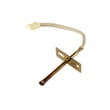
| Oven temp swings, error codes, under/overcooks | Temperature sensing issue | Range oven temperature sensor EBG61305805 |
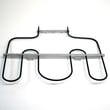
| Long preheat, weak bake, uneven browning | Bake heat problem | Range bake element MEE62306405 |
| Oven overheats or shuts down unexpectedly | Safety limit opening | Range safety thermostat 6930W1A003X |
Why it matters
A range that is cleaned correctly and repaired when symptoms first appear usually reaches its full 13 to 15-year service life. Waiting through months of weak heating or overheating can stress wiring, controls, and insulation, which can shorten the overall lifespan.
For model-specific care and cleaning guidance, follow the LRE3193ST owner's manual.
Last updated: February 2026
How do I reset my LG electric stove?
To reset your LG electric range model LRE3193ST, turn the range off, then reset power at the home breaker for 1 minute and restore power. This clears many control glitches; if heating problems continue, we focus next on the bake circuit, sensor, and control boards using the LRE3193ST owner's manual.
Quick reset steps (power cycle)
- Turn all surface burners and the oven off.
- Switch the range circuit breaker OFF.
- Wait 60 seconds (2 to 5 minutes is fine if the display was frozen).
- Switch the breaker ON.
- Set the clock and test Bake at 350°F.
If “reset” means the oven is not heating
A reset will not fix a failed heating component. On an electric range, these checks narrow it down fast:
- Confirm the breaker is a double-pole range breaker and it is fully reset (OFF then ON).
- Try Broil; if broil heats but bake does not, suspect the bake circuit.
- Look for error codes or abnormal temperature behavior.
- If preheat is very slow or temps swing widely, the oven sensor is a common cause.
- If the display works but elements do not energize, a relay/control issue is likely.
Common parts tied to “won’t heat” symptoms
| Symptom | Most likely area | Example part for LRE3193ST |
|---|---|---|
| Bake not heating, broil OK | Bake element | Range bake element MEE62306405 |
| Temps inaccurate, F30/F31-type sensor issues | Oven temperature sensor | Range oven temperature sensor EBG61305805 |
| No heat and control acts erratic | Relay/control | Range oven control board, relay board |
Why it matters
Resetting at the breaker clears the electronic control memory, but consistent no-heat symptoms usually point to a failed bake element, a drifting temperature sensor, or a control/relay problem. Identifying which mode fails (Bake vs Broil) prevents replacing the wrong part.
Last updated: February 2026
Why is my LG electric oven not heating up?
If your LG electric range LRE3193ST oven is not heating, the most common causes are a tripped breaker or blown fuse, incorrect control settings, or a failed heating component such as the bake element or oven temperature sensor. Start with power and settings checks, then move to component testing.
Quick checks first (fastest fixes)
- Confirm the range is plugged into a live, properly grounded outlet.
- Check your home breaker or fuse; reset/replace if needed.
- Verify you are using Bake (not Delay Start, Timer, or a canceled cycle).
- If the control is beeping and shows an F-code, press Clear/Off, then retry.
- Let the oven cool if it was overheated or recently in a high-heat cycle.
Parts that commonly cause “no heat”
When power and settings are good, these parts are the usual suspects on electric ranges:
| Symptom | Most likely part | What you may notice |
|---|---|---|
| No bake heat (or very weak bake) | Range bake element MEE62306405 | Long preheat, uneven baking, no glow/heat |
| Temperature swings, error codes, underheating | Range oven temperature sensor EBG61305805 | Food undercooks, temp seems inaccurate |
| Oven won’t heat and may show fault codes | Control/relay board | Clicking, intermittent heat, error beeps |
| Oven shuts down for safety | Safety thermostat | Heat cuts out unexpectedly |
Safe troubleshooting steps
- Disconnect power at the breaker before accessing wiring or testing parts.
- Inspect the bake element for visible damage (blisters, cracks, burn spots).
- If the display shows an F-code, record it; the manual lists fault conditions and reset steps.
- Avoid lining the oven bottom with foil; it can create unsafe conditions and interfere with heating.
For model-specific operating steps and troubleshooting tables, use the LRE3193ST owner’s manual.
Why it matters
An oven that will not heat is often a simple power issue, but a weak bake element or drifting temperature sensor can also cause slow preheat and poor cooking results. Checking the easy items first prevents unnecessary part replacement.
Last updated: February 2026
What are the common problems with LRE3193ST?
On the LG LRE3193ST electric range, the most common problems we see are the oven not heating correctly (too low, too hot, or uneven), a surface element not heating, the range not powering on, and the oven door staying locked after a clean cycle. Use the LRE3193ST owner's manual to match symptoms to operating checks and normal behaviors.
Most common symptoms and what they usually point to
- Little to no heat when baking: failed bake circuit (bake element, wiring, relay/control) or temperature sensing issue.
- Oven heats unevenly or runs too hot: temperature sensor drift, convection fan behavior, or rack and cookware placement.
- Surface element will not heat: failed radiant element, infinite switch/control issue, or wiring connection problem.
- Hot surface light stays on: cooktop is still hot; the HS indicator can stay on until the surface cools to about 150°F.
- Won’t turn on / will not start: power supply issue (breaker, cord/terminal block), control lockout, or control board problem.
- Door won’t open after self-clean: oven is still above the unlock temperature; cooling time is required.
Quick checks we recommend first (safe, no tools)
- Confirm the range has full power (electric ranges typically need 240V; a tripped double breaker can leave you with partial power).
- Verify Lockout is off; on LRE3193 models the lockout disables controls (the door itself does not lock on this model).
- For cooktop issues, remember elements cycle on and off even on Hi; that is normal.
- For oven performance, run a Bake 350°F preheat test; typical preheat is about 15 minutes.
- After a clean cycle, wait for the oven to cool; the door unlocks only after it drops below the locking temperature.
Parts that commonly solve heating-related problems
| Symptom | Common suspect part | Model-matched example |
|---|---|---|
| Oven too hot, too cool, or erratic temps | Oven temperature sensor | Range oven temperature sensor EBG61305805 |
| No bake heat | Bake element | Range bake element MEE62306405 |
| Convection bake issues (fan not running) | Convection fan motor | Range convection fan motor EAU61865302 |
Why it matters
Heating and power symptoms often overlap on an electric range. A quick power and lockout check prevents unnecessary part replacement, and knowing what is normal (element cycling, HS indicator staying on, convection fan cycling) helps you focus on true failures.
Last updated: February 2026