
How do I know what model my garage door opener is?
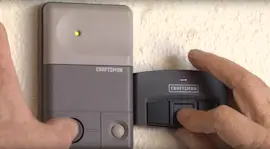
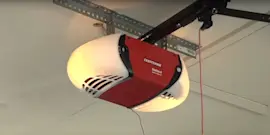
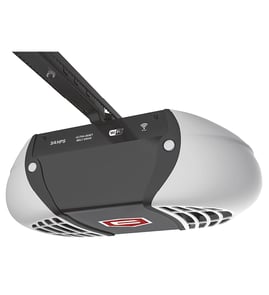
Your Craftsman garage door opener model number is printed on a label on the powerhead (the motor unit mounted to the ceiling or wall). For model 139654021, check under the front cover or under a light lens cover, depending on your opener style.
Where to look on the opener
Check these common label locations on Craftsman openers:
- Jackshaft operator (wall-mounted): under the front cover
- One-light powerhead: under the light lens/cover
- Two-light powerhead: under the light lens opposite the controls and antenna
- On the side panel of the motor unit near the wiring terminals
- On the back panel near the hanging bracket
What you should write down (so you get the right parts)
Record the information exactly as shown on the label.
- Model number (example: 139654021)
- Serial number (if listed)
- Motor type (AC or DC, if shown)
- Logic board or opener “learn” button color (helpful for remote compatibility)
| Label item | Why it matters |
|---|---|
| Model number | Matches the correct parts list and diagrams |
| Serial number | Helps identify production version changes |
| Motor type | Points you to the right troubleshooting and error code set |
| Learn button color | Helps identify compatible remotes and keypads |
If the label is missing or unreadable
Use these quick checks to narrow it down:
- Look for a second label under the light cover or inside the front cover
- Check the wall control style (some have a model label inside the button housing)
- Watch the opener lights for blink patterns after a failed close or open
- Compare your symptoms to Craftsman diagnostic charts
A fast next step is to use our Craftsman error codes guide to match blink patterns and narrow down the opener family.
Why it matters
Using the exact model number prevents ordering the wrong safety sensors, wall control, logic board, or remote setup parts, and it speeds up troubleshooting when the door will not close, reverses, or the lights blink.
Last updated: February 2026
How to find out garage door opener type?
To find your garage door opener type for Craftsman model 139654021, identify the drive style (chain, belt, or screw) and the control system (learn button color or DIP switches). These details determine which remotes, wall controls, and troubleshooting steps apply.
Quick ways to identify the opener type
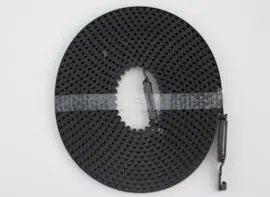
- Look at the rail: a visible metal chain usually means chain drive; a rubbery reinforced belt means belt drive.
- Check the motor housing label: it often lists AC vs DC motor, horsepower/HP equivalent, and sometimes the series.
- Find the learn button (under the light cover or near the antenna wire): the button color helps identify the radio platform.
- Look for DIP switches: older units use a small bank of switches in the remote and/or opener.
- Note the safety sensor setup: photo eyes at the bottom of the door tracks are standard; misalignment symptoms can mimic “wrong opener type.”
What to record (so you pick compatible controls)
| What you find | What it tells you | Why it matters |
|---|---|---|
| Chain vs belt vs screw drive | Mechanical drive type | Helps match repair approach and common wear parts (gears, sprocket, trolley) |
| Learn button color or DIP switches | Remote/control “family” | Determines remote and keypad compatibility |
| AC vs DC motor | Motor/control design | Affects error-code style and troubleshooting steps |
If you see blinking lights or diagnostic codes
Many Craftsman openers use light-flash patterns or diagnostic indicators to point to sensors, travel limits, or force settings. Use our Craftsman error codes guide to match the symptom to the most likely cause and next checks.
Why it matters
Using the correct opener type prevents buying the wrong remote or wall control and avoids misadjustments that can cause reversing, partial travel, or a door that will not close.
Last updated: February 2026
Is it worth repairing a 20 year old garage door opener?
For a 20-year-old Craftsman garage door opener (model 139654021), repair is usually not worth it because most openers have a 10 to 15 year typical lifespan. Minor fixes can make sense, but major failures (motor, logic board, stripped gears) point to end-of-life, so replacement is the better long-term value.
When repair still makes sense
Choose repair when the opener is otherwise reliable and the problem is clearly small.
- The door is binding due to track or roller issues (not an opener failure)
- Safety sensors are misaligned or getting sunlight interference
- Remote or wall control issues are simple (battery, wiring connection, reprogramming)
- The chain/belt is loose and needs adjustment
- The opener runs but the door reverses due to force or travel settings
For symptom-based troubleshooting, use Craftsman error codes.
Signs replacement is the better investment
These issues typically mean you will spend more time and money chasing repeat failures.
- Motor hums but the door does not move (internal drive or motor problem)
- Intermittent operation, random clicking, or no response (control board failure)
- Grinding noises (worn drive gear or sprocket)
- Excessive vibration or loud operation that persists after basic adjustments
- Safety sensor problems that return after cleaning, alignment, and wiring checks
Quick cost and outcome comparison
| Situation | Typical best choice | Why |
|---|---|---|
| Remote, sensor, or adjustment issue | Repair | Low cost, fast fix |
| Gear kit, motor, or logic board issue | Replace | High cost, more failures likely |
| Multiple symptoms at once | Replace | Troubleshooting time adds up |
Why it matters
A garage door opener is a safety device as much as a convenience feature. On an older unit, a major repair can still leave you with aging electronics and worn mechanical parts, which increases downtime and repeat service.
For maintenance steps that can extend life on any opener, follow how to maintain a garage door opener.
Last updated: February 2026
Can you get a universal remote for an old garage door opener?
Yes. For an older Craftsman garage door opener like model 139654021, you can typically use a universal garage door opener remote, and in some cases you can add a universal external receiver if the opener’s built-in radio is too old or uses an uncommon frequency.
What to check first (so you buy the right solution)
- Learn button color or logic board type: Many Craftsman openers pair remotes through a “Learn” button on the motor unit.
- Remote frequency: Older units may use 390 MHz, 315 MHz, or 310 MHz; very old units can use other frequencies.
- Safety sensor status: If the door will not close, a remote will not fix a sensor or alignment issue.
- Wall control works but remotes do not: This often points to a remote, receiver, or antenna issue.
- Number of doors: Choose a universal remote with enough buttons/channels.
Your options (most common to most flexible)
| Option | Best when | What you’ll do |
|---|---|---|
| Universal remote (programmed to the opener) | The opener has a compatible receiver | Program the remote to the opener using the Learn button sequence |
| Universal remote + external receiver kit | The opener is too old or incompatible | Wire the receiver to the opener terminals, then program the remote to the receiver |
| Keypad (universal) | You want keyless entry | Program keypad to the opener or to the added receiver |
Programming and troubleshooting tips
- Replace the remote battery first; weak batteries cause short range and intermittent operation.
- Reposition the opener’s hanging antenna wire straight down; do not cut it.
- If the opener lights blink or you see diagnostic flashes, use our Craftsman error codes guide to pinpoint the fault.
- If the door reverses or will not close, correct the safety sensor issue before adjusting force settings.
Why it matters
Universal remotes are convenient, but compatibility depends on the opener’s receiver technology. When the built-in receiver is outdated, adding an external receiver is the most reliable way to modernize an older Craftsman system.
Last updated: February 2026
Where can I buy Craftsman garage door opener parts?
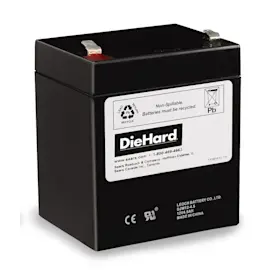
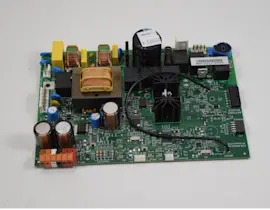
You can buy replacement parts for your Craftsman garage door opener model 139654021 through our parts listings and diagrams, then order the parts you need from Sears PartsDirect. This is the most reliable way to match parts to your exact opener and avoid ordering the wrong item.
How to find the right part for model 139654021
Use these steps to narrow it down quickly:
- Confirm the opener model number is 139654021 (usually on the motor unit housing).
- Identify the symptom (won’t open, won’t close, remote won’t work, lights blink, etc.).
- Use the parts diagram sections to locate the related assembly (motor unit, rail, sprocket/drive, sensors, wall control).
- Match the part by description and diagram location, not just by appearance.
- If multiple similar parts show, compare connector style, wire count, and mounting holes.
Common parts customers replace on Craftsman openers
Even without a model-specific parts list shown here, these are the most frequently purchased garage door opener parts for Craftsman units:
| Symptom | Common part area to check | What typically fails |
|---|---|---|
| Door won’t close and lights blink | Safety sensor system | Misalignment, damaged sensor, wiring issue |
| Motor runs but door doesn’t move | Drive system | Gear/sprocket wear, stripped gear kit |
| Remote or keypad won’t operate | Controls/radio | Remote battery, receiver logic board, wall control |
| Door reverses or stops | Travel/force settings | Force adjustment, binding door hardware |
Troubleshooting before you order
A quick diagnosis helps you buy only what you need:
- Clean and align the safety sensors; verify both sensor LEDs are steady.
- Check the door moves smoothly by hand (disconnect the trolley first).
- Replace remote batteries and reprogram remotes if needed.
- Look for diagnostic light flashes and error patterns.
For Craftsman-specific diagnostics, use Craftsman error codes.
Why it matters
Garage door opener parts are often model- and revision-specific. Matching parts to Craftsman 139654021 reduces returns, speeds up repair, and helps restore safe operation (especially the safety sensors and force settings).
Last updated: February 2026