Installation guide
 Owner’s manual
 Error Codes



Are wall ovens 120 or 240?
Most built-in electric wall ovens like Kenmore model 79047172400 are designed for a 240-volt (or 208-volt) supply, not a standard 120-volt outlet. The installation instructions call for a dedicated 60 Hz AC circuit and note power consumption ratings at 240Vac.
What to expect for Kenmore 79047172400 power
For this Kenmore wall oven family, the installation guide describes typical electrical requirements used for built-in electric ovens.
- Dedicated circuit required (separate from other appliances)
- 60 Hz AC supply
- Fused or breaker protection on both sides of the line (time-delay breaker recommended)
- Neutral should not be fused
- Extension cords should not be used
For the exact wiring method and junction box connection details, use the 79047172400 installation guide.
Typical circuit sizing (common for this oven type)
The installation guide provides typical maximum loads and breaker guidance at 240Vac:
| Oven configuration | Typical max load at 240Vac | Typical breaker | Typical wire gauge |
|---|---|---|---|
| Single wall oven | Up to 4000W | 30 amp | #8 AWG |
| Double wall oven | Up to 8000W | 40 amp | #8 AWG |
Quick ways to confirm what your home has
We recommend checking these items before installation or troubleshooting power issues:
- The oven nameplate rating (voltage and wattage)
- Breaker size in the electrical panel (often 30A or 40A for wall ovens)
- Whether you have a 2-pole breaker feeding the oven junction box
- Wire gauge and condition of the supply wiring
- Proper grounding per electrical code
Why it matters
A 240V (or 208V) supply is what allows the bake and broil heating elements to reach and hold temperature correctly. Using the wrong supply voltage or an undersized circuit can cause weak heating, nuisance breaker trips, or wiring overheating.
Last updated: January 2026
What is the life expectancy of a wall oven?
Most wall ovens, including the Kenmore 79047172400 electric wall oven, last 15 to 20 years with normal household use. Lifespan depends most on how often you bake or broil, how well the oven is kept clean, and whether key heating and control parts stay in good condition.
What affects wall oven lifespan most
- Heat stress over time: frequent high-heat baking and broiling ages wiring, relays, and elements.
- Self-clean cycles (if equipped): high temperatures can shorten the life of electronic controls and sensors.
- Door seal condition: a leaking seal makes the oven run longer and hotter than necessary.
- Power quality and connections: loose or overheated connections can damage components.
- Routine cleaning: keeping vents and the oven cavity clean helps prevent overheating.
Typical lifespan by component (what usually fails first)
| Component | Typical service life | Common symptom |
|---|---|---|
| Bake element | 8 to 15 years | Oven will not heat or heats unevenly |
| Temperature sensor | 10 to 15 years | Temperature swings, error codes, over/underheating |
| Control board or control panel | 10 to 20 years | Dead display, random beeping, won’t start |
| Door gasket | 5 to 10 years | Heat escaping, longer cook times |
How to help your Kenmore 79047172400 reach 20 years
- Use bake for most cooking; reserve broil for shorter finishing.
- Avoid running self-clean back-to-back; let the oven cool fully between cycles.
- Keep the door closing tightly; replace the gasket if it is torn or flattened.
- If temperatures seem off, follow the calibration steps in the owner's manual.
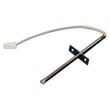
- If the oven is not heating correctly, test and replace common wear parts such as the frigidaire range oven temperature sensor 316217002 when symptoms match.
Why it matters
A wall oven is a long-life appliance; small maintenance steps and early part replacement often prevent bigger failures (like control damage) and help you get the full 15 to 20 years.
Last updated: January 2026
Are all 30 inch wall ovens the same size?
No. “30-inch” is a category, not an exact measurement. For the Kenmore 79047172400 wall oven, the installation guide shows specific product and cutout dimensions, and other 30-inch wall ovens can vary slightly in width, height, depth, and trim, which affects fit.
What “30-inch” usually means
Most 30-inch wall ovens are designed for a 30-inch cabinet opening, but the actual oven chassis and trim dimensions differ by brand and model. For a correct fit, we match the cutout dimensions (cabinet opening) and the product dimensions (oven body and trim).
- Measure the cabinet cutout width, height, and depth
- Confirm door clearance (space in front when the door is open)
- Confirm electrical junction box location and clearance
- Check whether you have a single or double wall oven cutout
- Verify the trim sits flush against the cabinet after installation
Model-specific sizing notes for Kenmore 79047172400
The 79047172400 installation guide includes diagrams for 27-inch and 30-inch single wall ovens and 27-inch and 30-inch double wall ovens, plus notes about minimum clearances and critical cutout depth.
| What to compare | Why it matters | Where to confirm |
|---|---|---|
| Cutout width/height/depth | Prevents gaps, binding, or trim not seating | 79047172400 installation guide |
| Door-open clearance (front) | Prevents door from hitting nearby cabinets/handles | 79047172400 installation guide |
| Support/weight capacity | Cabinet base must support the oven safely | 79047172400 installation guide |
Why it matters
Even small differences (for example, cutout depth or trim profile) can cause the oven to sit proud of the cabinet, leave gaps, or create heat buildup around the enclosure. Matching the cutout dimensions to the model’s requirements prevents installation problems.
Last updated: January 2026
Is it worth fixing a wall oven?
Yes, it’s usually worth fixing a Kenmore wall oven model 79047172400 when the repair is a common wear item (like a heating element, temperature sensor, or oven light) and the cabinet cutout and installation are still in good shape. Compare the repair cost to replacement and the oven’s overall condition.
Quick way to decide
We use these practical checkpoints before investing in parts or labor:
- The oven heats unevenly, won’t reach temp, or trips errors: often a bake element or sensor issue.
- The oven light is out or the socket is damaged: typically a straightforward repair.
- The control panel is dead or intermittent: can be a higher-cost repair.
- The oven is physically damaged (door glass, frame, liner): repairs can add up quickly.
- You plan to stay in the home several years: repairs usually pay off.
- The unit is very old or missing features you want: replacement can make more sense.
Typical repair cost vs. replacement (rule of thumb)
| Scenario | What it often involves | Usually worth it? |
|---|---|---|
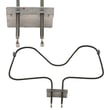
| No heat or weak bake | Frigidaire range bake element 318255103 | Yes |
| Temps are off | Frigidaire range oven temperature sensor 316217002 | Yes |
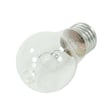
| Light not working | Range oven light bulb 316538904 or socket | Yes |
| Dead display or unresponsive keys | Control panel or wiring | Depends |
Why it matters
A wall oven replacement can also mean cabinet modifications and re-installation work. The installation instructions for this platform emphasize proper mounting and anti-tip bracket use, so keeping a correctly installed unit running can avoid extra carpentry and installation complexity. See the 79047172400 installation guide for key installation and safety notes.
Before you spend money on parts
- Confirm the symptom (no heat vs. slow preheat vs. inaccurate temperature).
- Check for obvious wiring damage at the terminal block area (power off first).
- If the oven is overheating or underheating, test the sensor and inspect the bake element.
- If the door doesn’t seal well, heat loss can mimic a “won’t heat” complaint.
Last updated: January 2026