Owner’s manual



Does the LG washer dryer combo need to be vented?
No. The LG WM3431HW washer dryer combo is designed to dry without an external dryer vent; it uses a ventless condensing system, so you do not run a vent hose to the outside. For model-specific installation and safety details, follow the WM3431HW owner’s manual.
A ventless washer dryer combo removes moisture from the air inside the unit and sends the collected water to the drain, instead of exhausting humid air outdoors.
- No exterior wall vent or roof vent is required
- You still need a working drain (standpipe or laundry sink) for the condensed water
- Good room airflow helps drying performance (avoid sealing the unit in a tight closet)
- Keep the unit level to reduce vibration and improve operation
Use these steps to avoid the most common setup problems:
- Confirm the drain hose is secured and routed correctly to prevent leaks or siphoning
- Verify hot and cold water supply valves are fully open
- Use HE detergent only; oversudsing can reduce wash and dry performance
- Level the washer so it does not “seesaw” under load
- Leave enough clearance around the unit for heat dissipation and service access
| Appliance type | Needs an external vent? | Where moisture goes |
|---|---|---|
| Washer dryer combo (ventless condenser) | No | Condensed to water and drained |
| Traditional vented dryer | Yes | Exhausted as warm, humid air |
Skipping a vent is a major space-saver, but the unit still depends on proper water supply, drainage, and routine maintenance. If drying seems slow, a restricted drain path or internal lint buildup can be a factor; the manual also notes the interior and condensing duct should be cleaned periodically by qualified service personnel.
Last updated: January 2026
How many years does a LG washing machine last?
Most LG washing machines, including the LG WM3431HW, typically last 10 to 15 years with normal household use. Lifespan depends most on load size, detergent choice (HE only), and routine care like cleaning the drain pump filter and keeping the door gasket clean; see the WM3431HW owner's manual for model-specific care guidance.
A washer’s service life is mainly driven by how hard it works and how well it is maintained.
- Load habits: frequent overloading shortens bearing, suspension, and motor life
- Detergent: use HE detergent to prevent oversudsing and residue buildup
- Water quality: hard water can increase scale and reduce heating and wash performance
- Moisture control: wiping the door boot and leaving the door ajar helps prevent odor and mildew
- Drain system care: keeping the pump filter clear reduces drain strain and error codes
| Usage pattern | Typical lifespan | What usually wears first |
|---|---|---|
| Light (few loads/week) | 12 to 15 years | door boot, inlet valve, drain pump |
| Average (most households) | 10 to 12 years | drain pump, shocks/dampers, bearings |
| Heavy (daily loads) | 7 to 10 years | suspension, bearings, pump, controls |
If the washer is otherwise in good shape, replacing a few common wear parts can restore performance.
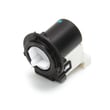
- Slow or no drain, grinding during drain: consider the washer drain pump assembly 4681EA2001T
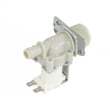
- Won’t fill or fills slowly: consider the LG washer single-solenoid water inlet valve 5220FR2006H
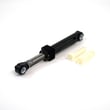
- Excess vibration or banging: suspension components (dampers) are common wear items
Knowing the typical 10 to 15 year lifespan helps you decide whether to maintain, repair, or replace. On a front-load LG like the WM3431HW, consistent HE detergent use and drain system cleaning are the easiest ways to prevent the most common performance problems.
Last updated: January 2026
Why is my LG washing machine stuck on CD?
On the LG WM3431HW washer, cD means the door is in a safety lock state (often “cool down” on washer-dryer combo models), so the control keeps the door locked until the tub is safe to open. The code usually clears after the cycle fully ends and the drum stops.
- Press Pause/Cancel once and wait 1 to 3 minutes for the lock to release.
- Confirm the cycle is truly finished; if the washer is still tumbling, draining, or sensing, the door stays locked.
- If the washer is draining slowly, let it finish; a slow drain can keep the door locked longer.
- Power reset: unplug for 2 minutes, plug back in, then try Drain/Spin.
- If you recently ran a dry or heated portion of a cycle, allow extra time for cool down.
For model-specific control behavior and cycle details, follow the steps in the WM3431HW owner’s manual.
| What you notice | Most likely cause | What usually fixes it |
|---|---|---|
| Door won’t unlock and you hear water sloshing | Water not fully drained | Clean pump filter, run Drain/Spin |
| Long drain time, gurgling, or intermittent draining | Partial blockage at pump/filter or drain hose | Clear obstruction, check hose routing |
| No draining sound or repeated drain attempts | Drain pump problem | Inspect pump and wiring; replace pump if needed |
| Door stays locked even when empty and idle | Door lock/control issue | Reset, then service diagnosis if it returns |
If the washer is not draining normally, the drain system is the first place to focus. A failed pump can also keep the unit from reaching the “safe to unlock” condition; the correct replacement for this model is the washer drain pump assembly 4681EA2001T.
The cD condition is a built-in safety feature. It prevents opening the door while the drum is moving, while water is still in the tub, or while internal temperatures are still dropping after a heated cycle.
Last updated: January 2026