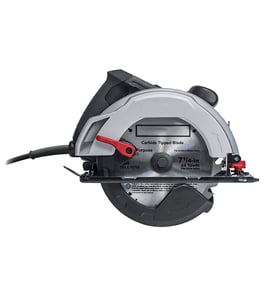

How good are Skil circular saws?
Skil circular saws are a solid value for most DIY and homeowner projects: they typically deliver good cutting power and practical features at a lower cost than many pro-only brands. For your Skil 77-TYPE15 circular saw, overall performance depends most on blade condition, alignment, and motor/brush health.
What “good” means for a circular saw
A circular saw feels “good” when it stays straight, cuts cleanly, and starts and runs consistently.
- Cuts without bogging down in common lumber (2x material, plywood)
- Tracks straight with minimal blade wander
- Base plate stays square to the blade for accurate bevel cuts
- Guard returns smoothly and does not hang up
- Motor runs without heavy sparking, burning smell, or surging
Quick checks that tell you a lot (77-TYPE15)
These checks help separate a blade or setup issue from a saw problem.
- Blade: Use a sharp, correct blade for the material (fine-tooth for plywood, framing blade for studs).
- Base and bevel: Verify 0 degree and 45 degree stops are accurate; tighten bevel and depth locks.
- Guard action: The lower guard should snap back freely.
- Power and cord: Intermittent power often points to a worn cord, switch, or internal wiring.
- Brushes (if equipped): Worn carbon brushes can cause weak power and excess arcing.
Common “good vs. not good” symptoms
| What you notice | Most common cause | What to do first |
|---|---|---|
| Burn marks, slow cutting | Dull blade, wrong blade | Replace blade, match tooth count to material |
| Saw pulls to one side | Blade warped, fence technique | Try a new blade; use a straightedge guide |
| Heavy sparking at motor | Worn brushes, debris | Inspect brushes; blow out dust (unplugged) |
| Cuts not square | Base out of alignment | Re-square base; check bevel lock |
Why it matters
A “good” saw is as much about safe, predictable control as raw power. A sharp blade, smooth guard, and stable base reduce kickback risk and improve cut quality.
Helpful DIY reading
- Are diy appliance repairs safe
- How to use a multimeter to test electrical parts video
- How to repair broken or damaged wires video
Last updated: February 2026
How much does a Skilsaw mag 77-TYPE15 weight?
A Skil MAG 77 model 77-TYPE15 typically weighs about 11 to 12 lb (tool-only), which is the normal range for magnesium worm drive circular saws. Your exact working weight depends on whether the blade, wrench, and any accessories are installed.
Typical weights you will see
- Tool-only: about 11 to 12 lb
- With blade installed: typically about 11.5 to 12.5 lb
- With cord wrapped and wrench onboard: usually a few ounces more
- Shipping weight: higher due to packaging and included items
| Configuration | Typical weight | What changes it |
|---|---|---|
| Tool-only | 11 to 12 lb | Base saw weight (magnesium housing models) |
| Tool + blade | 11.5 to 12.5 lb | Blade, flange, and hardware |
| Boxed/shipping | Higher than tool weight | Carton, inserts, manuals, extras |
How to get the exact weight (fast and accurate)
- Decide what you want to measure: tool-only or ready-to-cut (with blade).
- Use one of these methods:
- Bathroom scale method: weigh yourself, then weigh yourself holding the saw; subtract.
- Luggage/fish scale: hook the top handle and lift steadily.
- Bench/shipping scale: best for repeatable results.
Why it matters
Knowing the real weight helps you plan for fatigue and control, especially for long rip cuts, overhead work, or ladder use; it also helps you compare worm drive saws fairly.
To make sure you are looking up the correct parts list for your exact saw, use how to find your appliance model number (and what it means for parts).
Last updated: February 2026
How thick of wood can a 7 1/4 circular saw cut?
A 7-1/4 inch circular saw typically cuts about 2-1/2 inches deep at 90 degrees, which covers standard 2x lumber (about 1-1/2 inches actual thickness). On a bevel (angled) cut, the maximum depth is noticeably less.
Typical cut depth you can expect
Most 7-1/4 inch saws, including Skil models like 77-TYPE15, fall into these common ranges:
| Cut setting | Typical max depth (7-1/4 in blade) | What it means in real use |
|---|---|---|
| 90 degrees (straight cut) | ~2-3/8 to 2-9/16 in | Usually cuts through 2x material in one pass |
| 45 degrees (bevel cut) | ~1-11/16 to 1-13/16 in | Often will not fully cut through thicker stock |
What changes the maximum thickness you can cut
Even with the same blade size, real-world cut capacity depends on setup and technique:
- Base plate (shoe) setting: Depth lever must be locked and set correctly.
- Bevel angle: More bevel equals less depth.
- Blade type and sharpness: A dull framing blade cuts slower and can bind.
- Material and moisture: Wet lumber and dense hardwoods load the motor more.
- Cutting method: For thick stock, a flip-cut (cut from both sides) is common.
Quick way to check your saw’s actual depth
We recommend verifying cut depth on your Skil 77-TYPE15 before a project:
- Unplug the saw.
- Set bevel to 0 degrees.
- Set depth so the blade teeth extend about 1/4 inch below the board.
- Measure from the shoe to the lowest tooth to estimate max depth.
Why it matters
Matching cut depth to your lumber prevents stalled cuts, kickback risk, and rough edges. It also helps you choose the right approach (single pass vs. flip-cut) for thicker material.
For more DIY safety guidance before troubleshooting or repairs, use are diy appliance repairs safe.
Last updated: February 2026
When was the Skilsaw model 77-TYPE15 made?
The Skil 77-TYPE15 is a version of the classic SKILSAW Model 77 line, which dates back to 1937. The exact production years for the specific TYPE15 variant depend on its serial number and nameplate details, but the Model 77 family began in 1937.
How to narrow down the exact year for your 77-TYPE15
Because “TYPE” numbers can span multiple production runs, we use the saw’s identification markings to pin down the timeframe.
- Check the data plate for a serial number and any date code
- Look for a “TYPE 15” marking near the motor housing or nameplate
- Note the voltage and amperage rating (helpful for matching parts diagrams)
- Compare your guard, base plate, and handle style to the parts diagrams for 77-TYPE15
- If the label is missing, inspect the cord entry, switch style, and brush caps for clues
Where to find the model and serial information on the saw
Most Skil worm drive circular saws place the model and TYPE information on a label or stamped plate on the motor housing or main handle area.
| What to look for | Why it matters |
|---|---|
| Model number: 77-TYPE15 | Confirms you are in the correct parts listing |
| Serial number | Helps identify the production window |
| Electrical rating (amps/volts) | Helps match the correct switch, cord, and motor components |
Why it matters
Getting the build timeframe right helps you match the correct power saw parts (such as brushes, switch, cord set, bearings, and blade guard hardware) and avoid ordering a similar-looking component that does not fit your Skil 77-TYPE15.
For help confirming the model number format and where to locate it, use how to find your appliance model number (and what it means for parts).
Last updated: February 2026
