 Owner’s manual
 Error Codes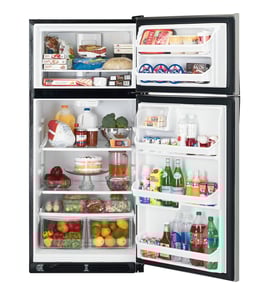


Can I use a generic water filter in my GE refrigerator?
Using a generic water filter in your GE GTH18HBC2RCC refrigerator is not recommended; we advise using a genuine GE filter made for your filtration system to protect water quality, maintain proper flow, and avoid leaks or fit issues. Confirm the correct filter type in the GTH18HBC2RCC owner's manual.
A non-genuine filter can physically fit but still cause performance problems.
- Poor seal at the filter head can cause dripping or internal leaks
- Lower flow can slow dispensing and reduce ice maker fill
- Filtration performance can vary widely (taste, odor, sediment)
- Incorrect bypass or valve operation can trigger intermittent water issues
- Premature clogging can make the refrigerator work harder to deliver water
Use this checklist to match the filter style and connection type.
| Check | What to look for | Why it matters |
|---|---|---|
| Fit style | Twist-in vs push-in | Wrong style can crack the housing or not seal |
| O-rings | Correct number and size | Prevents leaks and air in the line |
| Flow rating | Similar to OEM | Keeps dispenser and ice maker filling normally |
| Certification | NSF/ANSI claims listed on packaging | Helps ensure filtration performance |
Even with the correct filter, installation steps matter.
- Turn the filter until it seats fully; do not force it
- Dispense and discard several glasses of water to clear air and carbon fines
- Check for leaks around the filter area for the first 5 to 10 minutes
- Replace on schedule (most household refrigerator filters are changed about every 6 months)
Your refrigerator water system depends on a tight seal and consistent flow. A genuine GE filter is designed to match the filter head, water pressure, and dispenser performance so you get reliable ice production and clean-tasting water.
Last updated: January 2026
What is the high end GE refrigerator?
GE’s high-end refrigerator line is Monogram, which is GE’s luxury brand above GE Profile and GE Café. If you own a GE GTH18HBC2RCC top-mount refrigerator, Monogram is the step-up tier when you want premium materials, built-in styles, and higher-end design features; see the GTH18HBC2RCC owner's manual for your current model’s features and care details.
We see these tiers most often when customers shop by features, finish, and installation style.
| Line | Typical positioning | Common refrigerator focus |
|---|---|---|
| Monogram | Luxury flagship | Built-in columns, built-in side-by-side, premium finishes |
| GE Café | Premium design | Style-forward, pro-style looks, feature upgrades |
| GE Profile | Upper mainstream | Advanced features and performance at a mid-to-high price |
| GE | Mainstream | Core reliability and everyday features |
High-end models are usually defined by a combination of design, installation, and performance upgrades.
- Built-in or integrated installation options (flush, panel-ready)
- Premium interior lighting and shelving layouts
- More precise temperature management and airflow
- Quieter operation and upgraded fit and finish
- Higher-end serviceable components and modular designs
Knowing your product tier helps set expectations for parts cost, availability, and complexity. A top-mount like the GE GTH18HBC2RCC is typically straightforward to maintain, and many common repairs involve serviceable items such as a light bulb, door gasket, or fan motor.
- GE appliance light bulb, 40-watt 40A15 for an interior light that is out
- Door gaskets (to reduce warm air leaks and frost)
- Evaporator fan motor (for airflow and even cooling)
Last updated: January 2026
What is the most common problem with a GE refrigerator?
The most common problem we see with GE refrigerators (including the GE GTH18HBC2RCC top-mount) is a cooling complaint: the fresh food section gets warm, the freezer temperature rises, or temperatures swing. In many cases, the root cause is restricted airflow, a defrost failure, or a fan issue.
- Dirty condenser coils causing poor heat release and longer run times
- Evaporator fan not running (no airflow from freezer to refrigerator)
- Frost buildup on the evaporator from a defrost system problem
- Door gasket leaks letting warm, moist air in
- Temperature controls set incorrectly or vents blocked by food packages
- Confirm temperatures: freezer should be near 0°F; refrigerator near 37°F.
- Listen for fans: you should typically hear the evaporator fan when the compressor is running.
- Check for frost pattern: heavy frost on the freezer back panel often points to a defrost issue.
- Inspect door seals: look for gaps, tears, or areas that do not grip paper when the door is closed.
- Clean coils: unplug the refrigerator and vacuum coils and the condenser fan area.
If basic checks point to a failed component, these model-matched parts are common fixes:
| Symptom | Likely area | Example model-matched part |
|---|---|---|
| Warm fridge, freezer OK or noisy airflow | Air circulation | Refrigerator evaporator fan motor WR60X31522 |
| Heavy frost, warming over days | Defrost heat | Refrigerator defrost heater WR51X10038 |
| Frost returns quickly after manual defrost | Defrost control | Refrigerator defrost control board WR55X21623 |
| Warm temps, moisture, sweating around doors | Air leaks | Refrigerator door gasket WR24X10237 |
Cooling problems usually get worse over time. Catching airflow restrictions, defrost failures, or gasket leaks early helps protect food, reduces compressor run time, and can prevent more expensive repairs.
For model-specific operating details (controls, airflow locations, and cleaning guidance), use the GTH18HBC2RCC owner's manual.
Last updated: January 2026





