Get free shipping on your order, with any water filter subscription. Find my filter

Open Hamburger Menu
Sears Parts Direct
Tips to find your model number

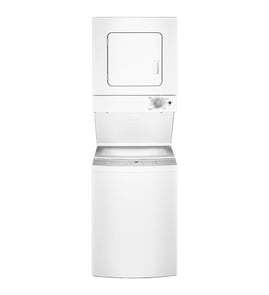
Kenmore 11098752794 washer/dryer laundry system Parts

Here are the diagrams and repair parts for Kenmore 11098752794 washer/dryer laundry system, as well as links to manuals and error code tables, if available.

Kenmore 11098752794 washer/dryer laundry system
By Schematic
By Part
SELECT DIAGRAM
?

This is the number corresponding to the part on the diagram / schematic

Browse Parts for 11098752794 Washer/Dryer Laundry System

  • Operating Instructions for Kenmore 11098752794 - Part 3394996

    Washer/dryer control panel parts diagram

    Operating Instructions

    Part #3394996

    The manufacturer no longer makes this part, and there's no substitute part

  • Laundry Center Control Panel for Kenmore 11098752794 - Part 3976403

    Washer/dryer control panel parts diagram

    Laundry Center Control Panel

    Part #3976403

    The manufacturer no longer makes this part, and there's no substitute part

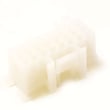
  • Connector for Kenmore 11098752794 - Part 2154470

    Dryer bulkhead parts diagram

    Connector

    Part #2154470

    The manufacturer no longer makes this part, and there's no substitute part

  • Burner Base for Kenmore 11098752794 - Part 697408

    3402856 burner assembly, miscellaneous parts, optional diagram

    Burner Base

    Part #697408

    The manufacturer no longer makes this part, and there's no substitute part

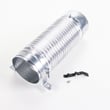
  • Air Duct for Kenmore 11098752794 - Part 8566187

    Dryer bulkhead parts diagram

    Air Duct

    Part #8566187

    The manufacturer no longer makes this part, and there's no substitute part

  • Retaining Ring for Kenmore 11098752794 - Part 90369

    Gearcase parts diagram

    Retaining Ring

    Part #90369

    The manufacturer no longer makes this part, and there's no substitute part

  • Grease for Kenmore 11098752794 - Part 389236

    3402856 burner assembly, miscellaneous parts, optional diagram

    Grease

    Part #389236

    The manufacturer no longer makes this part, and there's no substitute part

  • Bulkhead for Kenmore 11098752794 - Part 697540

    Dryer bulkhead parts diagram

    Bulkhead

    Part #697540

    The manufacturer no longer makes this part, and there's no substitute part

  • Connector for Kenmore 11098752794 - Part 696074

    Dryer support and washer parts diagram

    Connector

    Part #696074

    The manufacturer no longer makes this part, and there's no substitute part

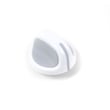
  • Washer Control Knob for Kenmore 11098752794 - Part 3402572

    Washer/dryer control panel parts diagram

    Washer Control Knob

    Part #3402572

    The manufacturer no longer makes this part, and there's no substitute part

Kenmore Washer/Dryer Laundry System 11098752794 FAQs

To tell how old your Kenmore washer is on laundry center model 11098752794, we use the serial number to decode the manufacturing date. The serial tag is typically on the washer cabinet (often under the lid area or on the back), and the date code format depends on who built the unit.

Where to find the serial number on model 11098752794

Check these common locations on a Kenmore stacked laundry center:

  • Under the washer lid, around the lid opening
  • On the back panel of the washer section
  • Inside the washer cabinet on a side wall
  • On the frame behind the front panel (visible after removing the front panel)

For diagrams and access notes specific to this unit, use the 11098752794 owner's manual.

How to decode the date once you have the serial number

Kenmore appliances were built by different manufacturers over the years, so the serial number format varies. Here is the practical approach we use:

  • Write down the full model number (11098752794) and the full serial number
  • Identify the manufacturer code pattern (letters, then numbers, or all numbers)
  • Decode the year and week/month from the first several characters
  • If the tag includes an explicit “MFG DATE,” use that date as the manufacture date
Quick decode guide (what you are looking for)
What you see on the tag What it usually means What to do next
“MFG DATE” printed Exact manufacture date Use that date directly
Letters + numbers Encoded year/month or year/week Match the prefix to the correct Kenmore builder chart
All numbers Encoded production sequence and date Look for a year/week pattern near the beginning
Why it matters

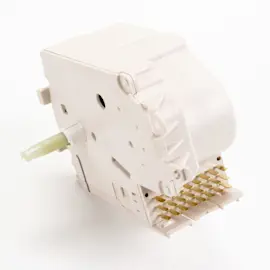
Knowing the manufacture date helps us match the correct Kenmore parts and revisions for your washer/dryer laundry system, especially for wear items like a coupling 285753A or a washer timer WP3952379. It also helps when comparing repair cost versus expected remaining service life.

Last updated: February 2026

A Kenmore washer typically lasts 10 to 15 years. For the Kenmore laundry center model 11098752794, consistent care (proper loading, periodic cleaning, and hose replacement on schedule) helps you reach the high end of that range; neglected maintenance shortens it.

What affects washer lifespan the most
  • Overloading the tub, which strains the drive system and motor
  • Poor water quality (hard water buildup) that accelerates wear
  • Inlet hose condition (old hoses can leak or fail)
  • Detergent habits (too much detergent can cause residue and odors)
  • Ignoring early symptoms (new noises, slow drain, weak agitation)
Maintenance that extends life (model-relevant)

Your Kenmore 11098752794 manual calls out several high-impact care items:

  • Clean the washer interior periodically using a hot cycle with chlorine bleach and detergent
  • Use only cleaners labeled washer safe for hard-water deposits
  • Inspect inlet hoses regularly for bulges, kinks, cuts, wear, or leaks
  • Replace inlet hoses every 5 years and mark the replacement date

For the exact care steps and cycle guidance, follow the 11098752794 owner's manual.

Common wear items you may replace over time

These parts are often involved when a washer stops agitating, won’t spin well, or starts making new noises:

Symptom Commonly involved part Example part for this model
Agitator moves poorly or “slips” Agitator dogs Agitator dog 80040
Won’t agitate or spin, loud grinding Motor coupling Coupling 285753A
Won’t drain or drains slowly Drain pump Washer drain pump WP3363394
Why it matters

A washer that is maintained on schedule usually avoids the most expensive failures (drive system damage, leaks, and repeated no-drain issues). Small preventive steps, especially hose replacement and proper loading, protect both the washer and your home.

Last updated: February 2026

The Kenmore laundry center model 11098752794 uses a compact 24-inch stacked gas dryer; the dryer drum capacity is 3.4 cu. ft. Confirm the specification in the 11098752794 owner's manual so you are matching the exact model/serial label inside the dryer door well.

How to verify the capacity on your unit

Use the manual to match the spec to your exact machine configuration.

  • Open the dryer door and locate the model/serial label in the door well
  • In the 11098752794 owner's manual, look for “Specifications” or “Product features”
  • Find the line for dryer capacity or drum volume (cu. ft.)
  • If multiple versions are listed, match by model number and serial range
  • Use the capacity to avoid overloading and to choose the right cycle and heat
What 3.4 cu. ft. means for load size

A 3.4 cu. ft. compact dryer is built for smaller, lighter loads with good tumbling space.

Load type Typical fit Practical tip
Bath towels Small load Shake towels out before drying for better airflow
Jeans Small load Dry similar weights together to prevent damp spots
Bedding 1 lightweight set Dry bulky comforters in a larger-capacity dryer
Why it matters

Dryer capacity directly affects airflow and tumbling. Keeping loads sized for a 3.4 cu. ft. drum helps prevent long dry times, overheating, and uneven drying, especially with towels and denim.

Last updated: February 2026

Most common symptoms to help you fix your laundry centers

Choose a symptom to see related laundry center repairs.

Main causes: broken dryer drive belt, weak drive motor, binding drum seals…

Main causes: door not fully shut, bad door switch, faulty push-to-start switch, wiring failure, bad drive motor, blown f…

Main causes: blocked exhaust vent, clogged lint screen, bad timer, moisture sensing problems, weak gas valve coils, bad …

Main causes: broken lid switch or lid lock, faulty drive motor, drain system problem, broken drive system components…

Main causes: bad lid switch or lid lock, drive motor failure, broken motor coupler, bad timer, faulty electronic control…

Main causes: clogged drain system, blocked drain hose, bad drain pump…

Main causes: control system failure, broken heating element, bad gas valve coils, gas supply failure, voltage supply pro…

Main causes: unbalanced load, broken suspension springs or shocks, worn snubber ring…

Main causes: lack of water supply, failed lid switch or lid lock, bad water level pressure switch, control system failur…

Most common repair guides to help fix your laundry centers

These step-by-step repair guides will help you safely fix what’s broken on your laundry center.

How to replace a laundry center washer lid lock switch

How to replace a laundry center washer lid lock switch

If the washer fills but won’t start the agitation cycle, the lid lock switch could be defective. …

Repair time and Difficulty

 15 minutes or less
How to replace a laundry center washer timer

How to replace a laundry center washer timer

If the washer doesn't fill, spin or drain, the timer could be the problem. …

Repair time and Difficulty

 15 minutes or less
How to replace a laundry center washer snubber ring

How to replace a laundry center washer snubber ring

If the washer tub bangs the cabinet during the spin cycle even though the load is balanced, you might need to replace th…

Repair time and Difficulty

 15 minutes or less

Effective articles & videos to help repair your laundry centers

Use the advice and tips in these articles and videos to get the most out of your laundry center.

How to get cleaner clothes: 7 laundry tips for whiter whites and better results

How to get cleaner clothes: 7 laundry tips for whiter whites and better results

Tired of dull laundry? These 7 expert tips help you get cleaner clothes, brighten whites, and fix common washer mistakes…

Are DIY appliance repairs safe?

Are DIY appliance repairs safe?

Find out how to stay safe when repairing your appliances.…

Cleaning your appliances after a drinking water advisory

Cleaning your appliances after a drinking water advisory

Find out how to clean and flush household appliances once a boil water advisory is lifted.…

Parts & More

Air Compressor
Audio Equipment
Bottom-Mount Refrigerator
Dryer
Electric Range
Gas Water Heater
Microwave
Microwave/Hood Combo
Miter Saw
Parts
Side-By-Side Refrigerator
Speaker
Top-Mount Refrigerator
Wall Oven/Microwave Combo
Welder