
How much horsepower does a Delta 36 540 have?
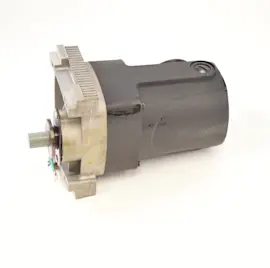
The exact horsepower rating for the Delta 36-540 10" bench saw depends on the specific motor nameplate data on your saw; Delta used different motor configurations across similar-era bench and contractor-style saws. For the most accurate number, we use the motor tag (HP or amps/volts) on your 36-540 to confirm the rating before ordering parts through Sears PartsDirect.
How to confirm horsepower on a Delta 36-540
Check the motor nameplate (usually on the motor housing) and record:
- Horsepower (HP) if listed
- Amps (A) and volts (V) if HP is not listed
- Phase (most home units are single-phase)
- RPM and Hz (helpful for matching a replacement motor)
- Frame or mounting style (helps avoid fit issues)
Quick conversion guide (when HP is not printed)
If your motor tag lists amps and volts, we estimate HP by comparing to typical single-phase motor ranges.
| Motor input shown on tag | Typical HP range for bench/contractor saw motors | What it means for cutting |
|---|---|---|
| 120V, ~12A to 15A | About 1.5 HP to 2.0 HP (peak ratings vary) | Better for thicker hardwood and faster feed rates |
| 120V, ~8A to 11A | About 1.0 HP to 1.5 HP | Good general-purpose ripping and crosscutting |
| 120/240V dual-voltage, similar amps scaled | Often 1.5 HP to 2.0 HP | More flexibility for shop wiring |
Why the model number alone is not enough
“36-540” identifies the saw platform, but the motor rating is ultimately set by the motor installed (and sometimes by prior owner replacement). Using the motor tag prevents mismatches when you are selecting electrical parts like switches, cords, or capacitors.
What we recommend before you buy parts
- Unplug the saw before inspecting the motor tag or wiring
- Confirm your exact model number is 36-540 (not a close variant)
- Match electrical ratings (volts/amps) when replacing switches or cords
- If the saw trips breakers, test the cord and switch for damage
- Use a multimeter to check continuity on suspect electrical components
Last updated: February 2026
Is the Delta ShopMaster a good woodworking tool?
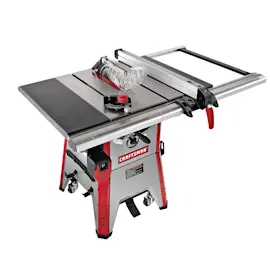
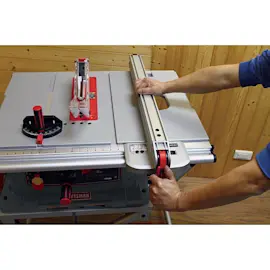
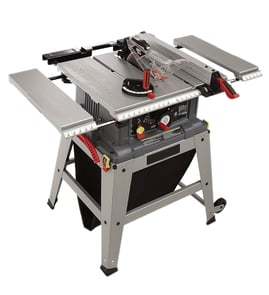
Yes, Delta ShopMaster tools are a solid choice for DIY and light-to-moderate woodworking when they’re set up correctly and used with sharp blades and proper safety gear. For your Delta 36-540 10" bench saw, overall results depend most on alignment, fence accuracy, and blade quality.
What “good” means for a bench table saw like the Delta 36-540
A 10-inch bench saw is built for portability and general-purpose cutting, not production cabinetry. You’ll get the best experience when you match the tool to the job.
Best for
- Ripping and crosscutting dimensional lumber
- Plywood and sheet goods (with proper support)
- DIY projects, home repairs, and hobby builds
- Jobsite-style work where portability matters
Not ideal for
- Heavy daily use in a pro shop
- Thick hardwood ripping all day without pauses
- Ultra-fine joinery unless you tune the saw carefully
Quick checklist to judge performance (and improve it)
If your ShopMaster-branded Delta tool (or your Delta 36-540 table saw) feels “off,” these checks usually make the biggest difference:
- Verify the blade is parallel to the miter slot (reduces burning and kickback risk)
- Confirm the rip fence locks parallel to the blade front and rear
- Use a clean, sharp 10-inch blade matched to the cut (rip vs. crosscut vs. combo)
- Check arbor flange and blade for pitch buildup or wobble
- Support long boards with outfeed and side support to prevent binding
Common symptoms and what they usually point to
| Symptom | Most common cause | What to do first |
|---|---|---|
| Burn marks on wood | Dull blade or misalignment | Clean/replace blade; re-align fence/blade |
| Wandering rip cuts | Fence not parallel or flexing | Re-square and re-check fence lock |
| Excess vibration | Blade issue or mounting/stand instability | Inspect blade; tighten fasteners; stabilize base |
| Tripping breaker | Extension cord too light or motor load too high | Use heavier-gauge cord; reduce feed rate |
Why it matters
A “good” woodworking tool is one that cuts accurately and predictably. On a bench saw, small alignment errors can cause rough cuts, binding, and unsafe cutting conditions. A basic tune-up often makes a bigger difference than upgrading the saw.
Finding the right parts and diagrams
For Delta 36-540 parts lookup, use the model number exactly as shown on the saw’s data plate when searching diagrams and replacements on Sears PartsDirect.
Last updated: February 2026
How do I find the model number on my 36-540?
The model number is printed on the saw’s model and serial tag. On the Delta 36-540 10-inch bench saw, that tag is typically on the main saw body or base; once you find it, match the full model number exactly (including any dashes) when looking up diagrams and parts.
Where to look on a Delta 36-540 table saw
Check these common tag locations first:
- The rear of the saw housing, near the motor area
- The side of the base or stand (if your bench saw is mounted to one)
- Under the table top near the front edge (look along the frame rails)
- Near the power switch box or cord entry point
- On the underside of the table, close to the arbor assembly
What the tag looks like and what to copy
Most tags include a model number and a serial number. For parts lookup, we use the model number.
| Item on tag | Example format | What we use it for |
|---|---|---|
| Model number | 36-540 | Identifies the correct parts diagrams |
| Serial number | Letters and numbers | Helps identify production run details |
Tips to avoid ordering the wrong parts
Small differences in the model number can change the blade guard, switch, belt, arbor parts, or fence components.
- Copy the model number exactly as shown: 36-540
- Include dashes and any extra suffix characters if present
- Clean dust off the tag; use a flashlight to read stamped text
- If the tag is missing, check any original paperwork or the carton label
Why it matters
Using the exact Delta model number ensures we show the correct table saw parts breakdown for your 36-540, so you can match components by diagram and avoid fit issues.
Related help: [how to find your appliance model number (and what it means for parts)]
Last updated: March 2026