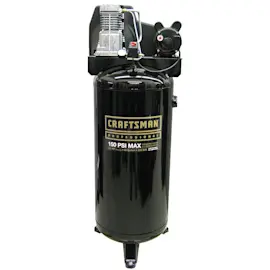
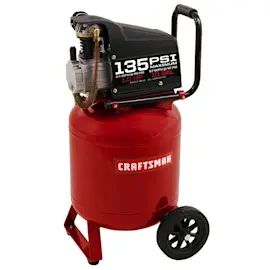
Owner’s manual

How to check compressor size?
To check the right compressor size for your Craftsman 919153451 air compressor setup, match your tool’s required airflow (SCFM/CFM) and pressure (PSI) to what the compressor can deliver, then confirm your electrical circuit can support the motor. Use the 919153451 owner's manual to verify the exact ratings and operating limits.
When people say “size,” they usually mean capacity and capability, not physical dimensions.
- Airflow (SCFM/CFM at a given PSI): how much air the compressor supplies while running
- Pressure (PSI): the maximum working pressure your tools can use
- Duty cycle and recovery: how long it can run and how quickly it refills the tank
Pick a compressor that meets or exceeds your tool’s airflow requirement at the tool’s required PSI.
Look on the air tool label or spec sheet and note:
- Required SCFM/CFM (often listed at 90 PSI for many tools)
- Required operating PSI range
- Whether the tool is continuous-use (sanders, grinders) or intermittent (nailers)
- Any air quality needs (painting may require filtration and dry air)
Use these checks to confirm your compressor can keep up:
- Compare tool SCFM to compressor SCFM at the same PSI (from the 919153451 owner's manual)
- Watch tank behavior: if pressure drops fast and the motor runs constantly, airflow is undersized
- Confirm the regulator outlet pressure never exceeds the tool’s max rating (the manual stresses staying under accessory pressure limits)
If the accessory air requirement is higher than what the compressor supplies, performance drops (slow tools, poor spray pattern) and the compressor can overheat from extended run time.
Undersized power supply can make a “right-sized” compressor act too small.
- Use extra air hose instead of an extension cord when possible
- If you must use an extension cord: 3-wire grounded, 50 ft max, 12 AWG or larger (never 14 or 16 AWG)
- Use the correct fuse/circuit breaker rating for the branch circuit
| What you’re checking | What to look for | What it tells you |
|---|---|---|
| Tool label | SCFM/CFM and PSI | Minimum air demand |
| Compressor specs | SCFM/CFM at PSI | Maximum air supply |
| Circuit/cord | 12 AWG, 50 ft max | Prevents voltage drop and hard starts |
For common sizing and performance symptoms, we recommend our air compressor common questions guide.
Last updated: February 2026
Is it worth it to repair a compressor?
Repairing a Craftsman air compressor model 919153451 is worth it when the problem is a normal wear item (pressure switch, check valve, regulator, fittings) and the tank is sound. If the air tank leaks or the safety system cannot control pressure, replacement is the practical choice.
- Repair makes sense when the unit:
- Won’t start, but power supply and switch checks point to a serviceable control issue
- Leaks air at fittings, the pressure switch release valve, or the check valve
- Won’t build tank pressure due to a valve, gasket, or regulator problem
- Has a dirty air filter reducing output (simple maintenance)
- Replace the compressor when:
- The air tank leaks or leaks at tank welds (the tank must be replaced, not repaired)
- The safety valve pops because pressure control is unreliable and repairs are escalating
- The pump is worn enough that a rebuild plus other parts approaches the cost of a new unit
The 919153451 owner's manual is clear on two high-impact points:
- Before any maintenance or repair, unplug the compressor and bleed off all tank air pressure.
- If there is an air leak in the air tank or at tank welds, the tank must be replaced and you should not drill, weld, or modify the tank.
| Symptom | Common cause | Typical path |
|---|---|---|
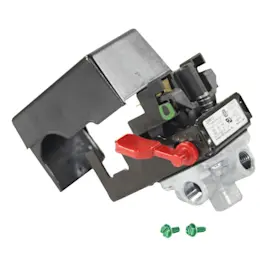
| Safety valve pops, tank over-pressurizes | Pressure switch not shutting off at cut-out | Replace pressure switch; verify cut-out control |
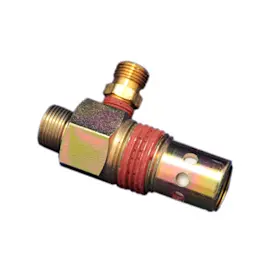
| Constant leak at pressure release valve when off | Check valve leaking | Clean or replace check valve |
| Air leaks at fittings | Loose fittings | Soapy water test; tighten carefully (do not over-tighten) |
| Pressure drops under use | Regulator needs adjustment | Adjust regulated pressure under flow conditions |
An air compressor stores high-pressure air; a compromised tank or uncontrolled pressure is a safety risk and turns a “repair” into a replacement decision. Fixing normal control and valve issues restores performance without gambling on the tank.
Last updated: February 2026
What is the average lifespan of an air compressor?
Most air compressors last 10 to 15 years in typical homeowner use; with light duty and good care, many run 15 to 20 years. For the Craftsman 919153451 (permanently lubricated, tank-mounted), lifespan depends most on run time, heat, moisture control, and keeping airflow clear as described in the owner's manual.
- Duty cycle and run time: frequent long runs wear valves, seals, and the pump faster.
- Heat and ventilation: blocked cooling airflow shortens motor and pump life.
- Moisture and corrosion: water left in the tank accelerates internal rust.
- Air leaks: constant cycling increases wear and electrical stress.
- Electrical supply: low voltage or overloaded circuits can damage the motor and switch.
We recommend these routine actions for a tank-mounted compressor like model 919153451:
- Drain condensation from the tank regularly (especially in humid conditions).
- Keep the unit in a clean, dry, well-ventilated area with clearance for cooling airflow.
- Keep the air intake/filter area unobstructed so the pump can breathe.
- Fix small leaks early (fittings, regulator, drain valve, safety valve).
- Avoid extension cords when possible; use proper power and a dedicated circuit if needed.
| Usage pattern | Typical lifespan | What usually fails first |
|---|---|---|
| Occasional DIY (inflation, brad nailer) | 15 to 20 years | regulator, pressure switch, fittings |
| Regular homeowner (garage tools weekly) | 10 to 15 years | check valve, pump seals/valves |
| Heavy/near-continuous use | 5 to 10 years | pump assembly, motor components |
A compressor that runs longer than normal to reach cut-out pressure, cycles rapidly, or struggles to restart is usually wearing faster than it should. Catching those symptoms early helps you avoid tank moisture damage and pump overheating.
Last updated: February 2026
What is the most common cause of air compressor failure?
The most common cause of air compressor failure is preventable wear from poor maintenance and operating conditions: restricted airflow (dirty intake filter), air leaks, and overheating that stress the motor and pump. On the Craftsman 919153451, these issues often show up as low output, tripped overload, or leaking valves.
- Restricted air intake filter: compressor runs hot, struggles to build pressure
- Air leaks (hose, fittings, regulator): long run times, pressure drop under use
- Check valve problems (stuck open or restricted): hard starting, leaking, poor recovery
- Safety valve leaking/defective: hissing at the safety valve, inability to hold pressure
- Electrical issues (loose connections, capacitor): motor will not run or trips overload
- Unplug the compressor before inspection or service.
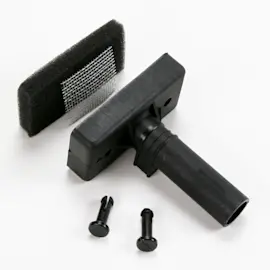
- Inspect the air intake filter; clean or replace if dirty or restricted.
- Listen for leaks at fittings, hose connections, regulator, and tank drain.
- If the safety valve leaks, pull the ring briefly to seat it; replace the valve if it still leaks.
- If the unit struggles to restart with pressure in the tank, inspect the check valve and related plumbing.
| Symptom | Most likely cause | Typical fix |
|---|---|---|
| Won’t build/maintain tank pressure | Air leaks, restricted intake filter, check valve issue | Fix leaks; clean/replace filter; service check valve |
| Motor won’t run | Overload tripped, loose electrical connections, capacitor | Reset after cooling; tighten connections; test/replace capacitor |
| Air leaking from safety valve | Defective safety valve | Reseat; replace if it continues |
| Big pressure drop when using a tool | Regulator not set under flow, compressor undersized for demand | Adjust regulator while tool is flowing; reduce air usage |
Running with leaks or a clogged filter forces longer run times and higher heat. That accelerates wear on the pump and motor, and it can also trigger overload shutdowns. Keeping airflow clear and fixing leaks early prevents most “sudden” failures.
- Use the 919153451 owner's manual for safety warnings and the troubleshooting chart.
- Follow air compressor won't build tank pressure if your tank pressure stalls or rises very slowly.
Last updated: February 2026