Owner’s manual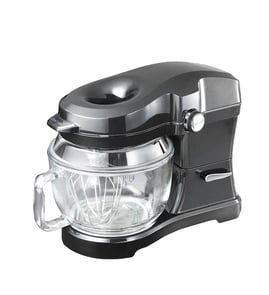



Is there a better mixer than KitchenAid?
For the KitchenAid KSM105GBCMC0, “better” depends on what you bake most: some brands outperform in heavy bread dough capacity and torque, while KitchenAid typically wins for everyday versatility, attachment options, and parts support. Use our KSM105GBCMC0 owner's manual to match speeds and accessories to your recipes.
When customers compare stand mixers, they’re usually weighing these factors:
- Dough performance: torque at low speed, heat buildup, and kneading consistency
- Capacity: how much dough or batter you can mix without strain
- Speed control: smooth starts and stable low-speed mixing
- Accessory ecosystem: bowls, beaters, whips, dough hooks, attachments
- Serviceability: parts availability and repair friendliness
KitchenAid mixers like the KSM105GBCMC0 are designed to mix faster than many stand mixers, so recipe times often need to be reduced to avoid overbeating.
- For cakes and cookies: KitchenAid performance is typically excellent; mixing time can be shorter than other mixers.
- For yeast doughs: use Speed 2; higher speeds can damage the mixer.
- For whipped mixtures (egg whites, cream): a wire whip is the right tool.
| Task | Best tool | Notes |
|---|---|---|
| Cookies, frosting, quick breads | Flat beater | Strong all-purpose mixing |
| Whipped cream, egg whites | Wire whip | Adds air efficiently |
| Bread, rolls, buns | Dough hook | Keep it at Speed 2 |
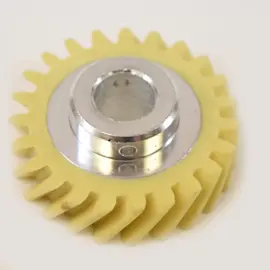
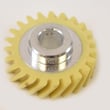
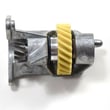
If the mixer runs but bogs down, clicks, or won’t drive the beater under load, a worn gear is a common cause. For this model, the stand mixer worm gear WPW10112253 is a key drivetrain part that can fail to protect the motor.
- Confirm you’re using Speed 2 for dough
- Reduce batch size (especially stiff dough)
- Stop and scrape the bowl only with the mixer off
- Watch for grease leakage or grinding noises from the gear case
- Try a different attachment (wire whip vs. flat beater) for the recipe
Choosing the right mixer is really about matching torque, capacity, and correct speed use to your baking style. Many “not powerful enough” complaints come from using the wrong speed for dough or from a worn drive component.
Last updated: January 2026
What does KSM mean in KitchenAid?
KSM is KitchenAid’s model prefix for a KitchenAid stand mixer. On your KitchenAid KSM105GBCMC0 stand mixer, “KSM” identifies the product family (stand mixers), while the remaining characters help specify the exact series, features, and color/finish.
Knowing that KSM refers to a stand mixer helps you match the right documentation, attachments, and replacement parts for your exact model.
- On the model/serial label on the mixer
- In parts diagrams and parts lists
- In the troubleshooting section and safety information
- When ordering accessories and replacement parts
- When contacting service for your specific unit
We recommend using the entire model number, not just “KSM”, when you shop for parts or look up instructions.
| What you enter | What it typically returns | Best use |
|---|---|---|
| KSM | Many KitchenAid stand mixer families | General browsing |
| KSM105 | A narrower group of similar mixers | Comparing similar models |
| KSM105GBCMC0 | Exact match for your mixer | Ordering parts and using the correct manual |
If you are repairing common issues like grinding noises, slipping under load, or speed control problems, these are examples of parts that can come up for KSM-series mixers.
- Stand mixer worm gear WPW10112253 (common wear item in the gear train)
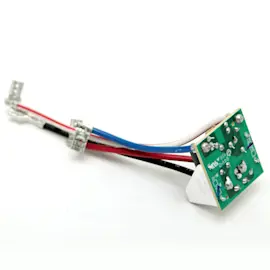
- Plate-ctrl WPW10119326 (speed control board)
- Stand mixer phase control board WPW10325124 (motor speed/phase control)
KitchenAid stand mixers share many design concepts, but parts and procedures can vary by model. Using KSM105GBCMC0 ensures you get the correct parts, wiring references, and troubleshooting steps from the right documentation.
For model-specific identification details and service guidance, use the KSM105GBCMC0 owner's manual.
Last updated: January 2026
What is the life expectancy of a KitchenAid stand mixer?
A KitchenAid stand mixer like model KSM105GBCMC0 typically lasts 10 to 15 years with normal home use and basic maintenance. Heavy loads (stiff doughs), overheating, and worn gears can shorten lifespan; routine care and timely part replacement help it run for years.
- Normal home baking (weekly use): 10 to 15 years
- Light use (monthly): 15+ years
- Heavy use (frequent bread dough, long run times): 5 to 10 years
- Running on high speed with heavy dough (especially above speed 2 for kneading)
- Overloading the bowl or mixing very stiff batches
- Letting the mixer run hot for long periods without rest
- Ignoring early symptoms like grinding, clicking, or speed surging
- Using worn attachments that cause extra drag on the planetary shaft
If your KSM105GBCMC0 starts grinding, stalls under load, or makes a loud clicking noise, the drive train is often the first place to check.
| Symptom | Common area involved | Example part for this model |
|---|---|---|
| Grinding or loud clicking | Gear train | Stand mixer worm gear WPW10112253 |
| Speed changes on its own | Speed control electronics | Plate-ctrl WPW10119326 |
| Mixer “walks” on the counter | Base grip | Foot WP9709707 |
- Keep vents clear and wipe flour dust off the motor housing
- Mix heavy dough at low speed and give the motor breaks
- Stop immediately if you hear gear grinding; continued use can damage the gear case
- Tighten loose screws and check for unusual wobble at the planetary
- Follow operating limits and troubleshooting steps in the KSM105GBCMC0 owner’s manual
A stand mixer is built around a motor, gear case, and speed control system. Catching wear early (especially gear noise or speed instability) prevents secondary damage and keeps repairs smaller and more affordable.
Last updated: January 2026