Owner’s manual
 Error Codes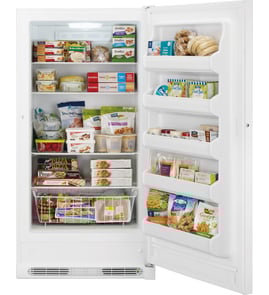




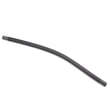
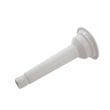
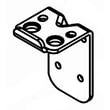
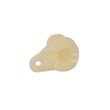

What does FF mean on a Frigidaire freezer?
On the Frigidaire FFFH20F2QWC upright freezer, an “FF” message is most commonly tied to a cooling-airflow problem, often from heavy frost/ice affecting the evaporator area or an evaporator fan issue. Start with a reset and manual defrost; if it returns, inspect the fan and defrost system.
What to do first (safe reset and quick checks)
Follow the operating and alarm guidance in the FFFH20F2QWC owner’s manual. Then:
- Press the control-panel key used to acknowledge alarms (often Set or any key, depending on what is displayed).
- Make sure the door is fully closed and the gasket is sealing.
- Check for blocked air vents from overpacked food.
- Unplug the freezer and leave the door open long enough to melt any hidden ice buildup (manual defrost).
- After restoring power, allow several hours for temperatures to stabilize.
If “FF” comes back: likely causes on this model family
On upright freezers like the FFFH20F2QWC, recurring “FF” behavior typically points to frost restricting airflow or a component that moves air or manages defrost.
- Ice buildup around the evaporator fan area
- Failed or slow evaporator fan motor
- Defrost system problem (heater, timer/control, wiring)
- Door sealing issue causing excess moisture and frost
Parts that commonly relate to airflow and defrost
If troubleshooting leads to a repair, these model-compatible parts are commonly involved:
| Symptom you notice | What it often points to | Example model-compatible part |
|---|---|---|
| Freezer warm, little/no airflow sound | Fan not running | Freezer evaporator fan motor 297309000 |
| Heavy frost returns quickly after defrost | Defrost heat not working | White-westinghouse freezer defrost heater 5304496284 |
| Frost pattern and temps swing, defrost timing suspect | Defrost timing/control issue | Freezer defrost timer 5304518034 |
Why it matters
When airflow is restricted, the freezer can look “on” but not cool evenly; food near the door warms first, run time increases, and alarms or error messages are more likely.
Helpful related DIY reference
For code definitions and what to check next, use our Frigidaire deluxe electronic control module freezer error codes guide.
Last updated: January 2026
What is the most common problem with a Frigidaire refrigerator?
The most common Frigidaire refrigerator complaint is a cooling problem (warm temperatures or frost buildup) caused by airflow restrictions, dirty coils, or a door that is not sealing. For your Frigidaire FFFH20F2QWC upright freezer, the most common day-to-day issue is also “too warm” or “frost inside” from door sealing, loading, or defrost-related conditions; use the checks in the FFFH20F2QWC owner’s manual.
Most common causes we see (what to check first)
- Door left ajar or packages preventing a full seal
- Temperature set too warm, or Quick Freeze running longer than expected
- Heavy frost buildup reducing airflow inside the cabinet
- Dirty, torn, or deformed door gasket letting humid air in
- Fan or temperature control problems causing uneven or warm temperatures
Quick triage: symptom vs likely cause
| Symptom | Likely cause | First action |
|---|---|---|
| Freezer too warm | Door not sealing, warm food load, frequent openings | Confirm door closes, reduce openings, allow 4 hours to stabilize |
| Frost inside | Air leak at door, door not closing | Repack items, inspect gasket contact all around |
| Runs a lot | Hot room, door leak, warm load | Improve ventilation around unit, check door seal |
| Alarm sounds | Door ajar, high temp, power fail | Close door, acknowledge alarm on the control panel |
Model-matched parts that often matter on FFFH20F2QWC
If troubleshooting points to a failed component, these are common parts used on this model:
- Temperature control 5304513033 (temperature not regulating correctly)
- Freezer evaporator fan motor 297309000 (poor airflow, uneven temps)
- Frigidaire freezer gasket and liner fastener kit 5304406520 (helps address gasket/liner fastening issues that can contribute to air leaks)
Why it matters
Cooling and frost problems usually get worse over time; the compressor runs longer, temperatures swing, and frost can block airflow. Fixing door-seal and airflow issues early often prevents more expensive repairs.
Last updated: January 2026
Why is my Frigidaire upright freezer not freezing?
If our Frigidaire FFFH20F2QWC upright freezer isn’t freezing, the most common causes are the unit being in Power Off mode, the temperature setting being too warm, a door not sealing, or a cooling/defrost system problem (fan, thermostat, or heavy frost blocking airflow). See the FFFH20F2QWC use & care manual for control and alarm behavior.
Quick checks we recommend first (no parts)
- Confirm the control panel is not in Power Off mode (the display can show “power off”).
- Make sure Control Lock is off; locked controls won’t accept setpoint changes.
- Check for Sabbath mode; controls and lights may not respond until it’s turned off.
- Allow a full 4-hour cool-down after plugging in or after a long door-open event.
- Verify the door closes tightly and packages are not holding it open.
What to inspect next (common repair paths)
If the freezer runs but stays warm, these model-relevant parts are common suspects:
- No air movement inside: freezer evaporator fan motor 297309000
- Temperature not regulating correctly: temperature control 5304513033
- Warm air leaking in (frost, long run times): check the door seal and consider the Frigidaire freezer gasket and liner fastener kit 5304406520
Symptom-to-cause guide
| What you notice | Likely cause | What we do next |
|---|---|---|
| Display shows “power off” | Cooling disabled | Turn power back on at the control panel |
| Controls won’t change settings | Control lock or Sabbath mode | Unlock controls or exit Sabbath mode |
| Warm temps, fan silent | Evaporator fan issue | Inspect fan area; replace fan motor if failed |
| Frost buildup, door not sealing | Door seal leak or door alignment | Check seal, level unit, correct door closure issues |
Why it matters
When the FFFH20F2QWC can’t circulate cold air or keep warm air out, internal temperatures rise quickly; that can trigger high-temp alarms, increase compressor run time, and prevent food from freezing properly.
Related DIY help: freezer not cooling.
Last updated: January 2026
Is it worth repairing an upright freezer?
Yes, repairing your Frigidaire FFFH20F2QWC upright freezer is often worth it when the cabinet is in good condition and the failure is in a replaceable component (temperature control, fan, or defrost part). If the compressor or sealed system is failing, replacement is usually the better value.
Quick decision checklist
- The freezer is under 10 years old and has been reliable overall.
- The issue is temperature control, airflow, or defrost related (common repair wins).
- The door closes and seals well after basic adjustment and cleaning.
- The cabinet and liner are intact (no major rust-through or structural damage).
- The problem points to a single part rather than repeated breakdowns.
Common repairs that are usually “worth it” on this model
On the FFFH20F2QWC, these are typical repair categories that can restore normal freezing without major cost:
- Temperature regulation problems (too warm, too cold, won’t hold set point)
- Airflow problems (warm spots, noisy fan, slow recovery after door openings)
- Defrost problems (frost buildup, reduced cooling, high temp alarm)
- Door alignment issues (door ajar alarms, moisture or frost near the opening)
For operating and alarm behavior (power fail, door ajar, quick freeze), use the FFFH20F2QWC owner’s manual.
Parts that often make a repair practical
If troubleshooting points to a specific component, these model-compatible parts are common repair candidates:
- Temperature control 5304513033 (regulates cooling cycles)
- Freezer evaporator fan motor 297309000 (circulates cold air through the cabinet)
- Freezer defrost heater 5304496284 (melts frost off the evaporator during defrost)
- Frigidaire freezer gasket and liner fastener kit 5304406520 (helps secure/fasten the door gasket and liner interface components)
Cost vs. value guide
| Situation | Typical recommendation | Why it usually makes sense |
|---|---|---|
| Runs but is too warm | Repair first | Often temperature control, fan, or defrost related |
| Heavy frost inside | Repair first | Defrost heater/timer issues are commonly fixable |
| Door ajar or moisture/frost at opening | Repair first | Alignment or sealing issues can reduce run time |
| Compressor or sealed system issue | Consider replacement | Repairs are typically high-cost versus unit value |
Why it matters
A properly working upright freezer protects food quality and reduces waste. Fixing airflow, defrost, or sealing problems can also lower energy use because the compressor does not have to run as long to maintain temperature.
Last updated: January 2026