Owner’s manual
 Error Codes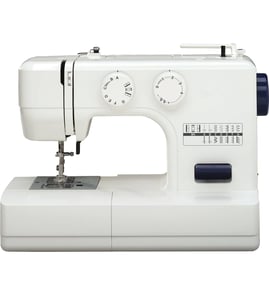

How old is a Kenmore 38515208400 sewing machine?
Kenmore sewing machines with model numbers that start with 385 were introduced in 1965, so a Kenmore 38515208400 is typically from the mid-1960s through the 1980s era. For the most accurate identification details, we recommend matching the exact model and ID information shown on the machine to the owner's manual.
How to estimate the age more precisely
We use the model and identification plate to narrow things down.
- Find the nomenclature/identification plate on the back of the sewing machine.
- Confirm the model format shown on the machine (often shown like 385.15208 in documentation).
- Note any additional suffix digits (some versions use an XXX range for sub-models).
- Compare your machine’s features and included accessories to the manual’s lists.
- If you are ordering parts, use the exact model number from the plate to avoid mismatches.
What the manual tells us about this model family
The documentation for this Kenmore family references Model 385.15202/15208 and also notes that 385.15202XXX and 385.15208 (XXX = 000 through 999) share certain compatible items (such as foot controller models). That confirms your machine belongs to the long-running Kenmore 385 series, which aligns with the 1965 to 1980s production window.
Quick reference: what you can and cannot date from the model number alone
| What you have | What it tells you | What it does not tell you |
|---|---|---|
| Model prefix 385 | Kenmore 385 series era (introduced 1965) | Exact year of manufacture |
| Full model 38515208400 | Specific variant within the 385.15208 family | Exact build date without plate details |
| Plate details (model/suffix) | Best match for parts and documentation | Purchase date unless you have receipt |
Why it matters
Knowing the approximate era helps you choose compatible items (needle system, bobbins, foot controller, and accessories) and avoid ordering parts that fit a different Kenmore 385 sub-model.
Last updated: February 2026
How do I know what model my Kenmore sewing machine is?
Your Kenmore sewing machine’s model number is printed on the machine’s identification plate; on Kenmore 385-series machines it’s typically on the back of the machine. For this model page, the model number you’re looking for is 38515208400.
Where to look on the machine
Check these common spots first (with the machine unplugged):
- Back of the machine on the nomenclature or identification plate
- Rear base area near the power cord connection
- Underside of the machine base (tilt it carefully)
- Inside the front or side cover (less common on mechanical models)
What the model number looks like
Kenmore sewing machine model numbers often start with 385 and may be shown with a dot (for example, 385.15208). The same model can appear in a few formats.
| You might see it printed as | What it means for ordering parts/manuals |
|---|---|
| 38515208400 | Full model number (best match) |
| 385.15208 | Common shortened 385-series format |
| 385.15208* | “First 8 digits + asterisk” format used in some parts lookups |
How to use the number once you find it
- Match the full model number to the parts list for the most accurate fit
- If your plate shows a dotted format (example: 385.15208), use the first eight digits (38515208) when a lookup asks for that format
- Use the instructions in the owner's manual to confirm the model format and where the plate is located
Why it matters
Kenmore 385-series machines share many similar-looking parts and accessories (needle plates, bobbins, presser feet, and feed components). Using the exact model number prevents ordering a part that fits a different 385 variant.
Last updated: February 2026
Is Kenmore sewing machine 38515208400 low shank?
Yes. The Kenmore sewing machine model 38515208400 uses a low-shank presser foot setup, so low-shank feet (including a walking foot/even feed foot) are the correct style for this machine. For the exact presser foot and accessory guidance for your stitch functions, use the owner's manual.
How to confirm low shank on your machine
We recommend a quick physical check so you buy the right presser foot style.
- Turn the power switch off and unplug the machine before changing feet.
- Raise the presser foot lifter to the highest position.
- Remove the presser foot.
- Measure from the center of the presser foot screw to the needle plate.
- If it measures about 3/4 inch (around 19 mm), it is a low shank.
What “low shank” means for accessories
Low shank affects which attachments fit the presser bar and align correctly with the needle and feed dogs.
| Foot type | Typical fit on 38515208400 | Common use |
|---|---|---|
| Low-shank walking foot (even feed) | Yes | Quilting, plaids, multiple layers |
| High-shank foot | No | Industrial-style machines |
| Slant-shank foot | No | Some older specialty machines |
Why it matters
Using the correct shank style keeps the presser foot level and the needle centered in the needle opening. That helps prevent needle strikes, skipped stitches, fabric feeding issues, and timing-related jams.
Related troubleshooting if fabric still will not feed
If you install a walking foot and the fabric still does not move evenly, these guides help pinpoint the cause:
- Check feed dog position and lint buildup (common after heavy fabric).
- Verify stitch length is not set too short for the material.
- Confirm presser foot pressure and correct threading.
- Review our sewing machine fabric not moving troubleshooting steps.
Last updated: February 2026