Owner’s manual
 Error Codes



How to read Kenmore model number?
For Kenmore appliances, the model number tells us the product family and who manufactured it. On Kenmore side-by-side refrigerator model 10655422501, the 106 prefix identifies the manufacturer series, and the remaining digits narrow down the exact design so we can match the correct parts and manual information (see the 10655422501 owner's manual).
The model and serial number label is located on the inside wall of the refrigerator compartment. We recommend writing down the model number, serial number, and purchase date for future service and parts lookup.
- Open the fresh food (refrigerator) door
- Look along the inside side walls near the crisper/meat pan area
- Check near the top interior liner if you do not see it at mid-level
- Record both the model number and serial number exactly as shown
Kenmore model numbers are typically structured as a prefix + base model + variation digits.
| Section | Example from 10655422501 | What it means | Why it matters |
|---|---|---|---|
| Prefix | 106 | Manufacturer series | Helps match the correct parts system and service info |
| Base/variation | 55422501 | Design and feature variations | Ensures the right ice maker, water valve, thermostat, and door parts fit |
Even small digit differences can change fitment for common refrigerator parts.
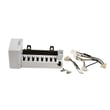
- Ice maker and ice storage components (example: ice maker assembly - refrigerator ice maker by whirlpool 4317943)
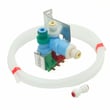
- Water system parts such as the inlet valve and filter housing
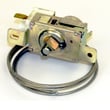
- Temperature control parts such as the thermostat
- Door hardware such as cams, gaskets, and brackets
Using the full model number (not just “Kenmore 106”) prevents ordering the wrong refrigerator water filter housing, inlet valve, or ice maker assembly, and it also ensures troubleshooting steps in the manual match your exact configuration.
Last updated: February 2026
How to replace an ice maker in a side by side refrigerator?
To replace the ice maker on Kenmore model 10655422501, we unplug the refrigerator, shut off the water supply, remove the ice bin and ice maker mounting screws, disconnect the wiring harness, then install the new unit and turn the wire shutoff arm back on. Use the 10655422501 owner's manual for the exact access points.
- Unplug the refrigerator or disconnect power.
- Turn OFF the main water supply; run a nearby faucet briefly to relieve pressure.
- Empty the ice bin and remove loose cubes.
- Keep towels handy to catch drips.
- Turn the ice maker OFF by lifting the wire shutoff arm (arm up); do not force it.
- Remove the ice bin from the freezer.
- Remove the ice maker cover (if equipped).
- Remove the mounting screws and support the ice maker.
- Unplug the ice maker wiring harness connector.
- Install the replacement ice maker, reconnect the harness, and tighten screws.
- Lower the wire shutoff arm to turn the ice maker ON.
- Allow 24 hours to produce the first batch of ice.
- Discard the first three batches of ice.
- If ice is slow, set the freezer control slightly colder and wait 24 hours between changes.
| Item | Normal result | What to check if not |
|---|---|---|
| Wire shutoff arm | Down = ON, up = OFF | Arm clicks into position |
| Ice bin | Seats fully | Clear clumps, re-seat bin |
| Water fill | Brief fill during cycle | Supply line, valve, kinks |
A properly mounted ice maker prevents leaks, reduces ejector jams, and restores normal production (the manual notes about 7 to 9 batches per 24 hours under typical conditions).
If you are replacing the complete unit, match the mounting and connector style to the ice maker assembly 4317943.
Last updated: February 2026
How to replace water filter in Kenmore side by side refrigerator?
To replace the water filter in your Kenmore side-by-side refrigerator model 10655422501, remove the old cartridge from the base grille, install the new cartridge (reusing the cap if your style has one), then flush 2 to 3 gallons (8 to 12 L) to clear air. See the 10655422501 owner's manual for your exact filter style.
- Open both doors and locate the filter cap/cartridge in the front base grille.
- Rotate the cartridge (or cap) counterclockwise to the vertical position.
- Pull the cartridge out; keep a towel handy because some water will spill.
- If your style uses a cap, slide the cap off the old cartridge and do not discard it.
- Remove the protective cover from the new filter O-rings.
- Push the new cartridge in until it stops, then rotate clockwise to the horizontal (locked) position.
- Hold a sturdy container at the dispenser.
- Dispense and discard 2 to 3 gal. (8 to 12 L).
- Expect sputtering at first as air clears.
| After you install the filter | What you should see |
|---|---|
| First dispensing | Air spurts, uneven flow |
| After flushing | Steady stream, normal taste |
A fully seated filter and proper flushing prevent leaks, reduce dispenser sputtering, and help maintain normal water flow for the dispenser and ice maker.
- Verify the filter is locked fully into the housing.
- Flush the full 2 to 3 gallons.
- If you use reverse osmosis, the refrigerator filter can reduce pressure; test flow with the filter removed to isolate the restriction.
- If the dispenser and ice maker both have weak flow, the refrigerator inlet valve W10408179 is a common water-supply component to check.
Last updated: February 2026
What are the most common problems with Kenmore refrigerators?
The most common issues we see on Kenmore refrigerators like model 10655422501 are cooling problems, ice maker or water dispenser failures, leaks, unusual noises, and frost buildup. Many of these are caused by airflow restrictions, control settings, or a few high-wear parts in the defrost and water systems.
- Not cooling or warming up: make sure air vents are not blocked and doors are not being opened frequently; large food loads can take hours to pull back down to temperature.
- Too warm or too cold: adjust the refrigerator or freezer control one setting at a time (rotary or slide controls) and recheck after temperatures stabilize.
- Ice maker not working: listen for the water valve buzzing during fill; check for low water flow, frozen fill tube, or a failed ice maker.
- Water dispenser weak or not dispensing: a restricted filter or a failing inlet valve is common.
- Water leaking or puddles: often tied to defrost drain issues, door sealing problems, or water line connections.
- Noisy operation: buzzing, gurgling, sizzling, and fan sounds can be normal; rattling can be items on top of the cabinet or a vibrating water line.
If troubleshooting points to a failed component, these model-matched parts are frequent fixes:
| Symptom | Common part to inspect/replace | Example part for this model |
|---|---|---|
| No ice or intermittent ice | Ice maker assembly | Ice maker assembly - refrigerator ice maker by whirlpool 4317943 |
| No water to ice maker/dispenser | Water inlet valve | Refrigerator inlet valve W10408179 |
| Frost buildup, warm freezer | Defrost safety/defrost heat circuit | Refrigerator defrost bi-metal WPW10225581 |
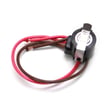
| Warm temps, inconsistent cycling | Temperature control | Refrigerator thermostat WP2198202 |
Cooling, ice, and water issues often overlap. For example, blocked vents or frequent door openings can make the freezer warm, which reduces ice production; a weak inlet valve can stop both the ice maker and dispenser.
Use the troubleshooting and control-setting guidance in the 10655422501 owner's manual, then match the symptom to the system involved (airflow, defrost, or water supply) before ordering parts.
Last updated: February 2026
What causes a side-by-side refrigerator to stop cooling?
A Kenmore side-by-side refrigerator model 10655422501 usually stops cooling because airflow is blocked, the temperature control is set to OFF, or a cooling-system component (fan, defrost system, or compressor) is not running. Start with vents, doors, and control settings before testing parts.
- Make sure the refrigerator control is not set to OFF (this model will not cool in OFF).
- Check that air vents are not blocked by food packages (blocked vents prevent proper airflow between sections).
- Confirm the doors close fully and the gaskets seal; frequent door opening warms the compartments.
- If the unit has digital controls, turn it OFF then ON to reset (a common manual-recommended step).
- After changes, allow time; normal recovery can take several hours, and adding warm food increases run time.
| Likely cause | What you typically see | What to do next |
|---|---|---|
| Blocked vents / poor air circulation | Freezer may be colder than fridge, temps uneven | Clear vents; reorganize items for airflow |
| Control setting issue (including OFF) | Both sections warm, compressor may not run | Set controls to normal; recheck in a few hours |
| Evaporator fan problem | Warm fridge, weak airflow, unusual fan noise or no fan sound | Inspect fan area; consider refrigerator evaporator fan blade WP2169142 |
| Defrost system issue (frosted evaporator) | Gradual warming, frost buildup, sizzling during defrost can be normal | Check for heavy frost; consider refrigerator defrost bi-metal WPW10225581 or refrigerator heater WP2323198 |
| Compressor not running | Both sections warm, little to no cooling at all | Professional diagnosis; compressor replacement may be needed |
This model circulates cold air between the freezer and refrigerator sections; when vents are blocked or a fan/defrost part fails, temperatures rise even if the controls are set colder. Setting controls colder will not cool faster, so fixing airflow or the failed component restores normal cooling.
Use the troubleshooting and “Ensuring proper air circulation” guidance in the 10655422501 owner's manual to confirm control settings, vent locations, and reset steps.
Last updated: February 2026
What is the cubic foot of my Kenmore refrigerator model 10655422501?
The cubic-foot capacity for Kenmore side-by-side refrigerator model 10655422501 is listed in the specifications section of the 10655422501 owner's manual. This model’s manual is the correct source for the exact total capacity and any refrigerator versus freezer breakdown.
Look for a section labeled “Specifications,” “Product data,” or “Capacity/volume.” It’s typically near the front of the manual or in a product information section.
- Open the 10655422501 owner's manual
- Search within the PDF for: “capacity,” “cu. ft.,” “cubic,” or “volume”
- Confirm your full model number on the ID label inside the fresh food compartment
- Record both values if shown: total capacity and compartment capacities
Most Kenmore side-by-side refrigerators of this design are commonly in the 20 to 26 cu. ft. total-capacity range. Your exact number depends on the cabinet size and interior configuration.
| What you’re measuring | What it means | Where it’s used |
|---|---|---|
| Total capacity (cu. ft.) | Refrigerator + freezer interior volume | Comparing replacement refrigerators |
| Usable space | What you can actually load | Depends on shelves, bins, and ice storage |
Knowing the correct cubic feet helps you compare replacement units, plan food storage, and avoid overpacking that can block airflow and cause uneven cooling.
Last updated: February 2026
What's the average lifespan of a Kenmore refrigerator?
Most Kenmore refrigerators average 10 to 15 years of service life; a well-maintained Kenmore 10655422501 side-by-side refrigerator often reaches the upper end of that range when airflow, door sealing, and cooling-system cleanliness are kept in good shape. For model-specific care steps, follow the 10655422501 owner's manual.
A refrigerator’s lifespan is driven more by operating conditions and maintenance than by any single part.
- Condenser coil cleanliness (dust buildup makes the compressor work harder)
- Door gasket condition (warm air leaks increase run time and frost)
- Stable temperatures (fresh food about 37°F, freezer about 0°F)
- Ice maker and water system health (leaks and low flow create secondary problems)
- Ventilation space around the cabinet (poor airflow shortens component life)
Use these habits to reduce wear on the sealed system and prevent common failures:
- Vacuum and brush dust from the condenser area regularly
- Keep door seals clean; close doors firmly every time
- Replace clogged water filters on schedule to protect valves and the ice maker
- Avoid overpacking; keep air vents inside the refrigerator and freezer clear
- Address temperature swings quickly (don’t “wait it out” for weeks)
| Symptom | Often fixable? | What to check first |
|---|---|---|
| Warm refrigerator or freezer | Yes | Airflow, frost buildup, thermostat settings |
| No ice or slow ice production | Yes | Water supply, inlet valve, ice maker |
| Water leaking | Yes | Water tube connections, filter housing, drain issues |
| Loud running or frequent cycling | Sometimes | Dirty condenser, fan issues, door seal leaks |
If you’re troubleshooting ice or water problems on this model, the refrigerator inlet valve W10408179 is a common wear item that can cause low water flow to the dispenser or ice maker.
A refrigerator that runs longer and harder than normal uses more energy and accelerates wear on major components like the compressor. Basic upkeep helps your Kenmore 10655422501 stay colder, run quieter, and last closer to its expected lifespan.
Last updated: February 2026