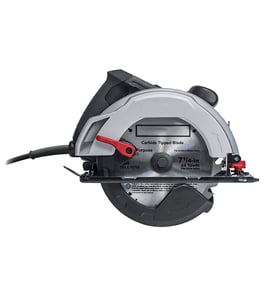

Are Skil circular saws good?
Yes. Skil circular saws are a solid choice for most DIY and light jobsite cutting because they typically offer good value, straightforward depth and bevel adjustments, and comfortable handling. For the Skil 367-TYPE7 power saw, overall performance depends most on blade condition, shoe alignment, and motor health.
What “good” means for a circular saw
A circular saw is doing its job well when it cuts straight, adjusts smoothly, and runs without excessive heat, sparking, or bogging down.
Common strengths many Skil saws are known for:
- Good value for general-purpose cutting (framing lumber, plywood, OSB)
- Easy-to-use depth and bevel adjustment controls
- Manageable weight and grip for one-handed guiding (when appropriate)
- Widely available blades in standard diameters and arbor sizes
- Simple, serviceable design compared with more complex tools
Quick checks to judge your 367-TYPE7 specifically
If you already own the Skil 367-TYPE7, these checks tell you more than brand reputation.
- Cut accuracy: Verify the shoe (base plate) stays square to the blade at 0 degrees.
- Depth adjustment: Confirm the depth lever locks firmly and does not slip under load.
- Blade wobble: With the saw unplugged, check for play at the blade/arbor area.
- Motor behavior: Listen for surging, grinding, or a burning smell during a cut.
- Cord and switch: Inspect for cracked insulation, intermittent power, or a sticky trigger.
Typical “good fit” vs “not the best fit”
| If you need this | Skil corded circular saws are usually a good fit | Consider a different class of saw |
|---|---|---|
| DIY home projects | Yes | Only if you need premium features |
| Repetitive daily jobsite use | Sometimes | Often (higher-duty pro models) |
| Fine-finish cabinetry cuts | Sometimes | Often (track saw or higher-end saw) |
Why it matters
A “good” saw is the one that matches your workload and stays safe. A sharp blade, a true shoe, and reliable electrical parts reduce kickback risk and improve cut quality.
For help identifying the exact model number and matching the right replacement parts, use how to find your appliance model number (and what it means for parts).
Last updated: February 2026
What are the parts of a circular saw machine?
A circular saw (including the Skil 367-TYPE7 power saw) is made up of safety controls, cutting components, and adjustment parts that work together to spin the blade and guide accurate cuts. The exact layout varies by model, but the core parts and their jobs are consistent across most handheld circular saws.
Main parts you will see on most circular saws
- Trigger switch (power trigger): Starts the motor when squeezed.
- Trigger lock (lock-off button): Helps prevent accidental starts.
- Main handle (rear handle): Primary grip; usually includes the trigger.
- Front grip (auxiliary handle/knob): Second handhold for control and stability.
- Blade: The cutting tool; selected by diameter, arbor size, and tooth count.
- Blade guard (lower guard): Spring-loaded cover that retracts during a cut.
- Base plate (shoe): Flat plate that rides on the workpiece and supports straight cuts.
Adjustment and guidance parts (for accuracy)
- Depth adjustment: Sets how far the blade extends below the base plate.
- Bevel adjustment: Sets the cutting angle (commonly 0 to 45 degrees).
- Rip fence/edge guide (if equipped): Helps keep a consistent distance from an edge.
- Blade wrench storage (if equipped): Holds the tool used for blade changes.
What each part does (quick reference)
| Part | What it controls | Why it matters |
|---|---|---|
| Trigger lock | Start safety | Reduces accidental start risk |
| Base plate (shoe) | Stability and tracking | Straighter, safer cuts |
| Depth adjustment | Blade exposure | Cleaner cuts, less kickback risk |
| Bevel adjustment | Angle | Accurate bevel and miter cuts |
Why it matters
Knowing the names and functions of circular saw parts helps you troubleshoot common issues (won’t start, rough cuts, binding, guard sticking) and choose compatible replacement items like blades, guards, or switches.
Helpful DIY reference
For basic electrical troubleshooting steps that apply to many corded power tools, use how to use a multimeter to test electrical parts video.
Last updated: February 2026
What circular saw has the deepest cut?
The deepest-cutting circular saws are specialty beam cutters that use very large blades (commonly 10-1/4 to 16-5/16 inches) and reach roughly 3-3/4 to about 6 inches of cut depth at 90 degrees. Your Skil 367-TYPE7 is a worm drive circular saw; it is built for torque and framing work, not maximum depth like a beam cutter.
What “deepest cut” means
Cut depth is the maximum thickness you can cut in one pass with the blade set to full depth. Depth changes with setup and technique.
- Blade diameter: larger blades cut deeper
- Bevel angle: depth drops at 45 degrees versus 90 degrees
- Shoe (base plate) geometry: limits how far the blade can extend
- Blade type and sharpness: affects real-world cutting performance
- Material: wet or dense lumber reduces feed rate and increases load
Typical maximum cut depth by saw type
| Saw type | Common blade size | Typical max depth at 90 degrees | What it’s best for |
|---|---|---|---|
| Compact circular saw | 4-1/2 to 5-3/8 in. | ~1-1/2 to 2 in. | plywood, trim, light cuts |
| Sidewinder (direct drive) | 7-1/4 in. | ~2-3/8 to 2-9/16 in. | general framing, sheet goods |
| Worm drive (like Skil 367-TYPE7) | 7-1/4 in. | ~2-3/8 in. | framing torque, long rip cuts |
| Beam cutter (specialty) | 10-1/4 to 16-5/16 in. | ~3-3/4 to ~6 in. | beams, posts, thick timbers |
How to pick the right saw for deep cuts
- For 4x and thicker in one pass, choose a beam cutter.
- For 2x lumber and plywood, a 7-1/4 inch saw (sidewinder or worm drive) is the practical standard.
- For occasional thick stock, use multiple passes or cut from both sides (only when the work is fully supported and the cut line is clear).
Why it matters
Using a saw that is too small for the cut increases binding and kickback risk, overheats the motor, and produces rough, inaccurate cuts. Matching blade size and saw type to the material improves safety and results.
For help confirming you have the correct Skil 367-TYPE7 before selecting replacement parts, use how to find your appliance model number (and what it means for parts).
Last updated: February 2026
What is the most useful circular saw size?
For the most useful, all-around circular saw size, we recommend a 7-1/4 inch saw. It is the most versatile standard because it delivers strong cutting depth for common lumber and sheet goods, and it has the widest blade selection. Your Skil 367-TYPE7 is a 6-1/2 inch class saw, which is a lighter, very practical size for many DIY cuts.
Quick size guide (what each size is best at)
- 7-1/4 inch: best overall versatility for framing lumber and plywood
- 6-1/2 inch: lighter and easier to handle; great for general DIY and overhead cuts
- 5-3/8 inch: compact for tight spaces; limited depth
- 4-1/2 inch: very compact; best for thin materials and small projects
- Worm drive 7-1/4 inch: high torque for long rips; typically heavier
Typical cutting depth comparison
| Blade size | Typical max depth at 90° | Typical max depth at 45° | Best use |
|---|---|---|---|
| 7-1/4 inch | ~2-3/8 in. | ~1-3/4 in. | 2x lumber, plywood, OSB |
| 6-1/2 inch | ~2-1/8 in. | ~1-5/8 in. | lighter general work |
| 5-3/8 inch | ~1-3/4 in. | ~1-1/4 in. | tight spaces, small projects |
How this applies to your Skil 367-TYPE7
Skil 367-TYPE7 is commonly used in the 6-1/2 inch blade category. That means:
- You shop for 6-1/2 inch blades (not 7-1/4 inch)
- You get easier handling with slightly less one-pass depth
- You can still cut typical 2x material in many situations, but deeper bevel cuts may require a second pass
Why it matters
Blade diameter directly affects maximum cut depth and how safely you can complete a cut in one pass. Choosing the right size also ensures the blade fits the guard and delivers proper performance.
Helpful DIY resources
- For power or switch troubleshooting: how to use a multimeter to test electrical parts video
- For cord or lead damage checks: how to repair broken or damaged wires video
- To confirm the exact model number before ordering: how to find your appliance model number (and what it means for parts)
Last updated: February 2026
