Owner’s manual
 Error Codes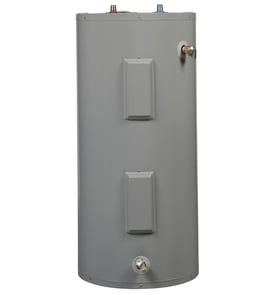



What is the average cost of a 40 gallon electric water heater?
For American Water Heaters model E2F40RD045V, we cannot determine an “average cost” from the model-specific information available because pricing depends on what is currently sold in your area and what installation updates your home needs. Use the E2F40RD045V use & care manual for safety and installation requirements that can affect total cost.
Typical cost buckets to plan for
Even when the tank price varies widely, most projects break down into these common categories:
- Water heater unit (40-gallon electric tank)
- Professional installation labor
- Permit and inspection fees (where required)
- Plumbing materials (shutoff valve, unions, fittings)
- Electrical materials (breaker, wire, disconnect, strain relief)
- Code and safety items (drain pan, discharge piping, seismic strapping in some areas)
How installation requirements can change the total
Your E2F40RD045V manual calls out items that often add cost if they are missing or need updating:
- Proper grounding and correct wire sizing; the manual notes 10 gauge solid copper wire for certain setups
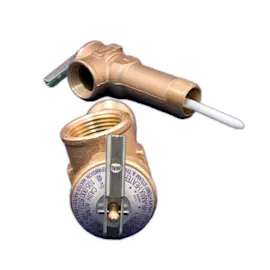
- A correctly installed temperature and pressure (T&P) relief valve and discharge line
- A drain pan and drain routing when leakage could damage surrounding areas
- Closed-system thermal expansion protection (expansion tank or relief strategy)
Quick planning table
| Cost area | What changes the price most | Why it matters |
|---|---|---|
| Unit | Warranty length, efficiency features | Impacts long-term operating cost and expected service life |
| Labor | Access, relocation, code corrections | Drives time on site and complexity |
| Materials | Electrical and plumbing upgrades | Needed for safe, code-compliant operation |
Related maintenance costs (optional but common)
If you are budgeting beyond replacement, plan for wear items that help performance and longevity:
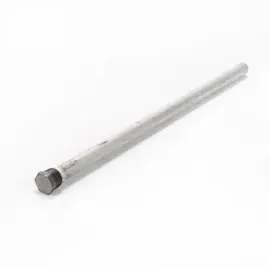
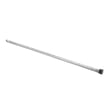
- Water heater anode rod 100109594 (helps protect the tank from corrosion)
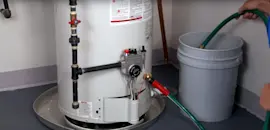
- Periodic draining and flushing to reduce sediment buildup
Why it matters
A low tank price can be outweighed by electrical, plumbing, and safety upgrades needed for a proper installation. Estimating by cost buckets helps you compare quotes and avoid surprise add-ons.
Last updated: January 2026
What is the average lifespan of an electric hot water heater?
For the American Water Heaters model E2F40RD045V electric tank water heater, a typical service life is about 10 to 15 years. Actual lifespan varies with water quality, usage, and maintenance; regular flushing and anode-rod checks can help the tank last longer (see the E2F40RD045V use & care manual).
Typical lifespan range (what to expect)
Most electric tank-style water heaters fall into these real-world ranges:
- 8 to 10 years: hard water, heavy use, little maintenance
- 10 to 15 years: typical household use with basic upkeep
- 15+ years: lighter use, good water conditions, consistent maintenance
| Factor | How it affects lifespan | Common symptoms |
|---|---|---|
| Sediment buildup in tank | Overheats elements, reduces efficiency | Popping/rumbling, slow hot-water recovery |
| Worn anode rod | Tank corrosion accelerates | Rusty water, eventual tank leakage |
| High thermostat setting | More stress, higher operating cost | Water too hot, relief valve may drip |
Maintenance that can extend life
The E2F40RD045V manual includes maintenance steps that directly impact longevity:
- Drain and flush the tank about every 6 months to reduce sediment
- Manually operate the temperature and pressure (T&P) relief valve at least once a year
- Inspect the anode rod about every 3 years; replace if more than 50% depleted
- Keep upper and lower thermostats set evenly; 120°F is a common starting point
If you are replacing the anode, use a compatible part such as the water heater anode rod 100109594.
When replacement is more likely than repair
These symptoms often point to end-of-life tank issues rather than a simple part failure:
- Water leaking from the tank body (not just a fitting)
- Persistent rusty or discolored hot water
- Repeated high-limit trips or frequent heating problems
- Heavy sediment noise plus reduced hot water capacity
Why it matters
A water heater near the end of its lifespan can lose efficiency and become more failure-prone. Staying ahead of sediment and corrosion helps protect the tank, heating elements, and thermostats, and can reduce the risk of surprise leaks.
Last updated: January 2026
How to tell if an electric hot water heater is bad?
If your electric water heater model E2F40RD045V is going bad, you’ll typically see no hot water, not enough hot water, water that’s too hot, leaking, unusual popping or rumbling sounds, or a tripped breaker. For model-specific checks and safety steps, use the E2F40RD045V use & care manual.
Quick signs the heater (or a key part) is failing
- No hot water: power issue, high-limit reset tripped, upper thermostat not working
- Not enough hot water or slow recovery: lower element failure, thermostat issue, sediment buildup
- Water too hot: thermostat stuck or miscalibrated (scald risk)
- Popping or rumbling: sediment or lime on the tank bottom
- Rusty water or rotten egg odor: anode rod depleted or reacting with water chemistry
- Water in the drain pan or visible leaks: fitting leak, drain valve leak, element gasket leak, or tank leak
What to check first (safe, high-value checks)
- Confirm power at the breaker or fuse; a tripped breaker can mimic a “bad” heater.
- Look for leaks at the cold inlet, hot outlet, drain valve, and around element access panels.
- Listen during heating; loud popping often points to sediment and the need to flush.
- Check temperature consistency at multiple faucets to separate heater issues from a single-fixture problem.
Symptom-to-cause guide (common for E2F40RD045V-STYLE electric heaters)
| Symptom | Most likely cause | What it usually means |
|---|---|---|
| No hot water | High-limit trip, upper thermostat, power supply | Heater isn’t energizing correctly |
| Not enough hot water | Lower element, sediment | Reduced heating capacity |
| Water too hot | Thermostat stuck | Overheating and scald risk |
| Odor or discoloration | Anode rod | Reduced tank protection, water chemistry reaction |
Parts that often solve the problem
If testing points to a failed component, these parts are commonly involved:
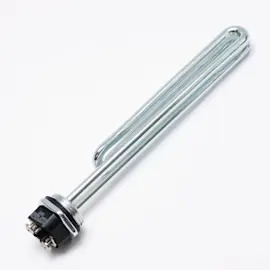
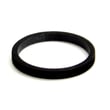
- Element 100108290 (heating element)
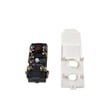
- Top t-stat 100108683 (upper thermostat)
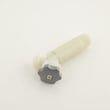
- Lwr t-stat 100108421 (lower thermostat)
- Water heater anode rod 100109594 (helps protect the tank and can reduce odor issues)
Why it matters
Catching a failing thermostat, heating element, or anode rod early can restore reliable hot water and help prevent secondary issues like overheating, nuisance breaker trips, and accelerated tank corrosion.
Last updated: January 2026