


How do I remove the filter from my CRAFTSMAN wet dry vacuum?
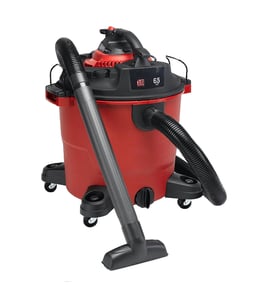
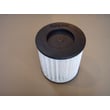
On the Craftsman 75817885 wet/dry vacuum, the filter typically comes off after you remove the filter retainer (often a knob, nut, or small screw) and slide the filter straight off the filter cage. Once it is off, reinstall by seating the filter evenly and tightening the retainer snugly.
Safe steps to remove the filter
- Unplug the wet/dry vacuum before you touch the motor head or filter area.
- Release the latches and lift off the motor head (powerhead).
- Locate the filter retainer at the center of the filter (commonly a knob or small screw).
- Turn the retainer counterclockwise (or remove the screw) and set it aside.
- Pull the filter straight off; twist gently if it is stuck from dust buildup.
- Tap debris into a trash bag; replace the filter if it is torn or won’t clean up.
What to check if the filter will not come off
| What you see | Most likely cause | What we recommend |
|---|---|---|
| Filter feels glued on | Fine dust packed on the cage | Twist while pulling; avoid tearing the media |
| Retainer spins but filter stays | Retainer not fully disengaged | Remove fully, then pull filter straight off |
| Filter is wet and heavy | Used for wet pickup with a dry filter | Remove and discard if deformed; let the tank dry |
Parts that affect suction after filter service
A clogged hose or restricted nozzle can feel like a “bad filter.” If suction is still weak after cleaning, check these common airflow parts:
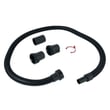
- Wet/dry vacuum hose, 1-1/4-in x 6-ft 551013109 for clogs, splits, or loose connections
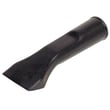
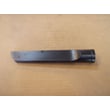
- Wet/dry vacuum crevice tool 551012109 for packed debris at the narrow tip
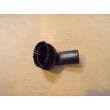
- Wet/dry vacuum hose adapter, 1-1/4 to 2-1/2-in 551025121 for a poor seal at the inlet
Why it matters
Running a wet/dry vacuum with a clogged, damaged, or incorrectly seated filter reduces airflow, can cause overheating, and makes cleanup take longer. A clean, properly installed filter also helps keep fine dust from reaching the motor area.
Last updated: January 2026
Where to find model number on CRAFTSMAN Wet Dry Vac?
On the Craftsman wet/dry vacuum model 75817885, the model number is typically printed on the product rating label (a sticker or plate) on the lid/motor head or on the tank/canister near the handles or cord wrap. Once you have the model number, we use it to match the correct hose, nozzle, and other replacement parts.
Where to look first (fastest checks)
- Check the top lid/motor head; look for a gray or silver label near the handle.
- Check the side of the tank/canister; look near the carry handles.
- Check the rear area near the power cord or cord wrap.
- Look for text like “MODEL”, “MOD”, or “MODEL NO.” followed by numbers.
- Wipe dust off the label; a flashlight at an angle helps make faded print readable.
What to write down from the label
Capture these items so we can match parts accurately:
- Model number (for example, 75817885)
- Serial number (if shown)
- Any type or part reference printed on the same label
| Label item | What it’s used for |
|---|---|
| Model number | Matches the correct parts list for your vacuum |
| Serial number | Helps confirm production version when parts changed |
| Voltage/amps | Helps when troubleshooting power issues |
Why it matters
Wet/dry vac accessories can look similar but differ by hose diameter, latch style, and port size. Using the exact model number helps ensure you get the right fit, like the wet/dry vacuum hose, 1-1/4-in x 6-ft 551013109 or the correct adapter.
Last updated: January 2026
Why is my CRAFTSMAN vacuum not suctioning?
For a Craftsman wet/dry vacuum model 75817885, loss of suction is almost always caused by a clogged filter, a blockage in the hose or nozzle, or an air leak at the lid or hose connection. Restoring airflow by clearing restrictions and sealing connections typically brings suction back.
Quick checks that fix most no-suction problems
- Unplug the vacuum and empty the tank; an overfilled tank reduces airflow.
- Check the hose and tools for a clog; remove the hose and push a broom handle through to clear debris.
- Inspect the hose for splits, crushed sections, or loose cuffs; reseat the ends firmly.
- Clean the filter (if washable) or replace it if it is packed with fine dust.
- Confirm the lid is seated evenly and the latches are fully engaged.
- If you are vacuuming liquids, make sure the setup is correct for wet pickup (a dry filter can restrict flow when wet).
Common blockage points on wet/dry vacuums
| Where to check | What to look for | What to do |
|---|---|---|
| Hose | Packed debris, kinked hose | Clear clog, straighten hose |
| Nozzle/tool | Hair, lint, gravel | Clean tool opening |
| Tank inlet | Debris at inlet port | Remove obstruction |
| Filter area | Caked dust, wet sludge | Clean or replace filter |
Parts that often help when airflow is restricted
If the hose is damaged, too short for your setup, or collapsing under suction, replacing it restores airflow and reduces leaks. For tight areas, a narrow tool can also help you clear clogs faster.
- Wet/dry vacuum hose, 1-1/4-in x 6-ft 551013109
- Wet/dry vacuum crevice tool 551012109
- Wet/dry vacuum hose adapter, 1-1/4 to 2-1/2-in 551025121
Why it matters
Wet/dry vacuums rely on steady airflow. Any restriction (clogged hose, dirty filter) or leak (loose lid, cracked hose) drops suction quickly and can also make the motor run hotter than normal.
Last updated: January 2026