 Installation guide
 Owner’s manual
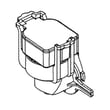


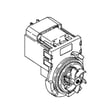
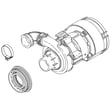

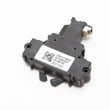

What is the most common problem with a GE dishwasher?
For the GE CDT845P2N1S1 dishwasher, the most common problems we see are draining issues (water left in the tub), starting problems (often door-related), and poor cleaning from restricted water flow. Many of these are fixed by cleaning the filters, confirming the door is fully latched, and checking for clogs.
Quick checks that fix the most issues
- Clean the filter assembly regularly; a clogged filter is a top cause of poor cleaning and slow draining.
- Make sure the door is fully closed; if the door opens mid-cycle, the Start light can flash and the cycle can stop.
- If your dishwasher is on a wall switch, confirm the switch is on; if it was turned off, wait 5 to 10 seconds after turning it back on before pressing Start so the control can initialize.
- Use only automatic dishwasher detergent; hand dish detergent can create suds that spill from vents and cause a wet floor.
- Load so spray arms can rotate freely; rattling or blocked arms reduces wash performance.
For model-specific operating steps and troubleshooting, follow the CDT845P2N1S1 owner's manual.
Most common symptoms and likely causes
| Symptom | Most common cause | What to do first |
|---|---|---|
| Won’t start or stops | Door not closed/latched, cycle interrupted | Press Start and close the door within 4 seconds; check latch alignment |
| Water not draining | Clogged filter, drain path restriction, weak drain pump | Clean filters and check hose routing; then test draining |
| Not cleaning well | Dirty filters, blocked spray arms, detergent issues | Clean filters, clear spray arms, use correct detergent amount |
| “LEAK DETECTED” | Leak detection triggered | Stop using and schedule service |
Parts that commonly relate to these problems
If cleaning and basic checks do not resolve the issue, these parts are frequently involved on this model family:
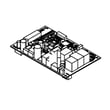
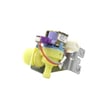
- Dishwasher drain pump WD19X25461 (draining problems)
- GE dishwasher door latch lock WD21X10490 (won’t start, stops mid-cycle)
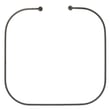
- Dishwasher tub gasket WD08X23477 (leaks at the door/tub opening)
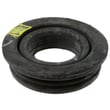
- Dishwasher drain hose WD24X10062 (slow drain, backflow, leaks)
Why it matters
Drain, latch, and leak-related problems can stop a cycle, leave dirty water in the tub, or create moisture on the floor. Addressing filters, loading, and detergent first prevents repeat failures and helps protect the wash pump and control system.
For code-related troubleshooting, use GE electronic dishwasher error codes.
Last updated: February 2026
What is NSF ANSI standard 184 certified dishwasher?
An NSF/ANSI 184 certified residential dishwasher is tested to confirm it can sanitize dishes on a specific sanitize cycle by achieving a 99.999% (5-log) bacteria reduction under the standard’s conditions. On the GE CDT845P2N1S1, the Sanitize option is monitored, and the “Sanitized” light only turns on when sanitizing conditions are met (see the CDT845P2N1S1 owner’s manual).
What NSF/ANSI 184 certification means in real use
NSF/ANSI 184 is a residential dishwasher performance standard that includes sanitization requirements. Certification focuses on results during the sanitize cycle, not every cycle.
Key points:
- Sanitization is verified only when you run the dishwasher’s sanitize cycle/option.
- The standard targets a minimum 99.999% (5-log) reduction of bacteria.
- The dishwasher must heat water enough in the final rinse to meet the sanitizing requirement.
- If the cycle is interrupted, sanitizing conditions may not be met.
- Very cold incoming water can prevent the unit from reaching the required heating conditions.
How to tell if your GE CDT845P2N1S1 actually sanitized
Your dishwasher monitors the sanitize conditions during the cycle.
- If conditions are met, the “Sanitized” or “Cycle Sanitized” indicator illuminates at the end.
- If conditions are not met (interruption or low inlet water temperature), the indicator does not illuminate.
Common outcomes
| What you see at the end of the cycle | What it usually means | What to do next |
|---|---|---|
| “Sanitized” light is on | Sanitizing conditions were achieved | Use normal loading and detergent practices |
| “Sanitized” light is off | Conditions were not achieved | Re-run with Sanitize; avoid opening mid-cycle; confirm hot water supply |
Why it matters
NSF/ANSI 184 certification helps you choose and use a dishwasher cycle that is designed to reduce bacteria on dishware. It also prevents guesswork because the control indicates whether sanitizing conditions were achieved.
Helpful related troubleshooting
If you are seeing error codes or the cycle will not complete, use GE electronic dishwasher error codes to match the code to likely causes and next steps.
Last updated: February 2026
Can a clogged drain cause an FTD error?
Yes. On the GE CDT845P2N1S1 dishwasher, an FTD (fail to drain) error commonly happens when the drain path is restricted, so the unit cannot pump water out. Clearing the blockage in the filter, air gap, disposer connection, or drain hose typically restores normal draining.
What to check first (fast, no parts)
- Cancel the cycle and confirm water is standing in the tub.
- Check and clean the dishwasher filters (GE recommends periodic cleaning).
- If you have an air gap, remove the cover and clean the cap and passage.
- If the dishwasher drains into a garbage disposer, run the disposer to clear it.
- Confirm the kitchen sink drains normally; a slow sink often points to a plumbing clog.
- Inspect the drain hose for kinks, crushing, or a blockage.
Drain setup issues that can trigger drain errors
A clog is common, but an incorrect drain installation can cause the same symptom. Use the installation guide to confirm the drain hose routing.
| Drain setup item | What “good” looks like | What goes wrong |
|---|---|---|
| High drain loop or air gap | Properly installed per instructions | Backflow or slow drain |
| Air gap (if present) | Clear and unobstructed | Water backs up, poor draining |
| Disposer inlet | Knockout removed and clear | No drain path into disposer |
When a part is more likely the cause
If the drain path is clear but the dishwasher still will not pump out, a failed drain component is likely.
- Loud humming but no draining can point to a jammed or failed pump.
- Intermittent draining can point to a partial blockage or a weak pump.
Relevant model parts to consider:
Why it matters
Running with water standing in the bottom of the tub can lead to odors, poor cleaning, and repeated FTD drain faults. Fixing the restriction quickly protects the wash system and helps cycles finish normally.
For model-specific care steps and troubleshooting tables, use the CDT845P2N1S1 owner's manual.
Last updated: February 2026





