
Can you resaw with a 14-inch bandsaw?
Resawing is a woodworking technique done on a vertical wood-cutting band saw; it is not something you do on the Craftsman model 10822920, which is a horizontal continuous-blade power hacksaw designed for cutting metal stock. For this model, focus on its cutting capacity and proper blade selection for metal.
A “14-inch bandsaw” usually means a vertical woodworking saw with a table and an adjustable upper guide. The Craftsman 10822920 is a horizontal saw that clamps material in a vise and cuts through it, so it does not have a resaw height or resaw fence setup.
| Task | Right tool type | Why |
|---|---|---|
| Resawing lumber into thinner boards | Vertical woodworking band saw | Needs tall resaw capacity, fence, and table control |
| Cutting metal bar, tube, angle iron | Horizontal metal-cutting band saw (like 10822920) | Uses a vise and controlled feed for straight metal cuts |
Use it for straight cuts in metal stock within the saw’s rated capacity. For best results:
- Match the blade tooth count (TPI) to the metal thickness (thin stock needs finer TPI).
- Clamp the work firmly in the vise; vibration ruins cut quality.
- Set the blade tracking and guide bearings so the blade runs true.
- Use appropriate cutting fluid when recommended for the metal type.
- Let the saw feed steadily; forcing the cut strips teeth and wanders.
- Thin wall tubing and sheet: 18 to 24 TPI
- General-purpose bar stock: 10 to 14 TPI
- Thick solids: 6 to 10 TPI
Resawing requires a tall, rigid vertical frame and a fence-guided feed; a horizontal metal-cutting saw like the Craftsman 10822920 is engineered for clamped, straight cuts in metal. Using the wrong tool or blade type leads to poor accuracy and faster blade wear.
Related reading: must have tools for appliance repair
Last updated: February 2026
What are the main parts of a band saw?
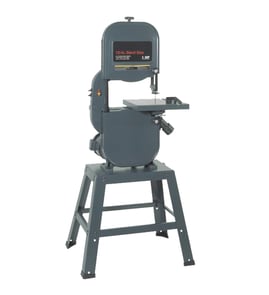
The main parts of a band saw (including the Craftsman 10822920 continuous-blade power hacksaw) are the wheels that drive the blade, the blade-guiding and tensioning system, the work support (table or vise), and the power and safety components that control the cut.
- Drive wheel (lower wheel): powered by the motor; turns the blade.
- Upper wheel: supports the blade loop and helps keep it aligned.
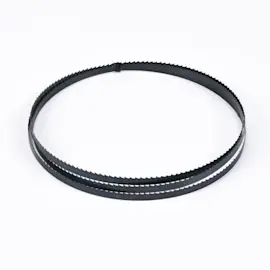
- Blade: the continuous cutting band; tooth pitch and width affect cut quality.
- Blade guides (side guides and thrust bearing): keep the blade from twisting or being pushed back.
- Tension control: tightens the blade so it tracks correctly and cuts straight.
- Tracking adjustment: centers the blade on the wheels.
Because the Craftsman 10822920 is a continuous-blade power hacksaw, it typically supports the work differently than a woodworking band saw.
| Feature | Woodworking band saw | Continuous-blade power hacksaw |
|---|---|---|
| Work holding | Flat table | Vise or clamp system |
| Cutting action | You guide the work | Saw guides the blade through clamped stock |
| Common use | Curves, resawing | Straight cuts in metal stock |
- Motor: provides cutting power.
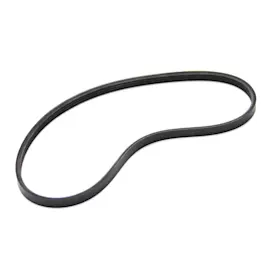
- Belt and pulleys (or gearbox): transfer power to the drive wheel and set blade speed.
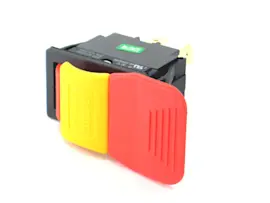
- On/off switch and wiring: controls power delivery.
- Guards and covers: reduce exposure to the moving blade and wheels.
Knowing the main parts helps you troubleshoot common issues like blade drift (guides or tracking), blade popping off (tension or tracking), vibration (wheels, tires, bearings), or weak cutting (blade selection or drive system).
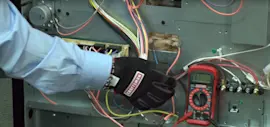
For safe electrical checks during troubleshooting, use our guide: how to use a multimeter to test electrical parts video.
Last updated: February 2026
What is the 3-tooth rule for bandsaws?
The 3-tooth rule means you choose a bandsaw blade tooth pitch (TPI) so at least 3 teeth are in the workpiece at all times during a cut. On a Craftsman 10822920 band saw, this helps the blade cut smoothly, reduces tooth breakage, and improves control.
- Measure the material thickness (the direction the blade travels through).
- Pick a blade TPI that keeps 3 or more teeth engaged.
A simple way to estimate it:
| Material thickness | Typical blade choice (TPI) | Notes |
|---|---|---|
| 1/8 in (3 mm) sheet | 18 to 24 | Thin stock needs finer teeth to prevent snagging |
| 1/4 in (6 mm) | 10 to 14 | Good general range for light cuts |
| 1/2 in (13 mm) | 6 to 10 | Common for thicker bar and tubing |
| 1 in (25 mm) and up | 3 to 6 | Coarser teeth clear chips better |
- Too few teeth in the cut: teeth can hook, strip, or break; the blade can chatter
- Too many teeth in the cut: gullets pack with chips, the blade overheats, and cutting slows
- More vibration: rougher finish and more drift off the cut line
Keeping at least three teeth engaged spreads the cutting load across multiple teeth and keeps chip size manageable. That improves cut quality and extends blade life, especially on a continuous-blade saw where steady feed and chip clearing are critical.
For safe troubleshooting steps and basic repair readiness, use our guide: are diy appliance repairs safe.
Last updated: February 2026
Why does my Craftsman bandsaw blade keep falling off?
On the Craftsman 10822920 continuous-blade power hacksaw, a blade that keeps coming off is caused by a tension problem or worn/misaligned blade-support parts (drive/idler wheels, tires, guide bearings, or guide alignment). Restoring correct tension and stable blade support stops the blade from walking off.
- Unplug the saw and remove packed chips from the wheel area and guides.
- Confirm the blade is the correct length and width for the 10822920; an incorrect blade won’t stay seated.
- Check blade tension; a loose blade derails during startup or when the cut loads up.
- Inspect the wheel tires (if equipped); hard, glazed, cracked, or loose tires let the blade slip sideways.
- Inspect guide bearings/blocks and the thrust bearing; rough, seized, or mispositioned guides steer the blade off.
- Check wheel bearings for play; wobble at the drive or idler wheel makes the blade climb off.
- Disconnect power and release blade tension.
- Inspect the blade for kinks, missing teeth, or a twisted weld; replace a damaged blade.
- Inspect wheels and tires: look for uneven wear, looseness, or buildup that changes the wheel profile.
- Set tension to the saw’s normal operating range; the blade should feel firm and resist side deflection.
- Set guides so they support the blade without forcing it sideways; the thrust bearing should only contact under cutting load.
- Test-run briefly with the guard closed; if the blade immediately walks, recheck wheel/tire condition and bearing play.
| Symptom | Most common cause | What to do |
|---|---|---|
| Blade jumps off at startup | Low tension, worn tire, seized guide bearing | Set tension; inspect tires and guide bearings |
| Blade walks off during the cut | Guides pushing blade, wheel wobble, dull blade forcing feed | Re-align guides; check wheel bearings; replace blade |
| Blade won’t stay centered at any tension | Tire profile worn, wheel misalignment, bent blade | Replace tire/wheel parts; replace blade |
A derailing blade can damage the wheels, guide bearings, and guards, and it also increases the chance of the blade breaking during a cut. Correct tension plus smooth, aligned guides keeps the blade stable and improves cut accuracy.
For general DIY safety practices before servicing a power tool, use are diy appliance repairs safe.
Last updated: February 2026