 Error Codes



How to tell what model Kenmore refrigerator?
Your Kenmore refrigerator’s model number is printed on the appliance’s ID label; once you find it, you can match parts and diagrams to the exact unit (for this page, the model is 59662832200). On most bottom-mount refrigerators, the label is inside the fresh food section or on the cabinet frame near the door.
Check these common spots first (use a flashlight and look for a white or silver sticker/plate):
- Inside the refrigerator compartment on the left or right side wall
- On the ceiling of the fresh food compartment
- Behind or beside the crisper drawers (remove drawers to see the frame)
- Along the door jamb or cabinet frame when the refrigerator door is open
- On the back exterior panel near the lower area (less common, but possible)
We recommend recording the full model number and serial number exactly as shown.
| Item | Example format | Why you need it |
|---|---|---|
| Model number | 59662832200 | Ensures the correct Kenmore parts list and diagrams |
| Serial number | Letters and numbers | Helps confirm production run when parts changed mid-series |
Kenmore model numbers can look similar across different refrigerator styles, but parts like door gaskets, control boards, and ice maker assemblies vary by model. Using the exact model number prevents ordering the wrong component.
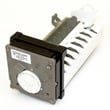
If you’re diagnosing an ice maker issue on this model, the correct replacement is typically the refrigerator ice maker D7824706Q. For common symptoms and checks (no ice, small cubes, leaking), use common refrigerator ice maker problems and solutions.
- Wipe the label gently with a damp cloth; dry it and re-check under bright light
- Take a close-up photo and zoom in to read faded characters
- Copy the number carefully; a single digit difference can change the parts list
Last updated: February 2026
What are the most common problems with Kenmore refrigerators?
The most common problems we see on Kenmore refrigerators like model 59662832200 are cooling issues, ice maker failures, water leaks, frost buildup, unusual noise, and interior light problems. These symptoms usually trace back to airflow restrictions, dirty condenser coils, door seal leaks, or a failing electrical component.
- Not cooling or weak cooling: dirty condenser coils, blocked vents, evaporator fan issue, or sealed system trouble
- Ice maker not making ice: water supply issue, frozen fill tube, or a failed ice maker module
- Water leaking: clogged defrost drain, cracked drain pan, loose water line, or door not sealing
- Excess frost in freezer: door left ajar, torn gasket, or defrost system problem
- Noisy operation: condenser fan/evaporator fan noise, compressor start components, or vibration from leveling
- Light not working: failed door switch or bulb
- Confirm the temperature settings (target 37°F fresh food, 0°F freezer).
- Make sure vents inside the compartments are not blocked by food packages.
- Clean condenser coils and the area around the condenser fan.
- Check door closing and gasket contact all the way around.
- If the unit has an ice maker, verify the shutoff arm is down and the water supply valve is fully open.
If troubleshooting points to a failed component, these model-matched parts are common solutions:
| Symptom | Likely part to check | Example part for this model |
|---|---|---|
| Ice maker not producing ice | Ice maker assembly | Refrigerator ice maker D7824706Q |
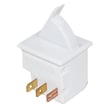
| Light stays off or won’t turn off | Door/light switch | Refrigerator switch W11396033 |
| Warm temps with compressor issues | Compressor (advanced repair) | Refrigerator compressor W10160407 |
| Frost or moisture around freezer door | Door gasket | Refrigerator freezer door gasket WPW10436247 |
| Intermittent cooling or odd behavior | Control board/module | Refrigerator control module WP12476002 |
Catching airflow and sealing problems early prevents temperature swings that spoil food and overwork the compressor. Simple fixes like coil cleaning or replacing a worn gasket often restore normal cooling and reduce noise and run time.
For step-by-step prevention and diagnosis tips related to ice and water symptoms, use our guide: how to prevent water dispenser and ice maker problems.
Last updated: February 2026
What does DH mean on Kenmore 59662832200 refrigerator?
On Kenmore refrigerator model 59662832200, DH is a defrost-related indicator; it shows the refrigerator is not completing defrost normally (commonly read as a defrost heater or defrost heating issue). When DH appears, cooling can suffer because frost can build up and restrict airflow.
- Power reset: unplug for 5 minutes, then restore power.
- Confirm both doors close fully; reduce door-open time.
- Check for heavy frost on the freezer back wall (a strong defrost-system clue).
- Make sure food packages are not blocking freezer vents.
- Clean dust from the condenser area to reduce run time and stabilize temperatures.
DH is tied to the defrost system. The most common causes are in the heater circuit, wiring, or the electronic control that runs defrost.
| Possible cause | What you may notice | What to check next |
|---|---|---|
| Frosted evaporator from failed defrost | Warm fresh-food section, weak airflow | Look for heavy frost pattern behind freezer panel |
| Door air leak creating excess frost | Frost returns quickly after clearing | Inspect and correct door seal alignment |
| Control or wiring issue | DH comes and goes, inconsistent temps | Inspect connectors for looseness or corrosion |
If warm, moist air is leaking into the freezer, fixing the seal helps prevent heavy frost that can trigger defrost trouble. For this model, the freezer seal is the refrigerator freezer door gasket WPW10436247.
When defrost does not work correctly, frost builds on the evaporator, blocks airflow, and forces longer compressor run times; that leads to warmer refrigerator temperatures and uneven cooling.
For general Kenmore bottom-freezer code help and next steps, use Kenmore 111 model bottom freezer refrigerator error codes.
Last updated: February 2026
What is the cubic foot of my Kenmore refrigerator model 59662832200?
Kenmore bottom-mount refrigerator model 59662832200 has an 18 cu. ft. total capacity. This is the overall rated storage volume (fresh food plus freezer) used for comparing refrigerators and planning storage.
- It is the total rated capacity, not just the refrigerator section.
- Usable space is always a bit less because shelves, bins, air ducts, and the ice maker take room.
- Capacity does not change with replacement parts; it is a cabinet design spec.
Use these practical cues to confirm you are working with the correct unit and layout:
- Bottom freezer drawer with basket style consistent with this model
- Standard-width cabinet (commonly about 30 inches class for many 18 cu. ft. designs)
- Interior storage that prioritizes height over extra-wide shelving
A common layout-related part you may see in the freezer section is the refrigerator lower basket WP12754803.
Manufacturers rate capacity using standardized methods; measuring inside dimensions gives a rough estimate and usually comes out lower.
| Method | What you get | Best for |
|---|---|---|
| Rated capacity (18 cu. ft.) | Standardized total volume | Comparing models, planning storage |
| Tape-measure estimate | Approximate usable box space | Quick sanity check |
Knowing the 18 cu. ft. capacity helps you choose correctly sized organizers, set realistic loading expectations for airflow, and compare replacement refrigerators in the same size class.
Last updated: February 2026





