Installation guide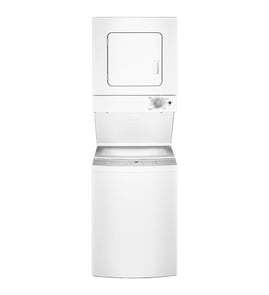


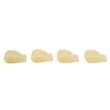
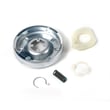
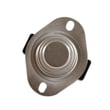
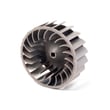
Are Whirlpool washer parts interchangeable?
Some Whirlpool washer parts interchange across models, but we match parts by the full model number because fit, wiring, and revisions vary. For your Whirlpool stacked laundry center LTG6234DQ4, use the parts list for this model and the installation guide to confirm the correct replacement.
What “interchangeable” really means
Parts can look identical but still differ in mounting points, electrical connectors, or updated designs. Interchangeability is most common with wear items and hardware, and least common with electrical and drive components.
Usually safe to match by model (common examples)
- Mechanical wear parts (rollers, pulleys, couplers)
- Fasteners, clamps, and some seals
- Some knobs, catches, and cosmetic pieces (color and fit still matter)
Often not interchangeable without an exact model match
- Timers, switches, and wiring harnesses
- Motors and gearcase related parts
- Gas ignition and valve components
Model-specific examples for LTG6234DQ4
If you are troubleshooting a symptom, start with the part that matches the failure mode, then confirm it is listed for LTG6234DQ4.
| Symptom | Common matching approach | Example part on this model page |
|---|---|---|
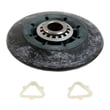
| Dryer squeals or thumps | Drum support and idler system | Support WPW10314173 |
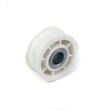
| Dryer will not tumble | Belt drive path and motor drive | Dryer idler pulley 279640 |
| Washer won’t agitate/spin | Drive coupling and clutch system | Coupling 285753A |
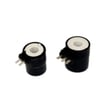
| Dryer won’t heat (gas) | Ignition and gas valve coils | Dryer gas valve coil kit 279834 |
Why it matters
Using the exact part listed for LTG6234DQ4 prevents repeat failures, noise, poor drying, leaks, and electrical miswiring. It also helps ensure the replacement matches the venting, gas, and hookup requirements outlined in the installation guide.
Last updated: February 2026
What is the most common problem with Whirlpool washers?
For Whirlpool washers like the washer in your Whirlpool LTG6234DQ4 stacked laundry center, the most common problems are not draining or not spinning (clothes left wet), water leaks, and excessive noise/vibration. Many of these start with simple causes such as an unlevel installation, a restricted drain path, or worn drive components.
Most common symptoms and what usually causes them
- Clothes still wet after spin: drain restriction, worn drive parts, or a failing motor coupling
- Washer leaks: loose fill hoses, worn tub gasket, or a leaking pump/hose connection
- Banging or shaking: unit not level, overloaded/unbalanced loads, weak floor support
- Won’t agitate or spin: worn agitator dogs, worn drive block, clutch wear
- Loud grinding/squealing: drive system wear, basket drive wear, or motor/coupling issues
Quick checks we recommend first (LTG6234DQ4)
Start with the basics that commonly fix drain/spin and vibration complaints:
- Confirm the laundry center is level; an uneven floor (more than about 1 inch slope across the footprint) can cause vibration and poor operation.
- Verify water supply conditions: hot and cold faucets within about 4 ft, and water pressure in the typical 5 to 100 psi range.
- Check operating environment: avoid freezing conditions (32°F and below) that can leave water in the washer and cause damage.
- Inspect the drain hose routing: make sure it is secured and not kinked or crushed.
- If the dryer side is involved (damp clothes): confirm the vent path is as straight as possible and joints are clamped (not taped or screwed through).
For model-specific installation requirements and leveling steps, use the installation guide.
Parts that commonly fix “won’t spin/agitate” complaints
If basic checks do not resolve it, these are frequent wear items for this style of Whirlpool washer:
| Symptom | Common wear part | Example from this model’s parts |
|---|---|---|
| Motor runs but washer won’t spin/agitate | Motor coupling | Coupling 285753A |
| Agitator moves poorly or “ratchets” | Agitator dogs | Agitator dog 80040 |
| Spins poorly, burning smell, or slipping | Clutch | Clutch 285785 |
| Loud clunking during spin, loose basket | Drive block | Washer drive block WP389140 |
Why it matters
Drain/spin problems and vibration are the issues that most often lead to secondary damage (worn drive parts, leaks, and noisy operation). Getting the unit level and addressing worn coupling, clutch, or agitator components early helps protect the gearcase, basket drive, and tub seals.
Related troubleshooting help
- Laundry center washer won't agitate or spin
- Laundry center washer won't drain
- Laundry center washer bangs loudly
Last updated: February 2026
How do I know if my Whirlpool dryer motor is bad?
If your Whirlpool LTG6234DQ4 dryer hums but will not start, runs intermittently, or the blower wheel will not spin freely by hand (with power disconnected), the drive motor bearings are typically failing and the motor should be replaced.
Quick checks that point to a bad dryer motor
Before replacing parts, we check these common motor-related symptoms:
- The dryer hums when you press Start but the drum does not turn
- The motor overheats and shuts off, then restarts after cooling
- A burning smell or hot electrical odor occurs during operation
- The drum is hard to turn and the blower wheel drags
- The dryer starts only if you spin the drum by hand first
Safe test steps (power and gas first)
- Unplug the laundry center from the grounded outlet.
- Confirm the dryer door closes fully and the start control is engaged.
- Try turning the blower wheel by hand; it should rotate smoothly without grinding.
- If the dryer will not start during a heat-cycle test, verify basic start conditions listed in the installation guide.
What to do if the motor is not the root cause
A “won’t tumble” complaint is often caused by a belt or support issue that overloads the motor.
| Symptom | More likely cause | What we check next |
|---|---|---|
| Motor runs but drum does not turn | Idler pulley or belt problem | Dryer idler pulley 279640 and belt routing/tension |
| Loud rumble/squeal, then no tumble | Drum support roller seized | Support WPW10314173 and roller shafts |
| Motor runs, weak airflow, noise at blower | Blower wheel stripped/cracked | Dryer blower wheel WP697772 |
Why it matters
A failing motor can trip breakers, overheat, or stop mid-cycle. Catching drag from a seized roller, idler pulley, or blower wheel early prevents repeat motor damage and restores normal drying performance.
Last updated: February 2026
How much does it cost to replace the control board on a Whirlpool dryer?
On the Whirlpool LTG6234DQ4 stacked laundry center, the dryer controls are typically timer and switch based, not a single “main control board.” Your cost depends on which control component actually failed (timer, switch, or wiring) plus labor if you hire service.
What you should price first (for LTG6234DQ4)
Use the parts list for your model to identify the exact control component before budgeting.
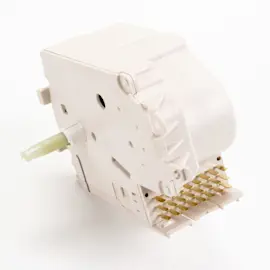
- Dryer timer or cycle control (common “control” replacement on timer models)
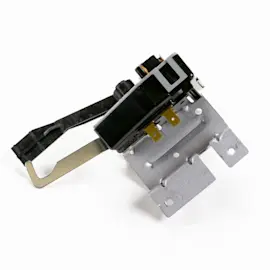
- Push-to-start switch or door switch (can mimic a bad control)
- Wiring harness/terminal connections at the console
- Knob or console pieces (only if damaged)
- Related dryer drive parts if the symptom is “won’t tumble” (for example, a seized idler)
Typical cost ranges (part vs. installed)
These ranges are typical for Whirlpool timer-style dryers; your exact total depends on the part you select and local labor rates.
| Item being replaced | Typical part cost | Typical installed total |
|---|---|---|
| Timer / cycle control | $80 to $250 | $200 to $450 |
| Start or door switch | $15 to $60 | $120 to $250 |
| Wiring repair at console | $0 to $40 | $120 to $300 |
Checks to do before buying any “control” part
These quick checks often solve “won’t start” or “no heat” complaints without replacing controls.
- Confirm the unit is plugged into a grounded 3-prong outlet and the breaker is on
- Make sure the dryer door fully closes and latches
- If it runs but does not heat, verify the gas shutoff valve is open
- Inspect venting for crushing, kinks, or heavy lint restriction
For the model-specific startup test, gas supply, and venting requirements, follow the installation guide.
Why it matters
“Control board” is a common search term, but on LTG6234DQ4 the correct fix is usually a timer or a simple switch. Pricing the right component first prevents ordering an expensive part that does not match the symptom.
Last updated: February 2026