 Owner’s manual



What are the common errors on an LG washing machine?
Common error codes on the LG WM2601HR washer relate to filling, draining, load balance, door locking, and motor protection. Many clear with simple checks like cleaning inlet screens, cleaning the drain pump filter, redistributing the load, and confirming the washer is level; use the owner's manual for code-specific steps.
These are the codes we see most often on LG front-load washers like the WM2601HR:
- IE: Water is not entering the washer fast enough (often clogged inlet screens or closed supply valves).
- OE: Washer is not draining (often a clogged drain pump filter or a kinked drain hose).
- UE: Unbalanced load during spin; the washer may try to rebalance several times, then stop and display the code.
- dE: Door not locking or not sensed as closed.
- LE: Motor overload protection tripped; the manual advises letting the washer sit about 30 minutes to cool, then restarting.
Before replacing parts, we recommend these safe, high-success checks:
- Turn both water supply valves fully on; straighten any kinked fill hoses.
- Clean the water inlet filters at the back of the washer (hard water can clog them).
- Clean the drain pump filter and check for coins, pins, or debris.
- Reduce the load size and redistribute items; add 1 to 2 similar items to help balance.
- Confirm all leveling feet are firmly on the floor; an unlevel washer increases UE and vibration.
If the same code returns after the basic checks, these parts are commonly related:
| Symptom or code | Common cause | Example part for WM2601HR |
|---|---|---|
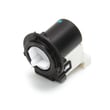
| OE, won’t drain, gurgling/humming at end of cycle | Drain pump area clogged or pump issue | Motor assembly 4681EA2001T or washer drain pump filter 383EER2001A |
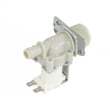
| IE, slow fill | Clogged inlet screens or valve issue | LG washer single-solenoid water inlet valve 5220FR2006H |
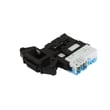
| dE, won’t start because door won’t lock | Door lock not engaging | LG washer door lock assembly EBF49827801 |
Error codes are the washer’s early warning system. Addressing an IE, OE, or UE condition quickly helps prevent poor cleaning, extended cycle times, leaks, excessive sudsing, and repeat shutdowns.
Last updated: February 2026
What is the average lifespan of an LG washer?
LG washers typically last 10 to 15 years in normal household use. For the LG WM2601HR, consistent cleaning, correct loading, and fixing small leaks or drain issues early are what most often determine whether you reach the high end of that range (or beyond); see the WM2601HR owner's manual for care and maintenance routines.
Most washer failures come from wear items (seals, pumps, hoses) and maintenance-related issues (detergent buildup, drainage restrictions), not the cabinet itself.
Key factors that extend washer life:
- Use the correct detergent type and amount (too much causes residue and odors)
- Avoid chronic overloading (stresses bearings, suspension, and motor drive)
- Keep the door gasket clean and dry between loads
- Clean the drain path periodically (filter and hoses)
- Address slow draining, leaks, or unusual noises right away
Your WM2601HR manual lists longer coverage on major drive components, which aligns with a 10 to 15 year expected service life when the washer is maintained.
| Component (from warranty section) | Coverage length (from purchase date) | What it implies |
|---|---|---|
| Labor | 1 year | Early issues are usually setup or defects |
| Parts (most) | 1 year | Many repairs later in life are wear-related |
| Drum motor components (stator, rotor, hall sensor) | 10 years | Core drive system is built for long service |
| Stainless steel drum | Lifetime | Drum itself is not a common wear-out item |
If performance changes, these are common repair points that can restore normal operation and prevent secondary damage:
- Drain and water removal: motor assembly 4681EA2001T, washer drain pump filter 383EER2001A
- Filling issues and valve leaks: LG washer single-solenoid water inlet valve 5220FR2006H
- Door sealing and leaks: LG washer door boot MDS47123602, LG washer door lock assembly EBF49827801
A washer that is kept clean and draining correctly runs cooler, vibrates less, and puts less strain on the motor, bearings, and door boot. That directly translates into fewer breakdowns and a longer usable lifespan.
Last updated: February 2026
What parts fail in a washing machine?
In an LG WM2601HR washer, the parts that fail most often are the ones that control filling, draining, door locking, and sealing. When these wear out or get clogged, you typically see no-drain/no-spin, won’t fill, leaks, loud noises, or heavy vibration; see the WM2601HR owner’s manual for symptom checks.
- Drain system: slow drain, standing water, humming at end of cycle (clogged filter or weak pump)
- Water inlet system: won’t fill, fills slowly, overfills (clogged inlet screens or failing valve)
- Door lock system: clicking but won’t start, door stays locked too long (lock delay is normal; repeated issues point to the latch)
- Hoses and seals: water leaking at door or inside cabinet (boot, clamps, internal hoses, tub gasket)
- Balance and leveling: thumping, vibration, out-of-balance stops (uneven loads, leveling feet not firmly on floor)
| Symptom | Common culprit | Example part on this page |
|---|---|---|
| Won’t drain or drains poorly | Drain pump motor or blockage | Motor assembly 4681EA2001T or washer drain pump filter 383EER2001A |
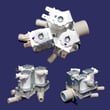
| Won’t fill or fills slowly | Water inlet valve or clogged screens | Washer water inlet valve 5221ER1003A |
| Door won’t lock/unlock reliably | Door lock assembly | LG washer door lock assembly EBF49827801 |
| Leaks at the door | Door boot or clamp | LG washer door boot MDS47123602 |
- Check the drum and drain area for coins, pins, and debris.
- Make sure both water taps are fully open; straighten kinked fill hoses.
- Clean the inlet screens and drain filter; restrictions mimic a bad valve or pump.
- Redistribute the load; the washer stops spinning when the load is too unbalanced.
Most “failed part” symptoms start as a restriction (filter, hose, inlet screen) or a safety condition (door lock, imbalance detection). Fixing the root cause prevents repeat errors, leaks, and extra strain on the drive system.
Last updated: February 2026


