Owner’s manual
 Error Codes



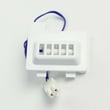
How do I know if my compressor is bad in my Kenmore freezer?
If your Kenmore Elite bottom-mount refrigerator model 79579044313 is not cooling and the compressor runs constantly, overheats, or repeatedly clicks on and off without restoring normal temperatures, the compressor or its start components can be failing. Use the checks in the owner's manual to rule out normal long run times first.
Quick checks before blaming the compressor
Many “bad compressor” symptoms are caused by airflow, temperature, or power issues that make the compressor run longer.
- If power was just restored, allow up to 24 hours for full cooling.
- Confirm doors close fully and gaskets seal; warm air leaks force long run times.
- Clean the condenser cover and vents with a vacuum attachment (do not remove the rear panel).
- Verify the room temperature is within 55°F to 110°F; hot rooms increase run time.
- Listen for normal sounds (clicking, gurgling, whooshing) that can occur during normal operation.
Signs the compressor or start circuit is likely the problem
These checks point more directly to a compressor or compressor start issue.
- Compressor is very hot and cooling performance stays poor.
- You hear repeated clicking every few minutes and the compressor does not stay running.
- The unit trips a breaker or blows a fuse (115V, 15 or 20A circuit) when the compressor tries to start.
- Fans run but the refrigerator and freezer temperatures do not recover after a full day.
Parts that are commonly involved
A “no cool” complaint can be the compressor itself or the components that help it start and run.
| What you observe | More likely culprit | Example part for this model |
|---|---|---|
| Click, hum, then shuts off | Overload/start protection issue | Refrigerator compressor overload protector 6750CL0001D |
| Runs but struggles to start or runs weak | Run capacitor issue | Refrigerator run capacitor EAE58905704 |
| Loud electrical clicking and wiring damage suspected | Overload and harness | Refrigerator compressor overload protector and wire harness EBG60663205 |
| Compressor runs but still no cooling (after other checks) | Sealed system/compressor | Refrigerator compressor TCA35893203 |
Why it matters
Replacing a compressor is a major repair; confirming basics like door sealing, condenser airflow, and normal “long run” conditions prevents unnecessary parts replacement and helps restore proper freezer temperatures faster.
Last updated: February 2026
What are the common problems with Kenmore 79579044313 refrigerators?
Common problems we see with the Kenmore Elite 79579044313 bottom-mount refrigerator include warm fridge or freezer temperatures, frost or ice buildup that restricts airflow, water leaks from a clogged defrost drain, and unusual fan or compressor noises. Many issues trace back to airflow, door use, or the defrost and cooling systems (see the owner's manual).
Most common symptoms and what they usually point to
- Refrigerator or freezer too warm: blocked air vents, frequent door openings, hot room conditions, or a cooling-system fault
- Food freezing in the fresh-food section: items placed near an air vent or temperature set too cold
- Frost/ice buildup: door left open, warm air infiltration, or defrost system trouble
- Water leaking inside: defrost drain restriction; the drain path and tube are common culprits
- Buzzing, rattling, or loud humming: evaporator fan area, condenser fan area, or compressor start components
Quick checks we recommend first (no parts needed)
- Give it time after setup: after installation, allow up to 24 hours for temperatures to stabilize.
- Check airflow: keep packages from blocking vents; blocked vents can make sections run warm.
- Reduce door-open time: frequent or long openings raise temperature and moisture.
- Confirm room temperature: this model is designed to run in about 55°F to 110°F ambient conditions.
- Review temperature settings: adjust one step at a time and wait for stabilization.
Parts that commonly solve these problems
If the basic checks do not fix the symptom, these model-matched parts are often involved:
| Symptom | Common part area | Example part for this model |
|---|---|---|
| Warm temps, poor airflow, noise from freezer | Evaporator fan/air movement | Refrigerator evaporator fan motor EAU65058315 |
| Frost buildup, temperature swings | Defrost sensing/control | Refrigerator defrost sensor assembly 6615JB2005N |
| Water dispenser/ice maker issues, no fill | Water supply control | Lg refrigerator water inlet valve AJU73753101 |
| Water pooling under crisper or in freezer | Defrost drain path | Refrigerator drain tube 5251JA3003D |
| No ice or inconsistent ice | Ice maker assembly | Lg refrigerator ice maker assembly model AEQ72909603 AEQ72909603 |
Why it matters
Warm temperatures, frost buildup, and leaks are usually connected: restricted airflow and excess moisture can reduce cooling performance, increase run time, and lead to ice or water where it does not belong. Catching the cause early helps protect food and prevents repeat icing or leaking.
Last updated: February 2026
What does DH mean on Kenmore 79579044313 refrigerator?
On Kenmore Elite model 79579044313, dH (often shown as Er dH) points to a defrost heating problem. The refrigerator is detecting that the defrost heater is not warming the evaporator as expected, so cooling can be affected until the defrost system issue is corrected.
What to check first (quick steps)
- Power reset: Unplug the refrigerator for 5 minutes, then plug it back in.
- Door sealing and airflow: Make sure doors close fully and vents are not blocked by food packages.
- Frost buildup: If the freezer back wall is heavily frosted, the defrost system is not clearing ice.
- Listen for the fan: If the evaporator fan is hitting ice or not running, temperatures can rise.
- Check for water/ice at the freezer bottom: A clogged drain can refreeze and contribute to icing.
Parts that commonly relate to an Er dH condition
These are the most common components involved when a defrost heat error shows up:
| Component | What it does | When it is a likely suspect |
|---|---|---|
| Defrost sensor (thermistor) | Tells the control board coil temperature | Error appears intermittently, temps swing |
| Control board | Manages defrost timing and heater power | Multiple odd symptoms, error returns quickly |
| Evaporator fan motor | Moves cold air across compartments | Freezer cold but fridge warm, noisy fan |
| Drain tube | Routes defrost water to drain pan | Ice sheet on freezer floor, recurring icing |
Model-matched parts we list for this refrigerator include the refrigerator defrost sensor assembly 6615JB2005N and the refrigerator drain tube 5251JA3003D. For wiring, diagnostics steps, and component locations, use the 79579044313 owner's manual.
Why it matters
When the defrost heater system does not clear frost off the evaporator, airflow drops. That can cause warm refrigerator temperatures, soft ice, longer run times, and eventually a no-cool condition.
Last updated: February 2026
What is the average lifespan of a Kenmore 79579044313 refrigerator?
A Kenmore Elite bottom-mount refrigerator like model 79579044313 typically lasts 10 to 15 years. Lifespan depends most on sealed-system health (compressor/evaporator), airflow, and basic upkeep like keeping condenser areas clean and doors sealing tightly; consistent maintenance helps you reach the upper end.
Typical lifespan and what usually ends a refrigerator’s life
Most refrigerators retire due to sealed-system or cooling-cost repairs rather than shelves or bins.
- 10 to 15 years is the normal service-life range for modern refrigerators
- Heavy use, hot garages, and poor ventilation shorten life
- Dirty condenser areas and restricted airflow increase compressor run time
- Worn door gaskets cause temperature swings and excess frost
- Water leaks and ice buildup can lead to fan, sensor, or drain issues
What your manual tells you about long-term ownership
Your owner's manual for the 795.7904* family includes care topics like power interruptions, vacation guidance, water line connection, troubleshooting, diagnostics, and service information. Using those sections as your routine checklist helps prevent the most common cooling and ice-maker complaints.
Quick “repair vs replace” guide (age-based)
Use this as a practical decision filter when your Kenmore 79579044313 starts acting up.
| Refrigerator age | What we typically recommend | Why |
|---|---|---|
| 0 to 5 years | Repair is usually worth it | Most failures are isolated parts |
| 6 to 10 years | Repair if the fix is straightforward | Costs start to rise |
| 11 to 15 years | Repair only if the cost is modest | Sealed-system risk increases |
| 16+ years | Replace is often the better value | Major repairs rarely pay back |
Parts that commonly affect performance as the unit ages
If symptoms point to a specific system, these model-matched parts are common suspects:
- Ice production issues: lg refrigerator ice maker assembly model AEQ72909603
- Water not dispensing or no ice fill: lg refrigerator water inlet valve AJU73753101
- Warm temps or poor airflow: refrigerator evaporator fan motor EAU65058315
- Frost buildup or defrost problems: refrigerator defrost sensor assembly 6615JB2005N
- Water under crisper or ice on freezer floor: refrigerator drain tube 5251JA3003D
Why it matters
Knowing the expected lifespan helps you plan: if your 79579044313 is already past 10 years, investing in airflow, defrost, and water-system maintenance can delay expensive compressor wear and reduce food-spoilage risk.
Last updated: February 2026