Owner’s manual
 Error Codes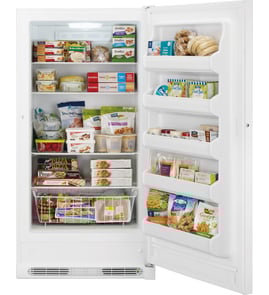


Why is my upright freezer only freezing at the bottom shelf?
When a Crosley CFUFH21QWA upright freezer freezes only on the bottom shelf, the most common cause is restricted cold-air circulation from frost buildup or blocked airflow paths; a weak evaporator fan or a defrost system problem can also keep cold air from reaching the upper shelves. See the CFUFH21QWA owner's manual for shelf and defrosting guidance.
Quick checks we recommend first
- Make sure packages are not pressed against the back wall or covering air passages.
- Confirm the door closes tightly and is not being held open by overfilled shelves.
- Look for heavy frost on the upper back interior panel (a sign of a defrost issue).
- Listen for the evaporator fan; it should run when the compressor is running (door switch closed).
- If your model is manual-defrost, remove frost when it reaches about 1/4 to 1/2 inch.
What usually causes “bottom-only” freezing
| Symptom | Most likely cause | What to do next |
|---|---|---|
| Bottom is solid, top is warm | Frost blocking airflow | Defrost and clear ice; improve loading/air gaps |
| Frost returns quickly | Defrost system not working | Check defrost timer and defrost heater |
| Little or no airflow sound | Evaporator fan not running | Inspect fan motor and blade |
| Temps swing, food softens | Control issue or door sealing issue | Verify control setting, gasket seal, and door alignment |
Parts that commonly fix uneven cooling on this model
If you confirm a fan or defrost problem, these model-matched parts are common solutions:
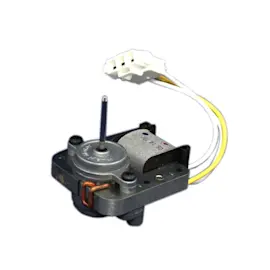
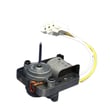
- Freezer evaporator fan motor 297309000 (moves cold air to upper shelves)
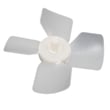
- Blade 5308000010 (damaged blades reduce airflow)
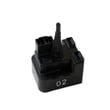
- Freezer defrost timer 5304518034 (controls defrost cycles on many designs)
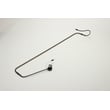
- White-westinghouse freezer defrost heater 5304496284 (melts frost off the evaporator)
Why it matters
Freezers cool by circulating air across the evaporator; when frost blocks that airflow or the fan cannot push air upward, the bottom area can stay cold while the upper shelves warm up. Fixing airflow and defrosting prevents temperature swings and freezer burn.
Last updated: February 2026
How to defrost a Crosley upright freezer?
To defrost your Crosley CFUFH21QWA upright freezer, unplug the unit, move food to a cooler, and leave the door open until frost melts. Defrost and clean when frost buildup reaches about 1/4 to 1/2 inch; then dry the interior and restart the freezer.
Step-by-step: manual defrost
- Unplug the freezer to prevent electrical shock.
- Remove all food; keep it frozen in a cooler with ice packs.
- Leave the door open to let warm air melt the frost.
- If your freezer has an internal drain plug, pull it straight out and drain meltwater into a shallow pan.
- If there is no drain, line the bottom with towels or newspapers to catch water.
- Use a plastic scraper to loosen soft frost; never use metal tools.
Speed it up safely
If frost is hard or glazed:
- Place deep pans of hot water on the freezer bottom.
- Close the door for about 15 minutes to soften frost.
- Repeat as needed, then remove loosened ice with a plastic scraper.
Cleaning after defrosting
Wash and dry the interior once all ice is gone.
| Area | What to use | What to avoid |
|---|---|---|
| Inside walls and floor | 2 tbsp baking soda + 1 qt warm water | Abrasive cleaners, alkaline solutions |
| Removable bins/shelves | Mild detergent + warm water | Dishwasher, scouring pads |
| Control area | Damp cloth (wring well) | Excess water near electrical parts |
For model-specific drain location and cleaning notes, follow the CFUFH21QWA owner’s manual.
Why it matters
Defrosting at 1/4 to 1/2 inch of frost buildup helps your freezer cool efficiently, reduces run time, and prevents door sealing issues caused by ice around the liner and gasket.
Last updated: February 2026
Why is my Crosley refrigerator not cooling but freezer works?
If your Crosley CFUFH21QWA has a freezer that stays cold but the fresh-food section is warm, the most common cause is an airflow problem: cold air is being made in the freezer but is not moving where it needs to go. Start with door sealing, vents, and frost buildup checks, then move to fan and defrost components.
Quick checks we recommend first
- Make sure the door closes fully and the gasket is clean and sealing all the way around.
- Confirm interior air vents are not blocked by food packages.
- Set the temperature control to a normal mid-range setting and give the unit time to stabilize.
- Allow proper cool-down time after startup; the freezer needs about 4 hours to cool completely for safe storage.
- Look for heavy frost on the back wall or shelves; that points to a defrost problem.
What to check next (most likely causes)
| Symptom | Most likely cause | What it affects |
|---|---|---|
| Freezer cold, refrigerator warm, little or no airflow | Evaporator fan not running | Cold air circulation |
| Freezer cold, refrigerator warm, frost/ice buildup | Defrost system issue | Airflow through evaporator |
| Temps swing, unit runs too long | Door gasket leak or frequent openings | Heat and moisture intrusion |
Air circulation (fan)
If you do not hear or feel airflow, the evaporator fan system is a prime suspect. On this model, the fan motor and blade are serviceable parts; see freezer evaporator fan motor 297309000 and blade 5308000010.
Defrost system (ice blocking airflow)
If frost is building up, the evaporator can get packed with ice and block airflow. Common service parts include the defrost timer and defrost heater; see freezer defrost timer 5304518034 and white-westinghouse freezer defrost heater 5304496284. For step-by-step guidance, use how to replace a freezer defrost heater.
Why it matters
A freezer can still “work” while the refrigerator section warms because the cooling system is located in the freezer. When airflow is restricted (ice, failed fan, blocked vents, or poor door sealing), the refrigerator section loses the cold air it depends on.
Model-specific tip
Use the temperature control and operating guidance in the CFUFH21QWA owner’s manual to confirm the correct control setting and normal cool-down expectations before replacing parts.
Last updated: February 2026