 Installation guide
 Owner’s manual



How do I figure out what model my dishwasher is?
Your GE dishwasher’s model number is printed on the rating label inside the door area. For GE DDT595SMJ0ES units, the DDT595SMJ0ES owner’s manual notes you can find the model and serial numbers on the tub wall just inside the door.
Where to look on the dishwasher
Check these common label locations first (use a flashlight and wipe off any moisture or soap film):
- Tub wall just inside the door opening (most common for GE)
- Left or right inner frame around the door opening
- Top edge of the door (visible when the door is open)
- Side edge of the door itself
- Underside of the control panel lip (less common)
What to write down (and why)
Record both numbers exactly as shown:
- Model number: identifies the exact design and parts list
- Serial number: helps match production changes and correct replacement parts
| What you’re looking for | Example format | Used for |
|---|---|---|
| Model number | DDT595SMJ0ES | Finding correct parts and diagrams |
| Serial number | Letters and numbers | Matching revisions and service info |
Tips if the label is hard to read
- Shine light across the label from the side to make faint print stand out
- Take a close-up photo and zoom in
- Copy characters carefully (0 vs O, 1 vs I)
Why it matters
Using the exact model number (like DDT595SMJ0ES) prevents ordering the wrong GE dishwasher parts such as a control board, door latch, or spray arm.
Last updated: January 2026
Can a clogged drain cause an FTD error?
Yes. On the GE DDT595SMJ0ES dishwasher, an FTD (fail to drain) condition commonly happens when water cannot leave the tub due to a clog in the drain path (air gap, disposer connection, filter area, or drain hose). See the DDT595SMJ0ES owner’s manual for drain and air gap cleaning steps.
What to check first (fast, no parts)
- Cancel the cycle and let the unit attempt to drain.
- Check for standing water in the bottom of the tub.
- If you have an air gap, remove the cover and clean the cap and opening.
- If the dishwasher drains into a garbage disposer, run the disposer to clear it.
- Confirm the kitchen sink drains normally; a slow sink often points to a plumbing restriction.
- Inspect the drain hose routing for a proper high loop or air gap (routing issues can mimic a clog).
Common clog points that trigger “fail to drain”
| Drain area | What happens | What to do |
|---|---|---|
| Air gap (if installed) | Backup prevents draining | Clean the air gap cap and passage |
| Disposer inlet | Food blockage stops flow | Run disposer; clear inlet if needed |
| Drain hose | Kink or debris restricts flow | Straighten hose; clear obstruction |
| Pump area | Debris can jam the impeller | Remove debris per manual guidance |
When a part is more likely
If the drain path is clear but the dishwasher still will not pump out, the drain pump can be the issue. For this model, the replacement is the dishwasher drain pump WD19X25187.
Quick symptoms guide
- Hums but no draining: pump jam or blockage at the impeller
- No pump sound at all: electrical issue, control issue, or failed pump
- Intermittent draining: partial clog, hose routing problem, or weak pump
Why it matters
An FTD condition leaves dirty water in the tub, can cause odors, and can stop the cycle from completing. Clearing the drain path (especially the air gap or disposer connection) restores normal draining in many cases.
Last updated: January 2026
What is the most common problem with a GE dishwasher?
For the GE DDT595SMJ0ES dishwasher, the most common issues we see are draining problems (clogged filter or drain path), the dishwasher not starting (door not fully latched or control issue), and poor cleaning from restricted spray-arm flow. These problems usually trace back to food debris buildup or a failed component.
Most common symptoms and what they usually mean
- Won’t drain or has standing water: drain filter, drain hose routing, or drain pump restriction
- Won’t start or stops mid-cycle: door not fully latched, UI/control problem, or power interruption
- Not cleaning well: clogged spray arm holes, blocked detergent cup, or circulation issue
- Not drying well: heater-related issue, rinse aid issue, or cycle selection
- Leaks: door seal/tub gasket wear, door not closing squarely, or oversudsing
Quick checks we recommend first (fast, no parts)
- Remove and rinse the filter area; clear any food, labels, or glass.
- Confirm the door closes firmly; a weak latch can prevent a cycle from starting.
- Check that dishes are not blocking the detergent dispenser (this is a common cause of detergent left in the cup).
- Run hot water at the sink before starting a cycle so the dishwasher fills with hotter water.
- Use only automatic dishwasher detergent; hand soap causes heavy suds and can trigger drain and leak symptoms.
Parts that commonly fix these problems on DDT595SMJ0ES
| Symptom | Common part to inspect | What it affects |
|---|---|---|
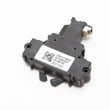
| Won’t start | GE dishwasher door latch lock WD21X10490 | Confirms the door is closed so the control will run |
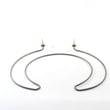
| Not drying | Dishwasher heating element WD05X30818 | Heats water and supports drying performance |
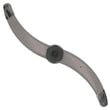
| Not cleaning | Dishwasher spray arm, lower WD22X33499 | Delivers wash water to the lower rack |
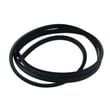
| Won’t drain | Dishwasher drain hose WD24X10062 | Carries water to the sink/disposal drain connection |
Why it matters
Drain clogs and spray restrictions reduce wash pressure and can leave detergent undissolved, while a weak door latch can make the dishwasher act “dead” even when it has power. Catching these early helps prevent repeat cycles, odors, and water left in the tub.
For model-specific operating and care steps (including loading guidance and cleaning recommendations), use the DDT595SMJ0ES owner's manual.
Last updated: January 2026
How to clear GE dishwasher error code?
To clear an error code on your GE DDT595SMJ0ES dishwasher, we start by canceling the current cycle: press and hold Start for 3 seconds, then close the door so the unit drains and resets. After it drains, start a fresh cycle to see if the code returns (see the DDT595SMJ0ES owner's manual).
Quick ways to clear the code
- Cancel and drain (first step): Press and hold Start for 3 seconds, then close the door so the dishwasher drains.
- Restart correctly: Press Start and close the door within 4 seconds to begin a new cycle.
- Power reset (if the code comes back): Turn the dishwasher’s power off at the breaker for about 5 to 10 minutes, then restore power and try a cycle.
- Check the door: If the door is not fully closed, the dishwasher can pause and beep; closing the door and pressing Start can clear the condition.
- Address common “false” triggers: If the dishwasher will not fill, check that the water valve under the sink is on and that the flood float is not stuck.
What the dishwasher is telling you (common symptoms)
| What you see/hear | What it usually means | What we do next |
|---|---|---|
| Start/status light flashing | Door opened or cycle interrupted | Press Start and close door within 4 seconds |
| Beeps once every minute | Door left open during operation | Press Start and close the door |
| “LEAK DETECTED” message | Leak detection canceled the cycle (on some models) | Check for water in the base area and obvious leaks before restarting |
When clearing the code is not enough
If the same error returns right away after a cancel/drain and power reset, we treat it as an active fault (not a “stored” code). These are the most common next checks:
- Clean filters and confirm spray arms spin freely
- Verify the unit fills and circulates water normally
- Look for pinched/kinked drain hose routing
- If symptoms point to control issues, inspect connections to the dishwasher electronic control board WD21X24901C
Why it matters
Clearing the code resets the cycle logic, but repeating codes usually indicate a real problem (door latch, fill, drain, leak detection, or control). Fixing the cause prevents mid-cycle stops, poor cleaning, and repeat beeping.
For code definitions and model-family troubleshooting, use our GE electronic dishwasher error codes reference alongside your manual.
Last updated: January 2026





