Installation guide
 Error Codes


How do you reset your Kenmore Elite washing machine?
For a Kenmore commercial washer model 11027022710, a practical “reset” is a power reset: turn the washer off, unplug it (or switch off the breaker) for 1 minute, then restore power and try a cycle again. Use the 11027022710 installation guide for model-specific setup checks that can prevent repeat issues.
Quick reset steps (power reset)
- Press Pause/Cancel (if your control has it) to stop the cycle.
- Unplug the washer (or turn OFF the dedicated breaker).
- Wait 60 seconds.
- Restore power.
- Select a normal cycle and start the washer.
If it still will not run, check these basics
Many “needs a reset” symptoms are actually installation or connection problems.
- Confirm hot hose to hot faucet and cold hose to cold faucet.
- Make sure the washer is level on all four feet (reduces vibration-related shutdowns).
- Verify the outlet/breaker is supplying power (no tripped breaker).
- Check that the drain hose is not kinked or pushed too far down the standpipe.
Common symptoms and what they usually point to
| Symptom after reset | Most common cause | What to do next |
|---|---|---|
| Won’t start, no response | Power supply issue | Check breaker, outlet, cord |
| Stops mid-cycle | Out-of-balance or vibration | Re-level washer, redistribute load |
| Won’t drain/spins poorly | Drain restriction or pump issue | Inspect hose, then consider pump |
Why it matters
A reset clears a temporary control “hang,” but if the washer is not installed correctly (hoses reversed, not level, drain setup issues), the same problem can come right back and cause excess noise, vibration, or cycle interruptions.
Last updated: January 2026
What is the average lifespan of a Kenmore washing machine?
Most Kenmore washing machines last 10 to 15 years with normal household use. For a Kenmore commercial washer like model 11027022710, consistent maintenance, correct installation, and avoiding overloads are the biggest factors that keep the drive system, drain pump, and suspension working longer.
Typical lifespan and what changes it
- 10 to 15 years is the typical range for washers overall.
- Heavy use (multi-family, rental, or daily large loads) shortens lifespan.
- Good leveling and proper drain setup reduce vibration and strain (see the 11027022710 installation guide).
- Routine cleaning helps prevent odor, corrosion, and drain restrictions.
What usually wears out first
These are common wear items that often need service before the washer reaches end-of-life:
- Drain components (pump, hoses, clamps)
- Drive components (belt/pulley related parts)
- Suspension/dampers (out-of-balance and vibration control)
- Lid/door lock components
- Inlet hoses and internal pressure hose
Common symptoms and likely areas
| Symptom | Most likely area | Example part for 11027022710 |
|---|---|---|
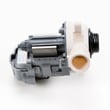
| Won’t drain or drains slowly | Drain pump, tub-to-pump hose, drain hose | Washer drain pump assembly WPW10276397 |
| Loud squeal or slipping | Drive pulley area | Whirlpool washer drive pulley W10721967 |
| Excessive shaking/banging | Suspension/dampers, leveling | Damper/suspension components |
Maintenance that adds years
- Keep the washer level and re-check after moving it.
- Do not overload; heavy loads strain the motor, basket, and dampers.
- Inspect hoses for bulges, cracks, or leaks; replace at the first sign of wear.
- If draining is slow, check for kinks and buildup in the drain path before the pump is damaged.
Why it matters
A washer can run for years past the average lifespan when vibration and water leaks are controlled. Those two issues are the most common causes of expensive secondary damage (tub wear, bearing stress, and electrical problems).
Last updated: January 2026
What is a suds saver?
A suds saver is an older laundry setup that “saves” soapy wash water (suds) so it can be reused for another load instead of draining it away. It was typically used with a separate tub or sink next to the washer, not as a standard feature on the Kenmore 11027022710 commercial washer.
How a suds saver system works
A traditional suds saver arrangement routes the wash water out of the washer into a nearby tub, then lets you pump or drain that same sudsy water back into the washer for the next load.
Common workflow:
- Wash the first load, then divert the wash water into a holding tub
- Reuse that wash water for a second load (often lighter soil)
- Drain and refill with fresh water when suds are depleted or water is dirty
- Repeat until water quality is no longer acceptable
What to check on a Kenmore 11027022710
This model is installed and plumbed like a standard commercial washer, so “suds saver” questions usually come up when you are troubleshooting draining, hose routing, or standpipe/sink setups.
Use these checks:
- Confirm the drain hose is routed to the correct drain system (standpipe, laundry tub, or floor drain)
- Make sure the drain hose is not sealed airtight into the drain (helps prevent siphoning)
- Verify the washer drains strongly; weak draining can mimic “water saving” issues
- Inspect for kinks, clogs, or leaks in the drain hose
- If the washer will not drain, check the drain pump and tub-to-pump hose for obstructions
Parts that matter if you are dealing with drain or reuse-water setups
If you are trying to manage where wash water goes (or you have slow/no drain symptoms), these parts are commonly involved:
| Symptom | Likely area | Example part for this model |
|---|---|---|
| Won’t drain or drains slowly | Pump or blockage | Washer drain pump assembly WPW10276397 |
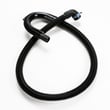
| Leaking or poor routing to tub/standpipe | Drain hose | Washer drain hose W11244231 |
| Pump cavitation, leaks, or restriction | Tub-to-pump hose | Hose asm - d W10899966 |
Why it matters
Reusing wash water can increase the chance of redepositing soil, odors, and detergent residue. For a commercial washer like the Kenmore 11027022710, correct drain setup and strong pump-out performance protect cycle results and help prevent overflow or siphoning problems.
For model-specific drain system and hose routing requirements, follow the installation guide.
Last updated: January 2026
How many cubic feet is a Kenmore Model 11027022710 washer?
Kenmore commercial washer model 11027022710 is a top-load, coin-operated style platform; washers in this Kenmore 110 commercial family are typically about 2.9 to 3.3 cu. ft. capacity. For the exact published capacity for your unit, confirm it in the 11027022710 installation guide.
How to confirm the exact capacity for model 11027022710
Use the model-specific document first; capacity is a spec, not something you estimate by water level.
- Check the specifications or dimensions section in the 11027022710 installation guide
- Match the full model number 11027022710 on the rating label (often under the lid or on the cabinet opening)
- Look for a tech sheet stored inside the cabinet (commonly taped to an interior panel)
- If your washer has a coin slide, keep the operator paperwork with the model number for future parts matching
What “cubic feet” means on a washer
Cubic feet is the internal volume of the wash basket. It does not equal gallons used per cycle, and it does not change with water level settings.
Typical capacity ranges (for context)
| Top-load washer type | Typical capacity (cu. ft.) | Common use |
|---|---|---|
| Compact | 2.0 to 3.0 | Small loads, tight spaces |
| Commercial/standard | 2.9 to 3.6 | Everyday loads, durability focus |
| Large residential | 4.0+ | Bulky bedding |
Why it matters
Knowing the correct basket capacity helps you load the washer properly (better cleaning and fewer out-of-balance spins) and helps when selecting fit-critical parts like the basket W10738339 or suspension components.
Last updated: January 2026