Owner’s manual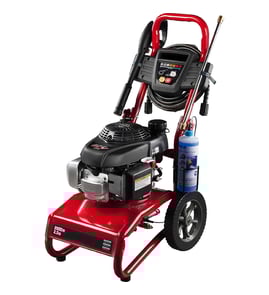



Can you put 87 gas in a pressure washer?
Yes. For the Craftsman 580768030 gas pressure washer, we use regular unleaded gasoline; 87 octane is the correct choice for normal operation. Fill the tank only when the engine is cool, and avoid overfilling so fuel can expand safely (see the owner's manual).
Fuel type and what to avoid
Regular unleaded (87 octane) is the right fuel for this model. To help prevent hard starting and fuel-system damage:
- Use fresh gasoline (do not use old fuel from a can that has been sitting for months).
- Avoid alcohol-blended fuel for storage; it attracts moisture and can form acids over time.
- Do not mix oil into the gasoline (this is a 4-cycle engine).
- Do not fill the tank indoors or near ignition sources.
- Leave space in the tank for expansion; do not top it off to the brim.
Quick specs for this model
| Item | What to use | Notes |
|---|---|---|
| Gasoline | Regular unleaded (87 octane) | Fill at the gas cap on the engine |
| Fuel tank capacity | 3 U.S. quarts | Do not overfill |
| Water supply temp | Up to 140°F | Hotter water can damage the pump |
Why it matters
Using the correct fuel helps the engine start easily and run smoothly, and it reduces the chance of fuel-system issues during storage. This is especially important on a gas pressure washer that may sit unused between cleaning jobs.
Related maintenance tip (prevents pump damage)
Before starting the engine:
- Attach all hoses.
- Turn the water ON.
- Confirm the high-pressure hose connection is secure.
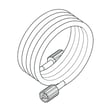
If you need to replace a worn or leaking line, match the connection style and length to your setup; the hose 84006753 is one of the replacement hose options listed for this model.
Last updated: February 2026
How many PSI is a normal pressure washer?
A “normal” home pressure washer typically runs about 1,300 to 2,800 PSI, and your Craftsman 580768030 is rated at 2,250 PSI, which is a solid mid-range output for common household cleaning. For exact operating and safety limits, follow the owner's manual.
What PSI ranges are used for (quick guide)
- 1,300 to 1,900 PSI: cars, patio furniture, grills (gentler cleaning)
- 2,000 to 2,800 PSI: decks, fences, siding, most driveway cleaning
- 2,900+ PSI: heavier concrete work and tougher stripping jobs (more risk of damage)
- Lower PSI is safer for paint, wood, and soft surfaces
- Higher PSI is faster on hard surfaces but can etch concrete or gouge wood
How PSI works on the Craftsman 580768030
This model lets you regulate output pressure by changing engine speed using the Pressure Command control. It also uses an adjustable nozzle that changes between low and high pressure modes.
| What you change | What it affects | What you’ll notice |
|---|---|---|
| Pressure Command (engine speed) | Overall pressure output | More or less “push” at the wand |
| Adjustable nozzle position | Low vs. high pressure mode | Detergent works in low pressure; high pressure for rinsing |
| Spray pattern twist | Narrow vs. fan spray | Narrow hits harder; fan is gentler |
Why it matters
Using the right PSI helps you clean effectively without damaging surfaces. It also reduces safety risk; high-pressure spray can cause serious injury and can send debris airborne, so eye protection and correct nozzle control are essential.
Last updated: February 2026
Is it worth repairing a pressure washer?
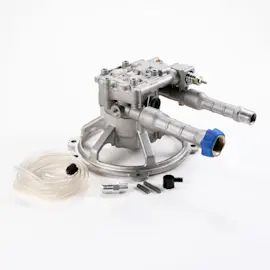
Yes, repairing a Craftsman 580768030 gas pressure washer is worth it when the problem is a wear item (hose, seals, injector, gun/wand leaks) and the repair cost stays well below the cost of replacing the unit. If the pump was run without water or has freeze damage, replacement is usually the better value.
Quick decision checklist
- Compare total repair cost (parts plus labor) to replacement cost; repairs make sense when they are clearly under about half the price of a comparable new washer.
- If the unit has low pressure caused by a leaking or damaged hose, repair is typically straightforward.
- If the pump was operated with no water supply, internal pump damage is common and costs rise quickly.
- If the washer was exposed to freezing temperatures, pump damage can be permanent.
- If the engine runs well and the issue is in the spray system (hose, gun, chemical injector), repair is usually a good bet.
Common repairs that are usually worth it (and why)
The owner documentation emphasizes routine inspection and replacement of wear parts, especially the high-pressure hose and leak points. Use the owner's manual to match symptoms to the troubleshooting and maintenance steps.
Typical “good value” repairs include:
- Replacing a worn or leaking high-pressure hose (never patch a high-pressure hose)
- Fixing chemical draw issues by replacing the injector or chemical assembly
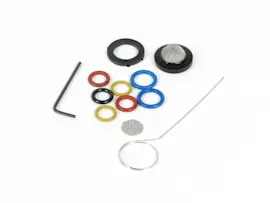
- Replacing small hardware and seals that cause drips at connections
Parts that often solve the problem
| Symptom | Likely area | Example part on this model page |
|---|---|---|
| Hose leaks, bulges, cuts | High-pressure hose | Hose 84006753 |
| Soap not drawing | Chemical injector system | Injector B4183 |
| Chemical selector issues or leaks | Chemical system | Chemical assembly B3594 |
Why it matters
A pressure washer is only safe and effective when it holds pressure without leaks. The manual calls out that a damaged high-pressure hose should be replaced immediately and not repaired; that single choice can prevent injury, property damage, and repeat failures.
Last updated: February 2026